

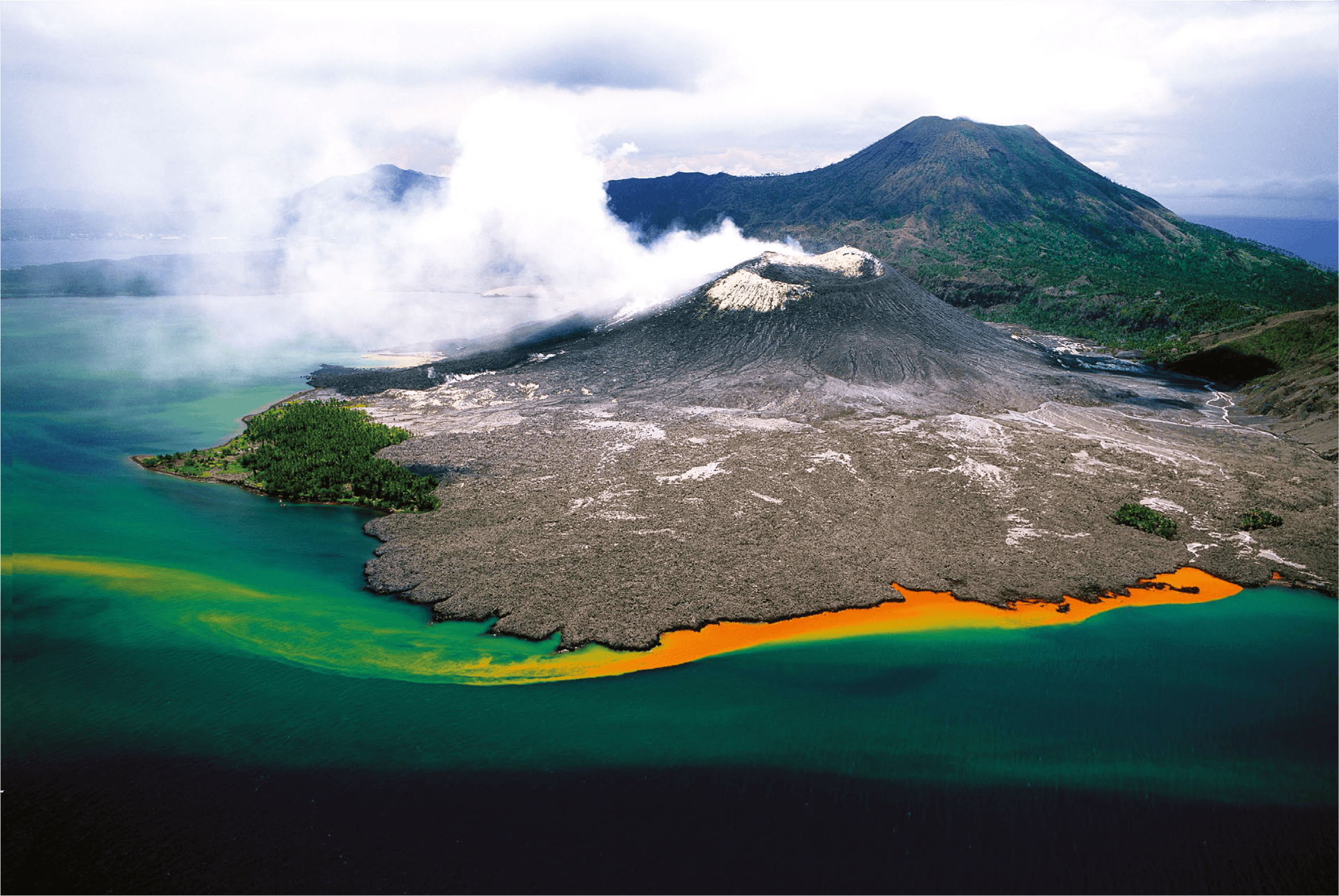
The Islands of Papua New Guinea are divided into four groups. East and West New Britain, the largest of PNG’s outer islands, has two main centres: Rabaul in the east and Kimbe in the west.
Rabaul is the site of some of PNG’s most active volcanoes, Tavurvur and Vulcan. The last big eruption in 1994 completely covered the peaceful town and harbour in ash and forced the residents who remained to move the town to nearby Kokopo. The town has recovered and visitors are assured of a range of quality accommodations and services.
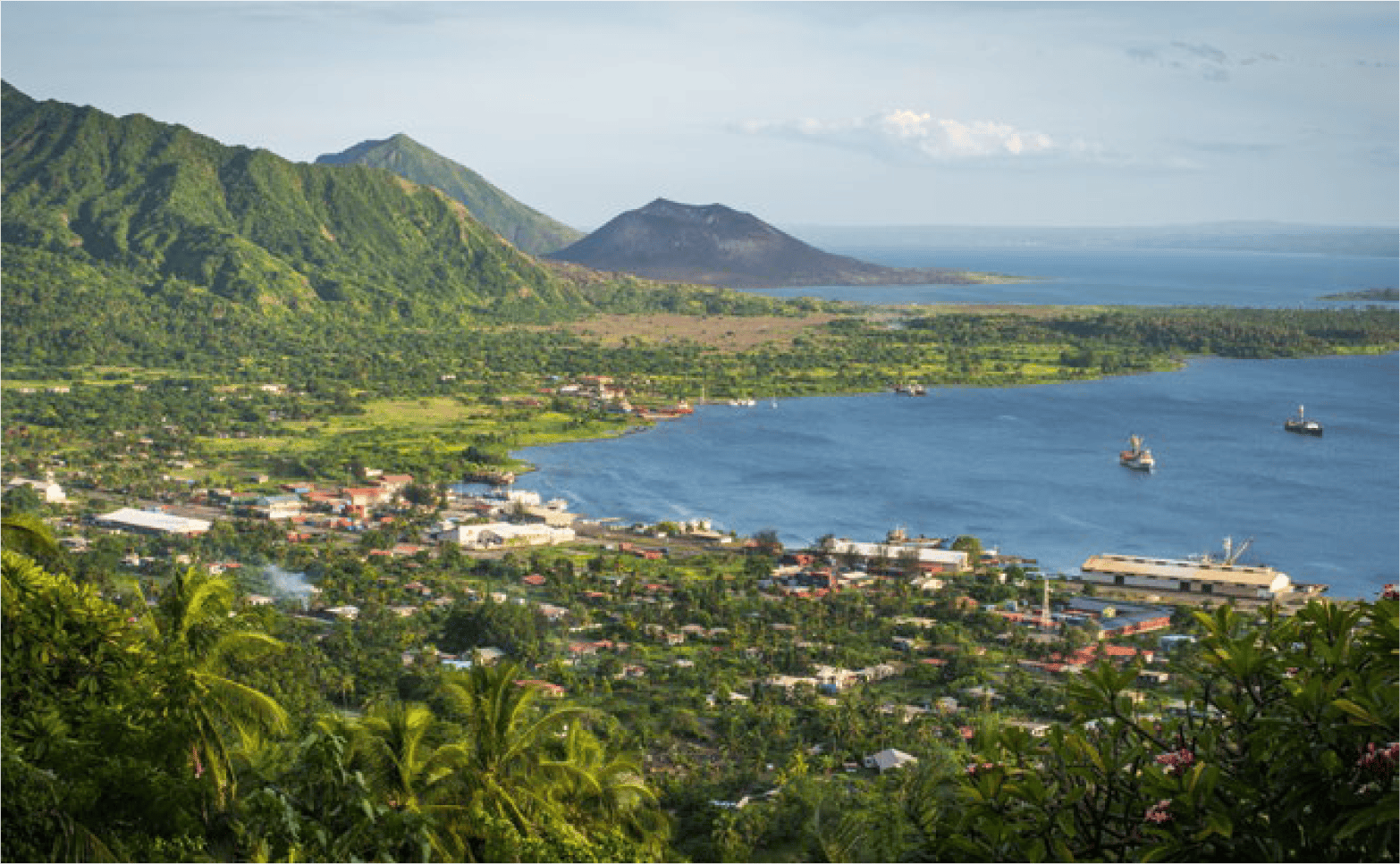
Diving is still a big attraction here, even though the eruption hit many dive sites in the harbour quite hard. Ironically, the source of the town’s demise has now become one of its biggest attractions. Trips to the volcanic observatory and helicopter tours of the crater are not to be missed.
There are a number of hotels operational in Rabaul Township and at Kokopo, a number of lodges, guesthouses and hotels are now open and provide excellent accommodation. A highlight of a visit to East New Britain is a visit to Palmalmal in the Pomio District, the Duke of York Islands and the Baining.
Like its neighbour in the east, West New Britain is surrounded by a turquoise sea, dotted with reef-fringed atolls and adorned with magnificent rainforests, which plunge into white sandy beaches. The fertile volcanic soil in this region is suitable for growing just about anything and lush plantations stretch from the mountains to the sea.
The major attractions here are diving in Kimbe Bay, and game fishing in Baia, accessible from land or via live-aboards. A chain of volcanoes shields the bay from open ocean conditions, creating a pocket of calm on the north coast of the island. The landscape of extinct to active volcanoes (Mount Ulawun is currently active) creates a dramatic backdrop and steaming thermal springs, waterfalls, boiling volcanic pools and mud holes can be found within.
New Ireland is an island paradise of sandy white beaches, towering mountains and clear springs and rivers that branch into the interior of the island – creating lagoons, estuaries and coral-canyons. A sealed highway links Kavieng – the main township in the north, to Namatanai in the south. It is one of the best scenic drives in the country.
The Malangan culture in the northern and central part of the island is unique within the Pacific and its people are particularly well known for their potent spiritual beliefs featured in their unique mask carvings, and shark calling. Diving and surfing in this region is fantastic and there are several resorts offering accommodation and diving and surfing experiences. The abundance of local seafood translates into gourmet feasts for visitors featuring coconut crabs, crayfish and a variety of reef fish. There are a number of hotels and guesthouses in Kavieng and small guest lodges are located on the islands in the harbour.
The Admiralty Islands is a distant island group known collectively as Manus, and is found to the northwest of the mainland which can be reached by air or by coastal cargo ship and there are two main hotels in Lorengau and several lodges. Manus Island has vast tracts of forests – home to the rare Superb Pita and the Papustyla Pulcherrima (Green Snail) in the central range and a magical coastline. The dancing by the locals is seductive and majestic, depicting a life of openness and joy. This island group is hailed as having exceptional diving and is occasionally visited by expeditionary cruises.
The Autonomous Region of Bougainville includes Buka and the Atoll Islands in the north, and Bougainville Island in the south. Formerly the province of North Solomons, it will become an independent country soon.
Boating enthusiasts find this a marine wonderland with untouched reefs to explore with an everlasting supply of reef fish and shellfish. Buka Island is accessible by boat and plane from Port Moresby and Rabaul and has a variety of accommodation varying in price and quality. Walking through village tracks and plantation roads is the best way to discover the magnificent flora and fauna.
Whilst there are few hotels on mainland Bougainville, there are numerous guest-houses in Buka and South Bougainville.