




Papua New Guinea Travel Guide: What First-Time Visitors Should Know
My first flight into Port Moresby felt like stepping onto another planet. The humidity hits you the moment you step off the jet, and the scent of eucalyptus mingles with diesel from the bustling airport tarmac.
Getting There

Most international visitors arrive via Air Niugini or PNG Air, both of which operate daily flights from Brisbane, Sydney and Manila. The cheapest round‑trip ticket I found in July was about AU$1,200, but prices jump to AU$1,800 during the dry season when demand spikes.
When you land, you’ll notice the airport is a mix of concrete and tarpaulin. There’s a small duty‑free shop, a handful of coffee stalls, and a queue for the immigration desk that can stretch to 20 minutes if you’re unlucky.
Customs is straightforward: you’re allowed to bring in 2 kg of tobacco, 2 l of alcohol and a modest amount of souvenirs. Anything over those limits incurs a 10 % duty, so keep receipts handy.
- Round‑trip from Australia: AU$1,200-AU$1,800 (dry season higher)
- Visa on arrival costs PGK 100 (≈US$30) for most nationalities
- Airport Wi‑Fi is free but slow; buy a local SIM for better speed
- Bring a reusable water bottle, bottled water costs PGK 2-3 per litre
- Carry a small power bank; power cuts are common after 6 pm
Visas and Entry
Most travelers need a visa, but the process is painless if you apply online before you leave. The e‑visa portal asks for a copy of your passport, a recent photo and a credit‑card payment.
Processing usually takes 24 hours, but I’ve seen cases where it stretched to three days during the high‑tourist months of June and July. Print the approval and keep a digital copy on your phone, immigration officers sometimes ask to see both.
On arrival, the officer will ask about your itinerary and the amount of cash you’re carrying. If you’re traveling beyond Port Moresby, be ready to show a rough route; they like to know you’ve planned ahead.
- Visa fee: PGK 100 (≈US$30) for most tourists
- Processing time: 24 hours, allow extra time during peak season
- Passport must be valid for at least six months
- Bring proof of onward travel, a printed bus ticket or a flight reservation
- Travel insurance is not mandatory but highly recommended
Health and Safety
Malaria is a real concern in the lowlands. I took a weekly dose of doxycycline for two weeks and kept a mosquito net over my pillow. The pharmacies in Port Moresby sell the medication cheaply, about PGK 5 per tablet.
Vaccinations you’ll need include hepatitis A, typhoid and routine shots. I got the hepatitis A vaccine at a travel clinic in Brisbane for AU$70; the clinic offered a combined hepatitis A/B for a little extra.
Road safety can be unpredictable. In Port Moresby, traffic moves slowly but drivers often ignore lane markings. In the Highlands, roads can be narrow, unpaved and prone to landslides after heavy rain.
- Take malaria prophylaxis; doxycycline 100 mg daily is common
- Carry a basic first‑aid kit, bandages, antiseptic wipes, antihistamine
- Drink only bottled or boiled water; refill stations charge PGK 1 per litre
- Use insect repellent with at least 30 % DEET
- Register with your embassy; the Australian High Commission in Port Moresby is helpful
Transportation and Getting Around
Public transport in the capital consists of minibusses called “buses” that run every 15 minutes along the main avenues. A single ride costs PGK 2.50, but the drivers rarely give change, so keep exact change ready.
If you want to explore the coast or the Highlands, you’ll need a 4‑wheel‑drive vehicle. I hired a Toyota Hilux from a local agency for PGK 150 per day, fuel included. The agency required a valid driver’s licence and a deposit of PGK 500.
Roads can be treacherous after sunset; many locals stop driving after 6 pm because street lighting is scarce. I learned to plan my daily drives to finish before dark, and to carry a flashlight at all times.
- Minibus fare: PGK 2.50 per ride, exact change needed
- 4WD hire: PGK 150/day (fuel included), deposit PGK 500
- Petrol price: PGK 1.30 per litre (about US$0.40)
- Roads may close after heavy rain; check local radio for updates
- Consider hiring a local driver for remote areas, they know shortcuts and customs
Accommodation and Food

Port Moresby offers everything from budget hostels to five‑star hotels. I stayed at a mid‑range hotel for PGK 120 per night; the room had air‑conditioning, a ceiling fan and a private bathroom with hot water.
In the Highlands, guesthouses are the norm. The one I stayed in near Goroka charged PGK 70 for a basic room with a fan and shared bathroom. Breakfast was a bowl of pap (corn porridge) and a cup of strong tea.
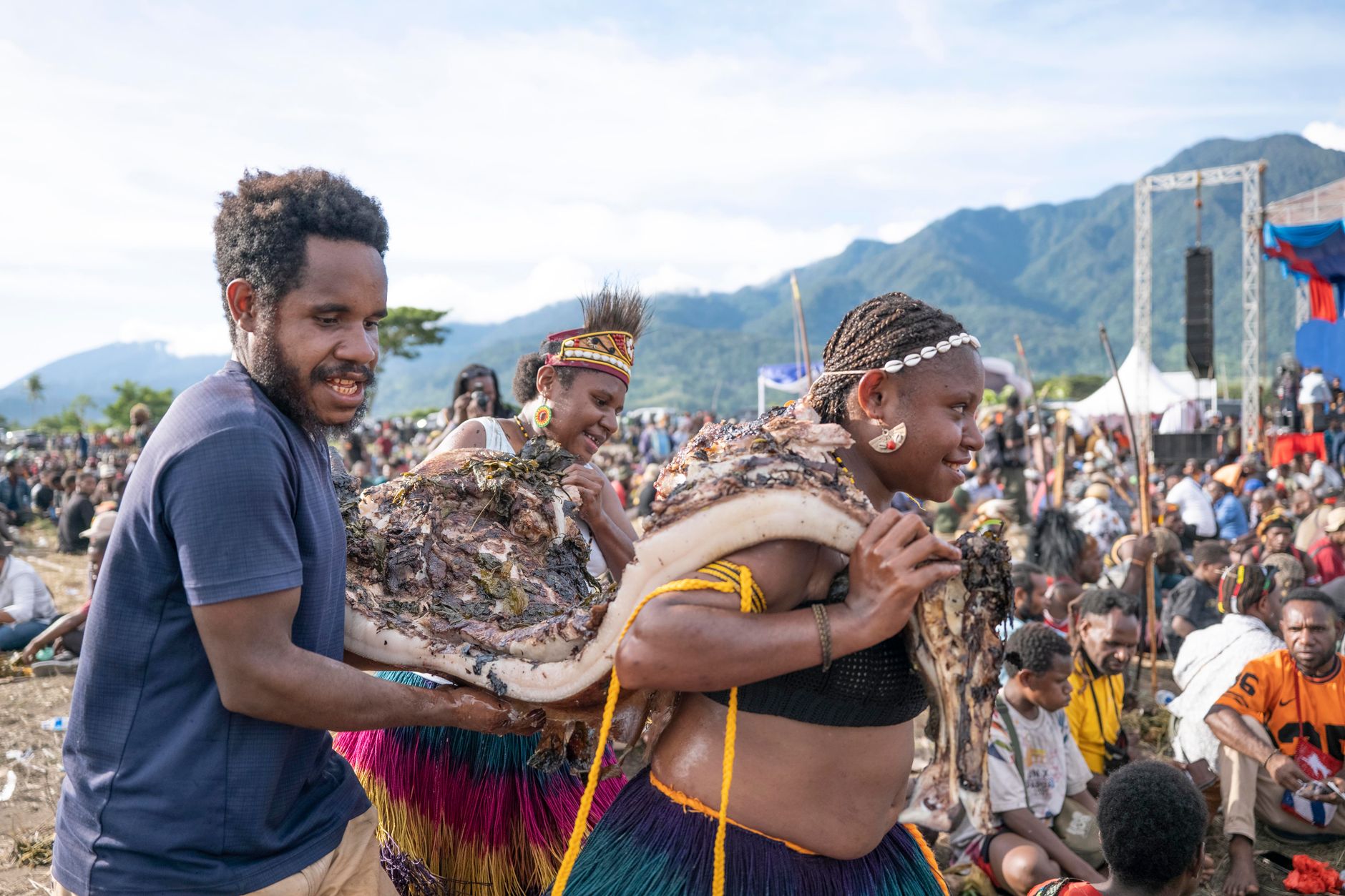
Food prices vary widely. A meal at a roadside stall costs PGK 5-8, while a dinner at a tourist restaurant can be PGK 30-40. I tried a dish called “mumu”, pork, sweet potato and taro wrapped in banana leaves and cooked in an underground pit. It was smoky, tender and worth the extra travel.
- Mid‑range hotel in Port Moresby: PGK 120/night (incl. breakfast)
- Highland guesthouse: PGK 70/night, shared bathroom
- Street food: PGK 5-8 per plate (e.g., grilled fish, banana chips)
- Restaurant dinner: PGK 30-40 for a three‑course meal
- Tip 10 % if service is not included
Cultural Etiquette and Must‑Do Experiences
PNG is a mosaic of over 800 languages, so customs differ from village to village. In the Sepik region, it’s polite to greet elders with a slight bow and to avoid pointing your feet at sacred objects.
I spent a night in a Motu village on the coast. The family offered me a kava bowl; I learned to drink it slowly, as the bitter taste can be overwhelming at first. They also taught me a simple dance step that I still practice at home.
For adventure seekers, the Kokoda Trail is a must. The trek is 96 km long and can be done in 8-10 days. I walked the trail with a small group; we carried our own gear, paid a local guide PGK 150 per day and camped in basic bivouacs.
- Learn a few basic greetings in Tok Pisin (e.g., “Gutpela dei” = good day)
- Ask permission before taking photos of people or ceremonies
- Dress modestly in rural areas, shorts above the knee may be frowned upon
- Kokoda Trail: 96 km, 8-10 days, guide fee PGK 150/day
- Bring a sturdy pair of hiking boots; trails can be muddy and slippery
Traveling in Papua New Guinea is not polished tourism; it’s raw, rewarding and sometimes chaotic. If you go with an open mind, a flexible schedule and a willingness to barter at market stalls, you’ll leave with stories that few other destinations can match.