Oahu

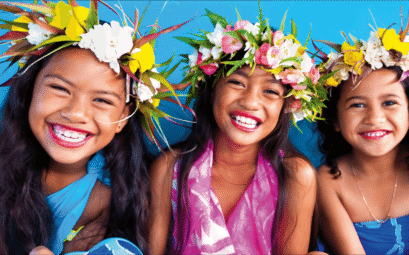
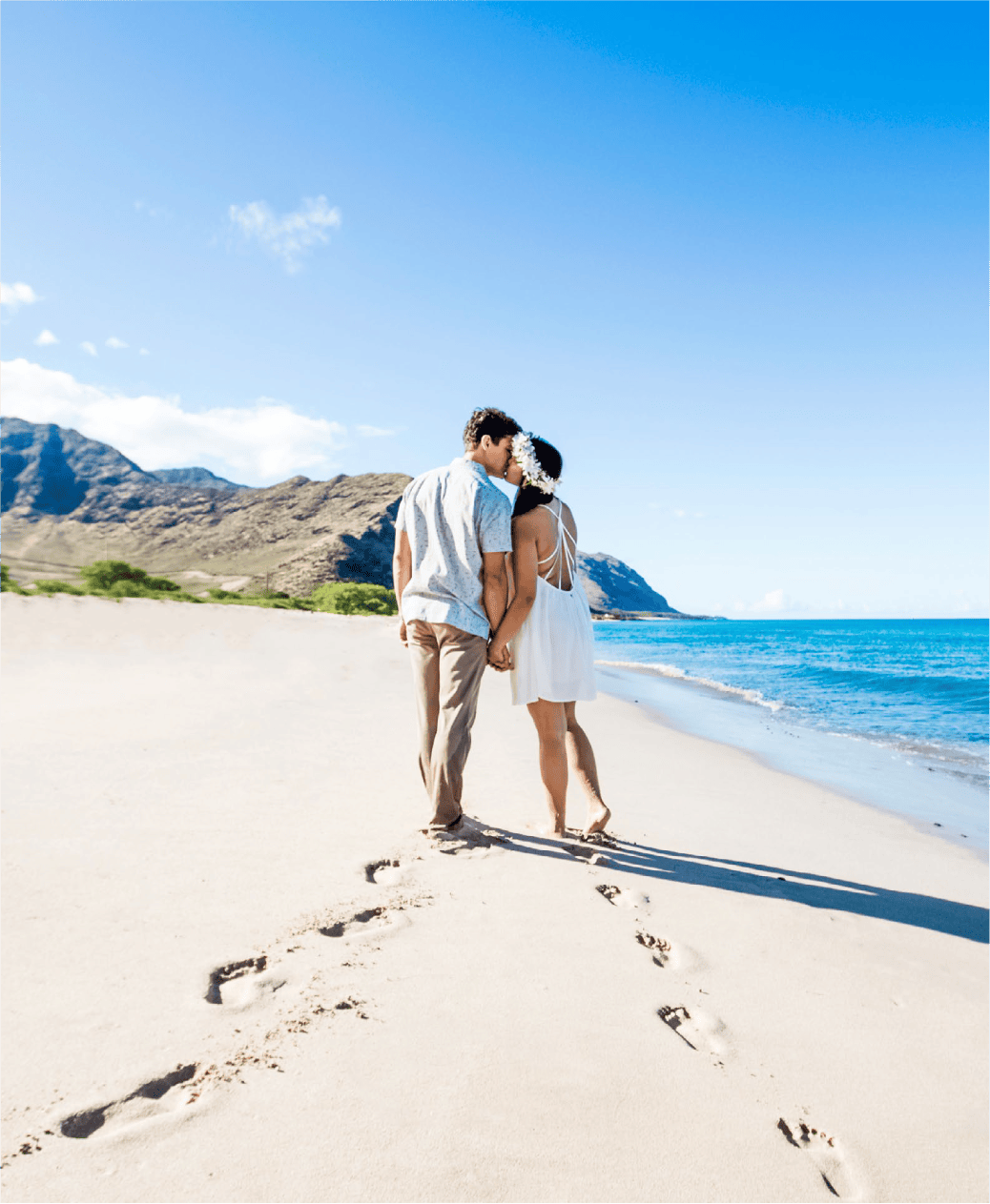
O‘ahu suits beachcombers, honeymooners and adventurers of all ages.

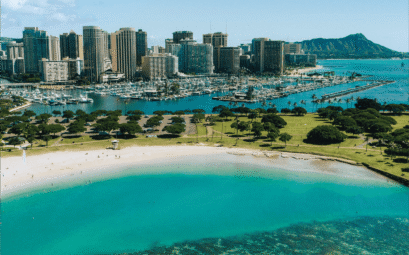
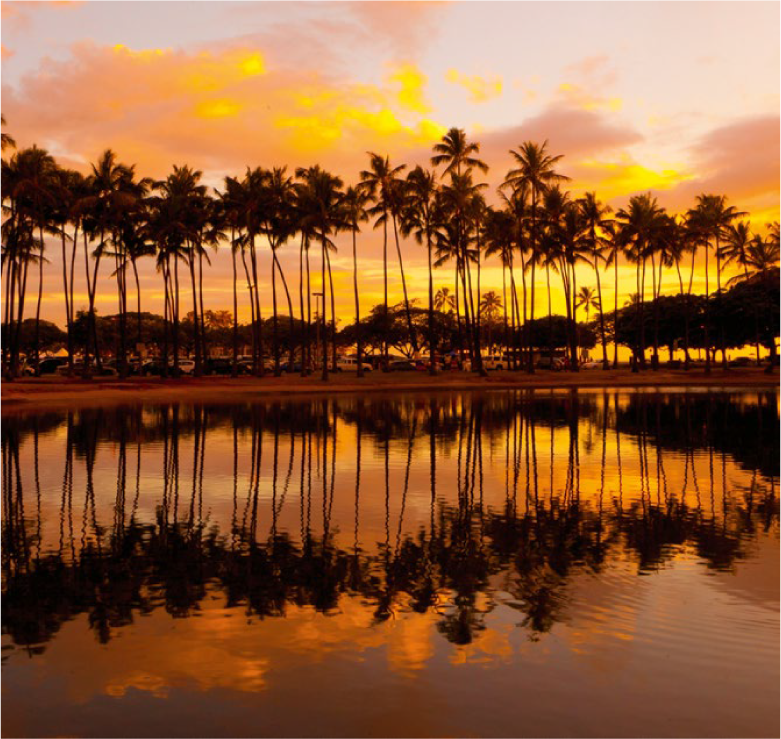
With its perfect weather, tropical flowers, pristine valleys, rainbows and waterfalls, quiet beaches and fiery sunsets, it’s truly a jewel. Honolulu, the capital, is surrounded by beautiful white sandy beaches and attracts some seven million visitors each year. It offers plazas, five-star restaurants, nightclubs, world-class shopping, great art and architecture, exquisite hotels and friendly people with old-fashioned Aloha spirit. Enjoy all the convenience of city living with the ambience of the tropics.

A great way to get an overview of Honolulu is to take the Historic Waikiki Trolley Tour, a two-hour narrated tour on a turn-of-the-century designed trolley which stops every 15 minutes at 20 locations allowing you to spend time at as many stops as you like before rejoining the route. Stops include Honolulu Zoo, Chinatown, Aloha Tower Marketplace and the Hawai’i Maritime Centre, King Kamehameha Statue, Restaurant Row and several shopping locations.
There are more than a dozen specialised walking tours in Honolulu and many focus on historical sites such as the Kawaiaha’o Church, Hawai’i’s oldest. Chinatown has many buildings with architecture reminiscent of a bygone era. Stroll through the arcades past the exotic herb shops and see the famous open market. More than one million visitors a year experience a taste of old Polynesia and the charm and beauty of the seven South Pacific villages at the Polynesian Cultural Centre. While there, visit the Imax theatre, experience a luau and see the spectacular Polynesian show.

Take a nostalgic trip to Pearl Harbour where you can visit the USS Arizona Memorial or step aboard the USS Bowfin, a real WWII submarine. You can learn more about this compelling wartime attack by visiting the USS Arizona Memorial Visitor Centre displaying WWII naval history and see a film about the attack.

Outdoor attractions include Sea Life Park on O’ahu’s South East Shore which has the world’s only ‘wholpin’, offspring of a false killer whale and an Atlantic Bottlenose dolphin. Waikiki Aquarium houses several endangered and rare species, interactive exhibits and a world-famous collection of tropical fish.

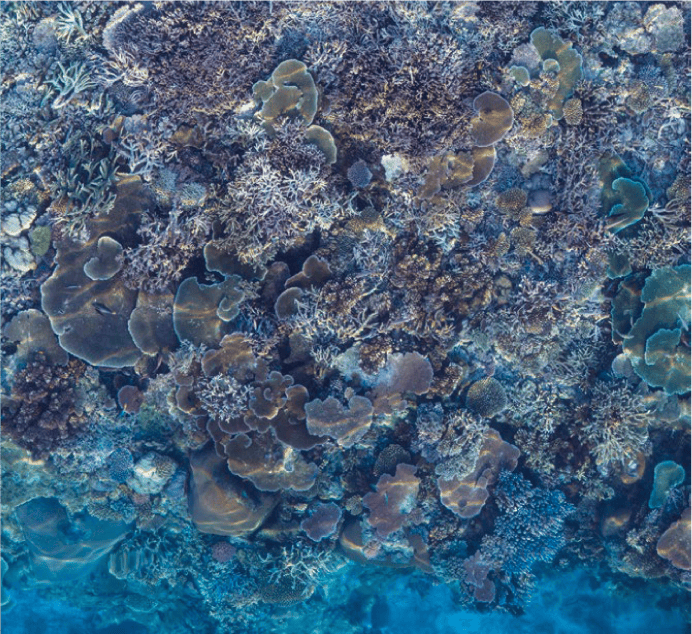
At Waimea Valley Audubon Centre, on the North Shore, experience Hawaiian cultural and ecological treasures in a natural park. Numerous cruises offer the opportunity to see the spectacular Waikiki Honolulu coastline and whale watching cruises are a highlight in season. Another way to sightsee is in a glass-bottom catamaran in Kaneohe Bay on O’ahu’s East Coast, where you can enjoy the sail and make viewing stops along the coral reefs. A safe and interesting way to see the natural wonders of the reef is to take a trip in a high-tech Atlantis Sub to a depth of 30 metres and see a visual feast of reef fish and mysterious ocean predators.

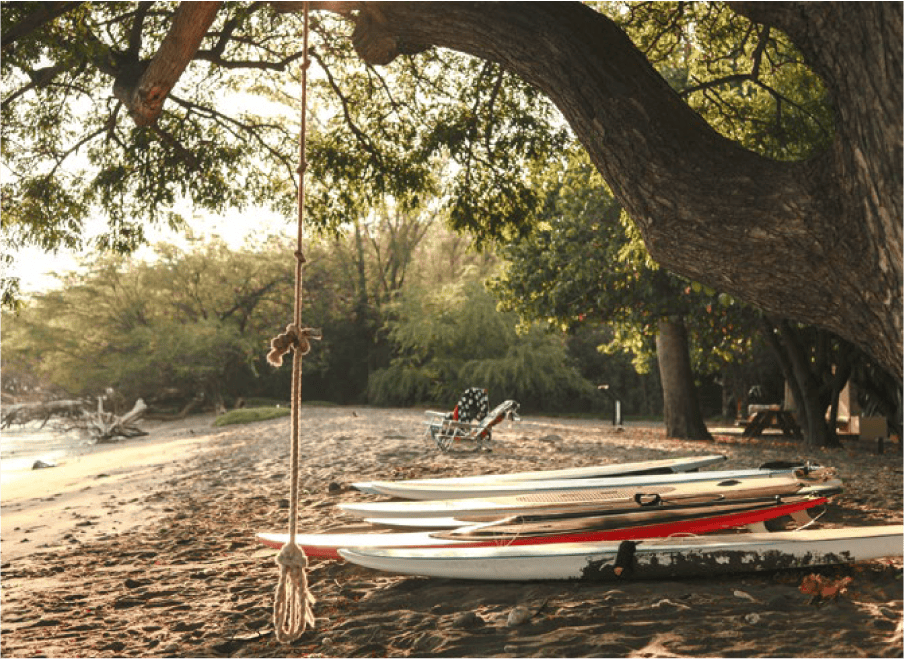
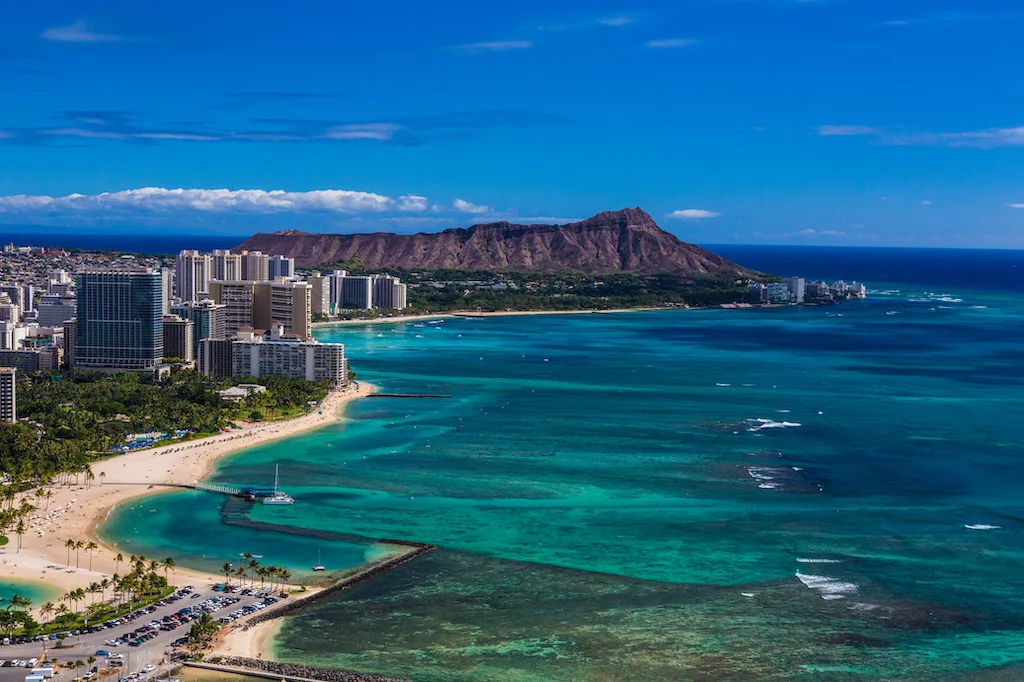
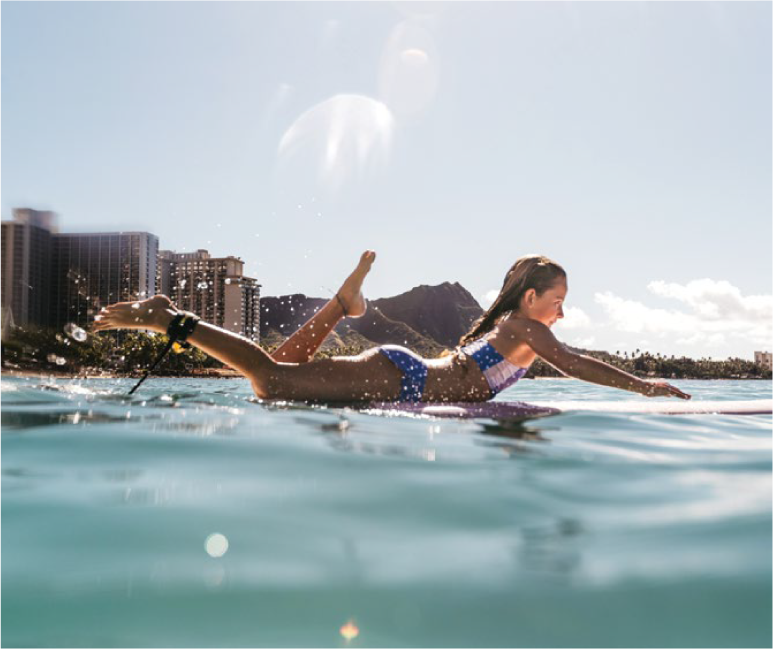
Other O’ahu ‘musts’ include a visit to Diamond Head (Le’ahi) crater which has a one-mile hiking trail leading to the 231 metres summit where there are spectacular views of Waikiki and Honolulu. No visit to Hawai’i would be complete without a swim or at least a walk along the promenade at famous Waikiki beach. Surfboards and boogie boards are available for rent with the option of lessons for the novice ‘guaranteed to get you up’. Other activities on O’ahu include windsurfing, sailing on catamarans, kayaking, waterskiing and jet skiing.
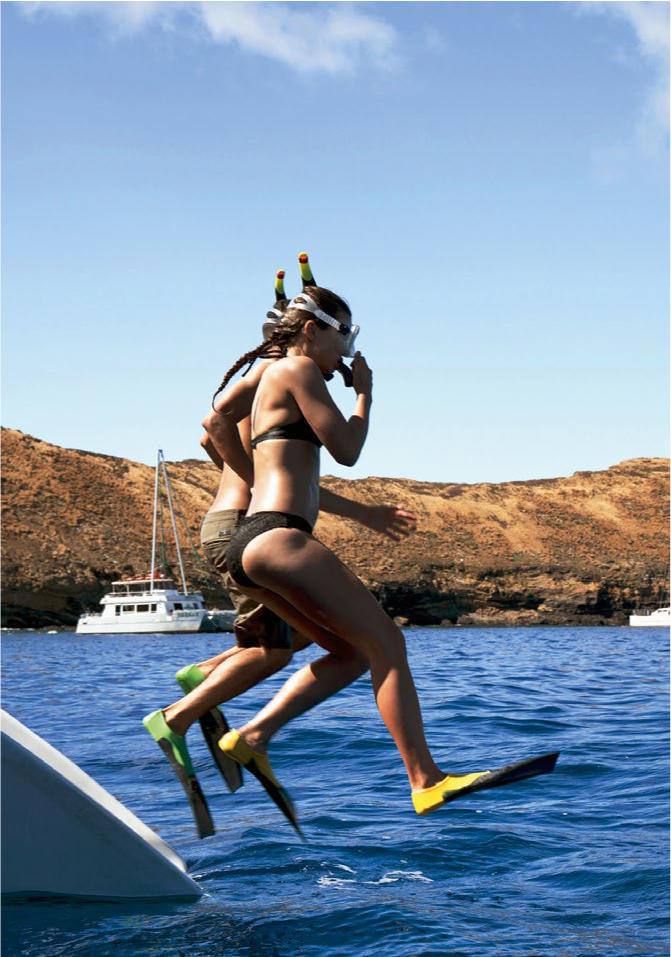
Parasailing under the direction of an experienced captain is a great way to view Honolulu and Waikiki from a new perspective, nine to 91 metres above the ocean flying tandem or by yourself. The Hanauma Bay Marine Preserve, Hawai’i’s most famous snorkelling spot, aims to preserve nature and educate visitors about the fragile ecosystem.

As well as having unlimited activities, Honolulu is a gourmet’s paradise with cuisine that is a blend of the spices of Asia and the Pacific with European styles and sauces.

It is also a shopper’s paradise with everything from the International Marketplace ‘souvenir heaven’ (built around a 100-year-old banyan tree) to famous Ala Moana, one of the largest open-air shopping centres in the USA. With nearly 50 new retailers, the Waikiki Beach Walk is the largest development in Waikiki’s history. Nearly three hectares along well-traversed Lewers Street is a colourful showcase and gathering place. This outdoor entertainment plaza includes several dining establishments and hotels, and benefits from the island’s cooling trade winds and year-round excellent weather.

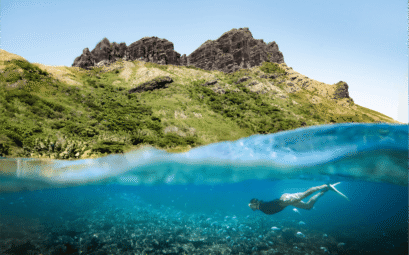
Where else in the world can you snorkel a crystal lagoon, climb a dormant volcano, surf huge waves, kayak along a pristine coastline, picnic on a sandbar, soar in a glider over tide pools, scuba dive over sunken aeroplanes, play golf at a championship course and sail into the sunset?
Maui

This beautiful isle was born in a fiery explosion of two volcanoes.

To one side of Maui is the 1764 metre Pu’u Kukui and on the other Haleakalā, a 3055-metre dormant volcano with a Manhattan size crater that houses a vast desert of unusual flora including the rare Silversword. Add to this, 190 kilometres of dazzling coastline – both dramatic and diverse for surfing, snorkelling and canoeing plus waterfalls plunging 300 metres, rainforests bursting with exotic vegetation and a stark lunar landscape so barren that the astronauts practised their moon landing here, and you have the extraordinary island of Maui.

The dramatic variations in climate and land formations are a large part of what makes Maui so exciting. The West Maui Mountains are rugged and verdant, with jagged peaks and deeply grooved valleys hiding waterfalls. Central Maui and the slopes of Haleakala are agricultural areas where the rich volcanic soil supports sugar, pineapple and ranch lands. The south shore, except where irrigated, is desert and scrub because Haleakala snags the rain clouds and empties them before they cross her peak.

The second largest of the Hawaiian Islands, Maui was settled by Polynesians and had its own ruling family. King Kamehameha’s warriors overthrew the kingdom of Maui to unite it with the other Hawaiian Islands. He made Lahaina in Maui his capital in 1802. Today Maui has evolved into a peaceful agricultural island of charm and rustic beauty, particularly Lahaina which is being restored to its previous colonial splendour.

The banyan tree came to Lahaina from India when only eight feet tall. William O. Smith, the Maui sheriff, planted it in 1873 to mark the 50th anniversary of the founding of Lahaina’s first Christian mission. By the time large fires arrived on Maui in August 2023, it was the largest banyan in the United States. It had grown to more than 60 feet with 12 major trunks and reached a height of 15 metres stretching outward over a 61-metre area. Unfortunately, many branches were destroyed by the fires however, with a lot of care, the banyan is now thriving and there is still plenty to see and do that is away from the fire-affected areas of Lahaina Town.

The Carthaginian, a replica of a 19th century brig which houses a whaling exhibit, graces the harbour, which is also the departure point for a multitude of cruises and whale watching tours (in season).

However, if it is off season, Whalers Village in Ka’anapali houses an excellent whale museum and the Maui Ocean Center at Maalaea is also well worth a visit. Lahaina Jodo Mission Cultural Park, on a point of land known as Puunoa, was once a small village fronting the royal grove of coconut trees. Now the best-known landmark in the area, the largest Buddha outside of Japan sits in the small park commemorating the arrival of the first Japanese immigrants in 1868.

Don’t miss a journey on the famous Sugar Cane Train, modelled after the turn of the century railroads that transported Valley Isle sugar to Lahaina mills. The steam driven locomotive runs between Lahaina and Ka’anapali and visitors can hop aboard at Puukolii and Ka’anapali as well.

While on Maui, you can explore the Maui Tropical Plantation which consists of 45 hectares of crops. Learn how to husk a coconut, create a delicious tropical fruit boat and string a fragrant lei. Then catch the Tropical Tram on a 40-minute circuit to see fruit cutting demonstrations, visit the marketplace and learn how to start your own tropical garden.

At the Sugar Museum you will see the production of sugar, once one of Hawaii’s biggest cash crops, from beginning to end.

Kauai

The fourth largest and the oldest of the Hawaiian Islands. Kaua’i is about 888km square in area, formed from one massive volcano of which Mt Wai’ale’ale forms the eastern rim.

The main road circles the coastline with the exception of a 24-kilometre stretch at the north shore cliffs which is inaccessible. When Captain Cook came ashore in January 1778 he was received as a god. Today, visitors to this beautiful island of gardens and rainbows are greeted in much the same friendly way.

Lihue, the capital of Kaua’i still has few buildings taller than a coconut tree. Yet the island offers visitors all the ingredients for a perfect holiday including luxury accommodation, gourmet cuisine, a host of water sports and activities including world-class golf.

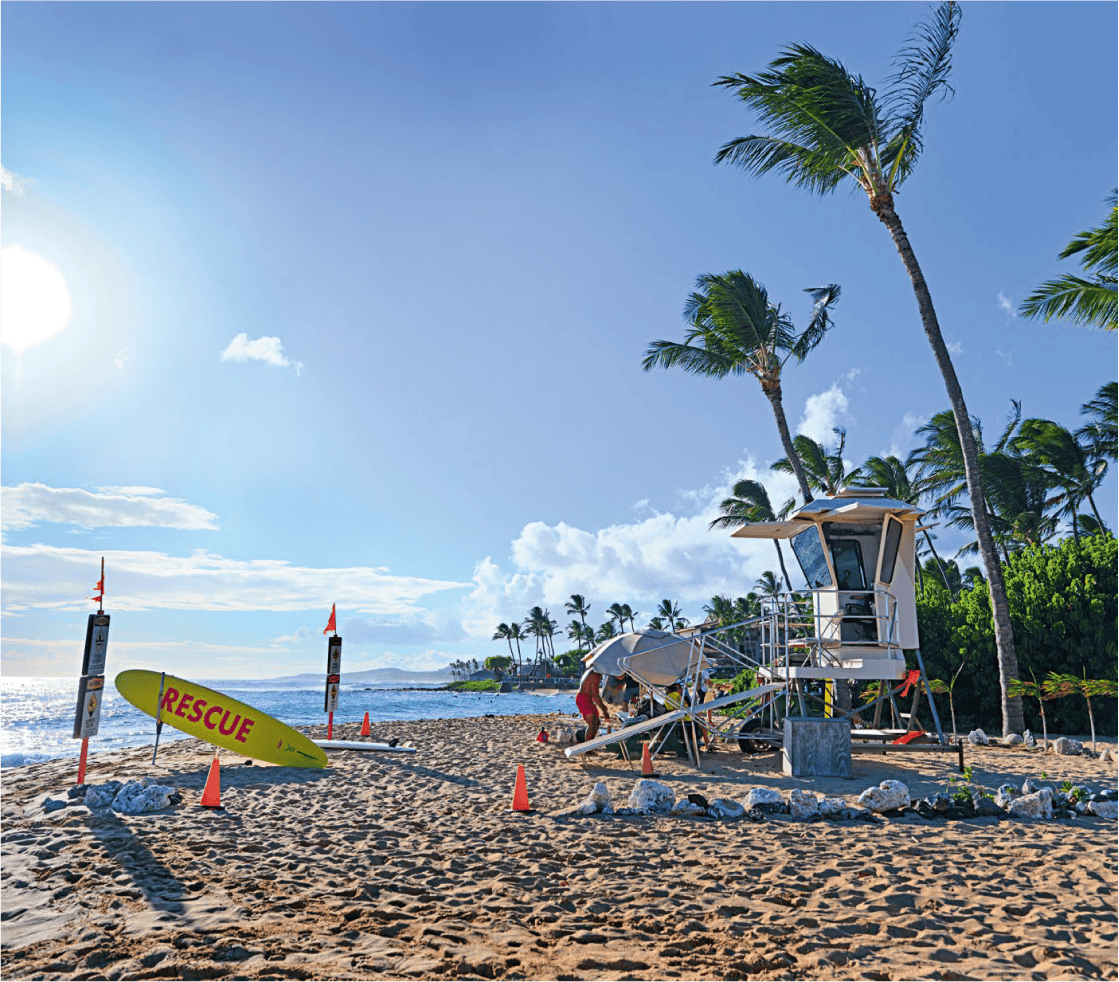
Po’ipū, a leisurely 30 minutes by car south of Lihue, has been called Kaua’i’s playground, with its pristine beaches protected by a necklace of offshore reefs.

Just one kilometre from the resort area is sailing, diving, deep sea fishing and daily boat tours from Kukui’ula Harbor.

At nearby Spouting Horn, a turbulent wave action causes surf to shoot through a lava tube and out a hole in the coastal rock. This geyser sometimes reaches heights of 18 metres and more.

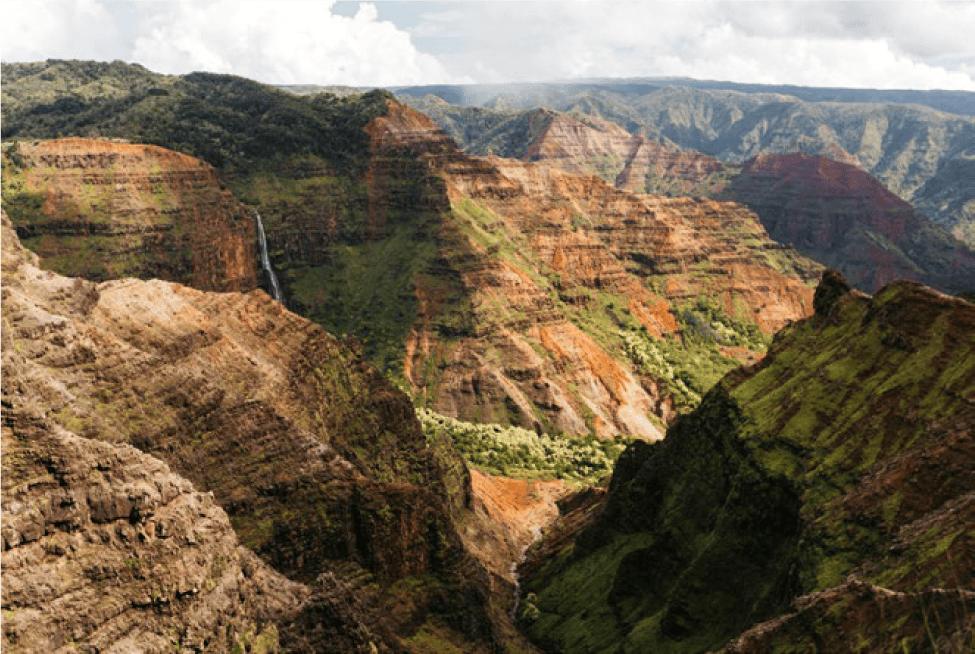
On the west side of Kaua’i you’ll find what Mark Twain called the ‘Grand Canyon of the Pacific’, Waimea Canyon, 1097 metres deep in parts, with red and green vistas punctuated by waterfalls.

North from Lihue you can stop off to take a ride on one of the flat-bottom river boats that takes you to the Fern Grotto. Further north past the Coconut Coast you pass by the turnoff to The Kilauea Point National Wildlife Refuge which shelters thousands of seabirds.

Near Princeville and Hanalei, made famous by the song Puff the Magic Dragon, is Ke’e Beach. Close by are the wet and dry caves, prominent in ancient Hawaiian myth and the start of the 17 kilometres Kalalau hiking trail.

Further south is Lumaha’i Beach the famous nurse’s beach in the movie South Pacific.

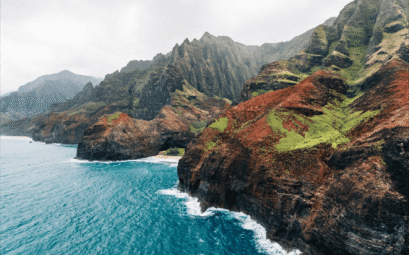
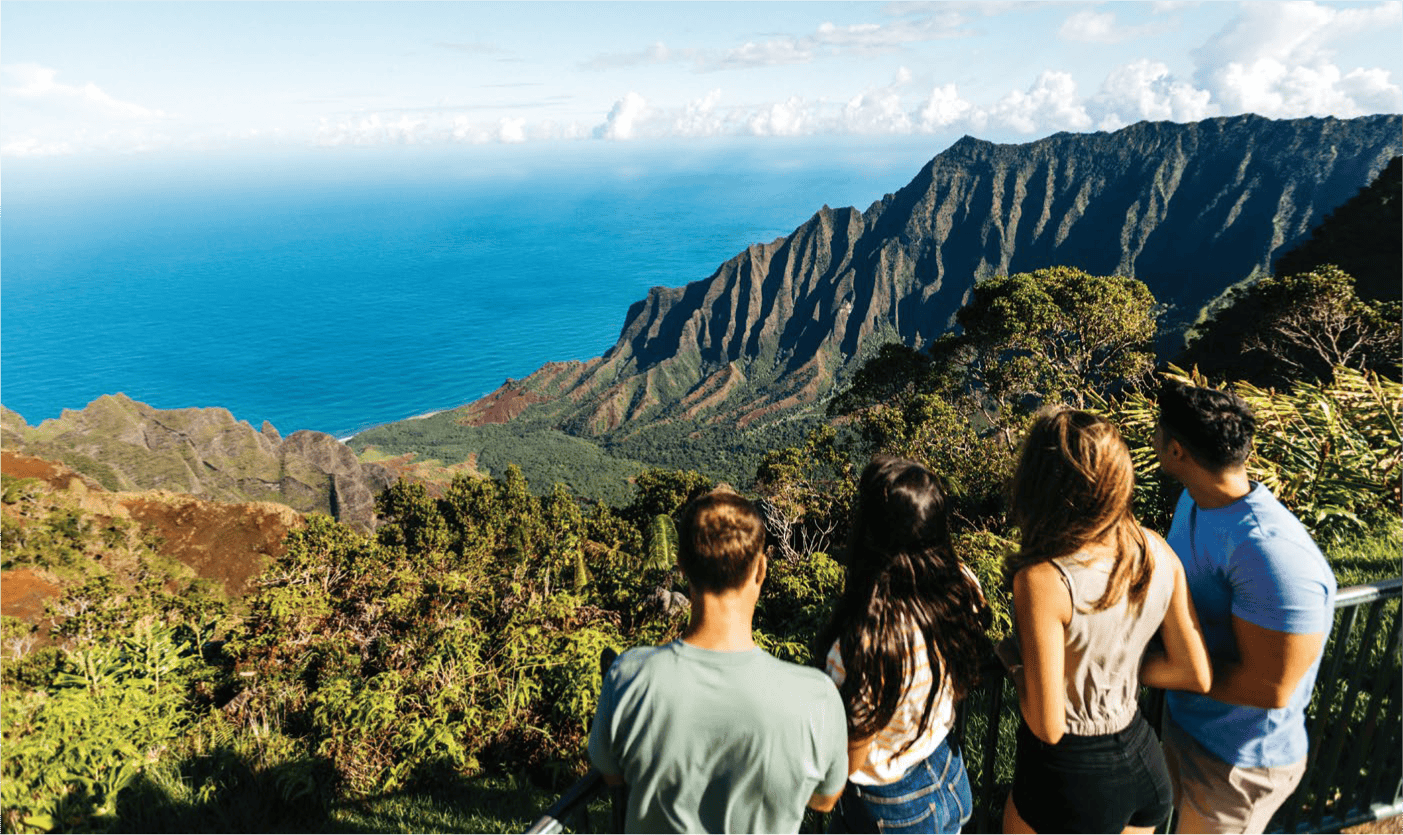
On the island’s north shore, the scenery runs riot – grey mists hang over the sheer Nāpali cliffs, waterfalls tumble into deep valleys.

Much of this region and the island’s interior cannot be reached by road, so a helicopter or fixed wing plane tour can give you a perspective otherwise unobtainable.

Kaua’i is called the Garden Island with good reason. The National Tropical Botanical Gardens in Lāwa‘i Valley and the Allerton Estate Gardens, as well as the Limahuli Gardens in the north, are among the major attractions that showcase nature at her best. Kaua’i’s diverse scenery has lured filmmakers to her shores for decades and such classics as Jurassic Park, Raiders of the Lost Ark and of course, South Pacific mean visitors can occasionally experience déjà vu.

Kaua’i is also popular with practitioners of the healing arts, giving it the reputation of being a special place for those seeking rejuvenation and relaxation combined with a taste of traditional local culture.

Hawaii

Located more than 5178 kilometres off the west coast of America, this tropical paradise of turquoise bays, white sandy beaches, lush tropical vegetation and balmy sunshine all year round, is renowned as one of the world’s most famous vacation playgrounds.

Most of the 132 islands in this beautiful archipelago are no more than tiny atolls, the summits of a chain of submarine volcanoes that stretches almost to Japan. Hawai‘i is full of contrasts and extremes and it has 11 of the world’s 13 climatic zones.

Capital and major centres
There are six major islands to visit in Hawai’i. These are Oahu, with the city of Honolulu, the capital of Hawai’i; Mau‘i, the second largest island with the world’s largest dormant volcano; Kaua‘i which is known for its magnificent scenery and vegetation; Hawai‘i Island or the Big Island where Captain Cook is buried, and the ancestral home of Hawai‘ian royalty; and Moloka‘i and Lãna‘i, located off the coast of Maui.

The people
There are 1.4 million people of mixed races living in the Hawai‘ian archipelago. Hawai‘i’s religions are as diverse as its cultural heritage. The official languages are Hawaiian and English. The diverse culture of Hawai‘i is expressed through language, music, art, theatre, dance, film and food.

History
The first inhabitants of Hawai‘i were Polynesians who arrived between the fourth and fifth century with plants and animals. Captain James Cook was the first European. He landed in 1778 to find a structured society with chiefs ruling each island. In 1920, Hawaii became a major tourist destination with the first non-stop flight from the US mainland. In 1959 it became an American state and Honolulu is now the 11th largest city in the USA.

The sights
On Oahu, see Pearl Harbor and visit famous Waikíkí Beach. Hike to the top of one of Hawai’i’s most recognised landmarks, Diamond Head, for panoramic views of Waikíkí and Honolulu. Hire a car or jump on the local bus to explore the beautiful beaches on the famous North Shore.

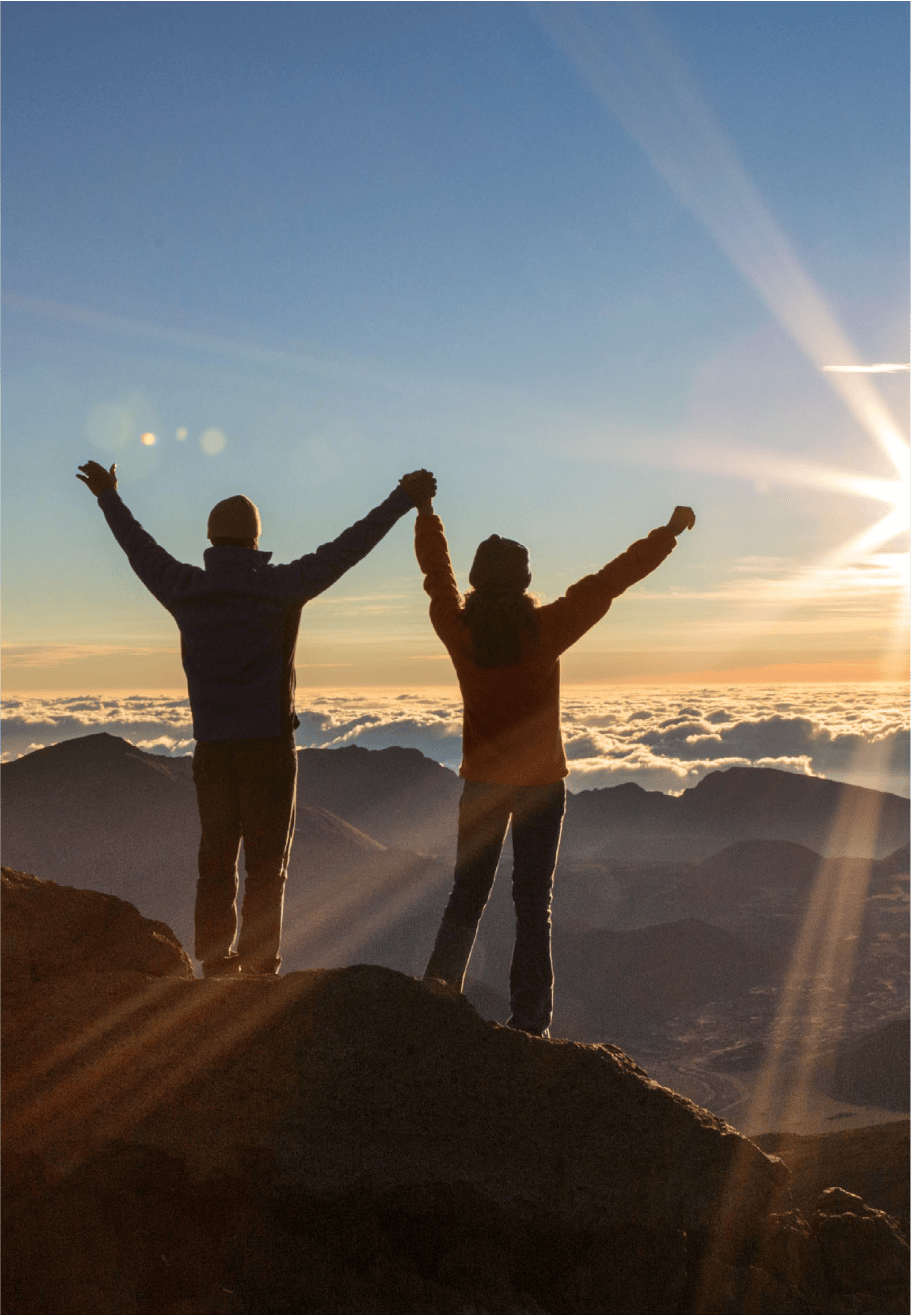
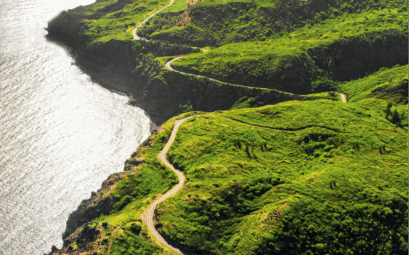
On Mau’i the main attraction is Haleakala, the world’s largest dormant volcano reaching approximately 3000 metres. The best time to visit Haleakala is at sunrise. A drive along the stunning Hana highway is also a must while on Mau’i.

On Hawai‘i Island, there is Hawai’i Volcanoes National Park and Parker Ranch, which is the third largest working cattle ranch in the US. There is also a space centre named after Hawai’i’s first astronaut, Ellison S. Onizuka. Visit Akaka Falls State Park and take a scenic self-guided walk that features two amazing waterfalls, Akaka Falls and Kahuna Falls.

Kaua‘i has Waimea Canyon and a number of magnificent botanical gardens. A sailing trip or helicopter ride along the breathtaking Napali coast is also highly recommended.

Molokai is home to historic Kalaupapa National Historical Park where victims of Hansen’s disease were exiled in the 1800s. Today, the serene Kalaupapa National Historical Park is a place of preservation and education and is only accessible by mule ride, hiking tour or airplane from the small commuter Kalaupapa Airport.

The smallest inhabited island in Hawai’i is Lãna‘i. It’s best dive spot, Cathedrals, has dramatic coral formations creating pinnacles and caverns rising from a depth of 21 metres to the surface. Kaunolu Village is an archaeological site featuring the largest surviving ruins of a prehistoric Hawai‘ian village.

Where to stay
Hawai’i has accommodation to suit all budgets, and travellers can expect to find hundreds of hotels and condos in every category from luxury to budget. Camping is available in National, State, City, and County Parks.

Getting around
If you are considering visiting all of the islands, it is recommended that you allow a minimum of three weeks. The domestic airlines, Hawai’ian, Mokulele Airlines and Island Air help to maximise sightseeing time. Helicopter sightseeing tours are popular and give you a chance to see places that may otherwise be inaccessible.

On the ground there are limousines, taxis and coaches available. Oahu is the only island with a bus service with an extensive route that covers the entire island. In addition, there is a ferry from Lãna‘i to Mau’i and from Moloka’i to Mau’i. Renting a car or jeep is extremely popular in Hawai’i, although it is not necessary in Honolulu as it has a good public transport network.

Driving is on the right-hand side and, as most islands have only one main road, it is difficult to get lost. Night driving is not quite as enjoyable, as roads between towns are not lit and can be narrow.

Hiring a bike is a great option for visitors as it allows you to get off the beaten track and visit smaller towns.

Food and entertainment
Experience a traditional Hawai’ian feast or luau, which usually includes dishes like poi, ground from the taro plant, kalua pork, an entire pig wrapped in ti leaves and baked in an underground oven or imu, poke, marinated raw fish, shellfish, or octopus, along with Polynesian-style entertainment and a hula performance.

Aside from the Pacific Rim or Hawai’i regional cuisine, which is a fusion of food and techniques from all of the countries and ethnic groups that have historically had an influence on Hawai’i, Hawai’i boasts many international restaurants serving various Asian and continental cuisines. There are also fast foods of every kind, and doit-yourself is popular as most condominiums have cooking facilities.

Activities
There is a wide range of activities for all ages including snorkelling, fishing, tennis, golf, windsurfing, sailing, and many other water-based activities including magnificent surfing. Hawai’i offers sightseeing tours, bushwalks, downhill cycling adventures, trail rides, and a range of indoor activities.

Whale watching season begins in late December and ends in early May, with peak viewing occurring between January and early April. November through February is big wave surf season on Hawai’i’s north shores.

Shopping guide
Artisans make copies of their ancient instruments made from gourds, stones, seeds, feathers, shells, lumber and bamboo. Also for sale are woven leaf hats, feather work in colourful hatbands, capes and bags, handwoven cloth, Lauhala leaves made into sandals, bags and wall ornaments. Beautiful Hawaiian applique quilts in island designs make the perfect gift.

Climate
With its warm and gentle trade winds, mild temperatures and sunny skies, Hawai’i is an ideal vacation destination throughout the year. There are really only two seasons in Hawai’i: summer from May to October and winter from November to April. The average daytime summer temperature is 29.4°C, while the average daytime winter temperature is 25.6° C.

The wettest months are from November to March, with most of the rain falling in the mountains and valleys on the windward (northeastern) side of the islands. During the winter on many north shore beaches, Pacific storms drive ocean swells towards the islands, creating The Hawaiian Islands’ legendary big waves.

Suva

Suva is the capital of Fiji and is a beautiful harbour city built on a peninsula reaching out into the sea. The city is perched on a hilly peninsula between Laucala Bay and Suva Harbour in the southeast corner of Viti Levu. The mountains north and west catch the southeast trade winds, producing moist conditions year-round.

An exciting multi-racial city, the Fijian capital was moved from Levuka to Suva in 1882 for its large, protected deepwater harbour and extensive space to grow. Much of its past still survives, for there are many small, quaint wooden bungalows and colonial administrative buildings that sit in juxtaposition to the modern offices and shopping plazas.

On Sundays it’s well worth attending church to hear the choral singing that is magnificent. Most churches have services in English, but none compare with the Fijian service at Centenary Methodist Church on Stewart Street.

A vital centre, Suva offers a great selection of restaurants including Chinese, Indian, traditional Fijian and European cuisine.

It’s also worth visiting the Thurston Gardens next to Government House, the official residence of the president of the Republic of Fiji.

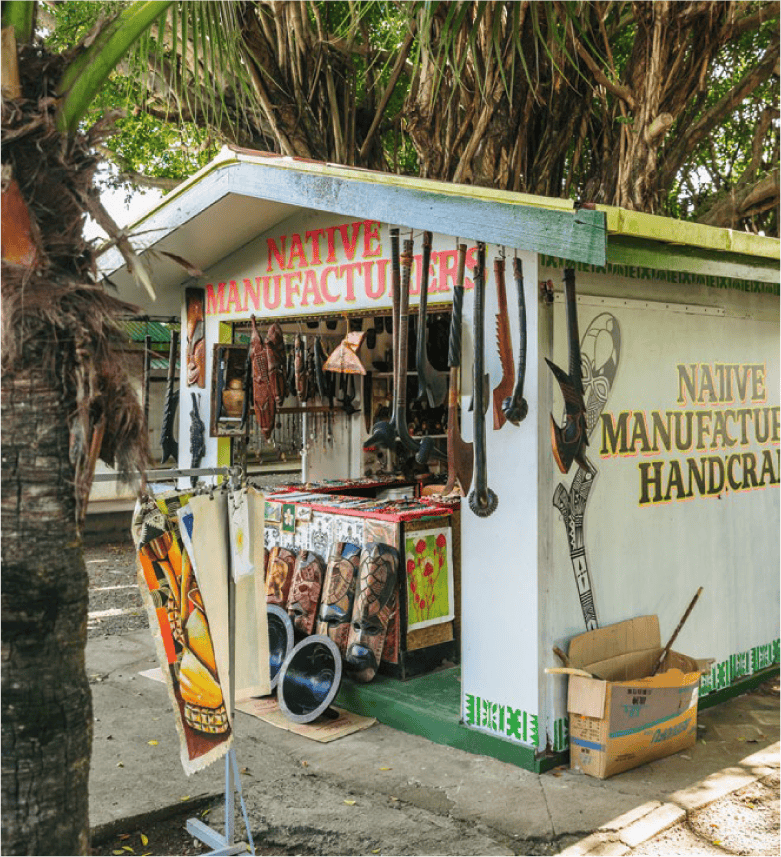
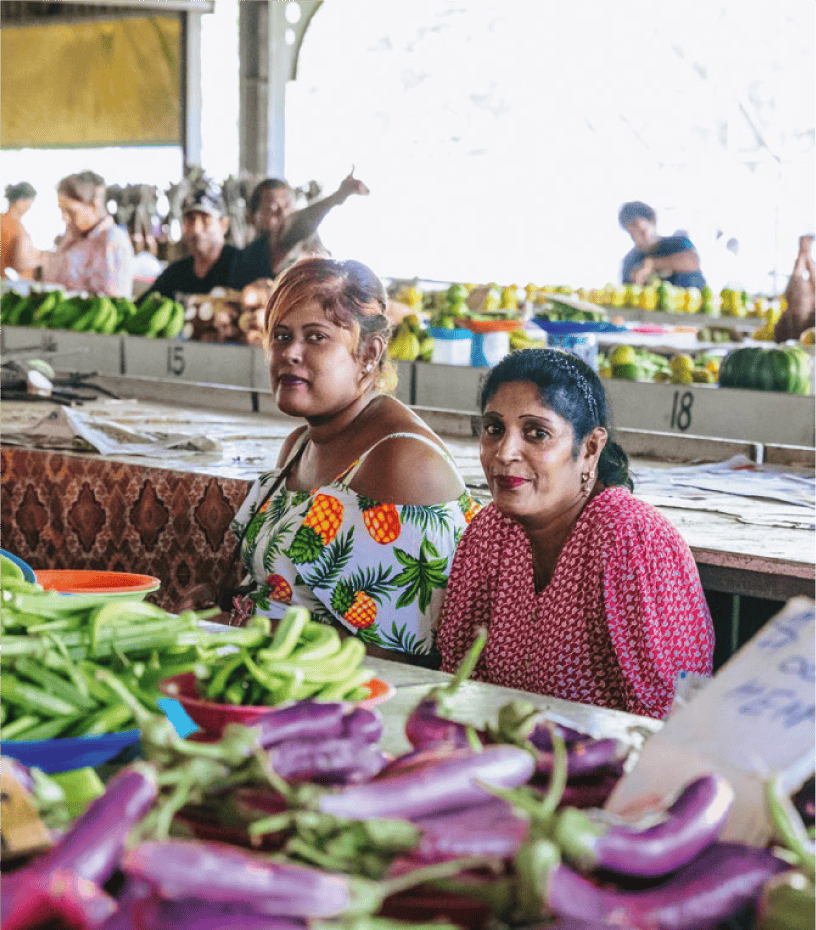
Within Thurston Gardens, the Fiji Museum – recognised as one of the best of its type in the South Pacific – holds a remarkable collection of archaeological material dating back 3,700 years and cultural objects representing both Fiji’s indigenous inhabitants and the other communities that have settled in the island group over the past 200 years. Not to be missed is the sprawling complex of municipal food and handicraft markets near the Kings Wharf that comes to life on Fridays and Saturdays. Here you’ll find an assortment of artefacts and handicrafts for sale, made by Fijians throughout the Island group.

The city is home to a large stadium that hosts top level rugby games and the University of the South Pacific campus – a tertiary educational hub for the Pacific.

Suva is best known for shopping, restaurants and nightlife at reasonable local prices compared to some of the tourism centric regions.

It is an economic, educational and regional hub for UN agencies and embassies as well as the seat of the Fijian government.

For those who like history, there’s Albert Park where Charles Kingsford-Smith landed his plane Southern Cross on his trans-Pacific flight in 1928. Across the road from the Park is the Grand Pacific Hotel, one of Fiji’s oldest hotels, that has hosted various members of the British Royal Family in the past.

Nadi

Nadi is the gateway to Fiji and sits on the western coast of Viti Levu.

Nadi has a population of more than 71,000. Because of its proximity to the Nadi international airport, it essentially caters for tourists. Facilities include accommodation, restaurants, nightlife, duty free shopping, sightseeing tours and interisland cruises.

Nadi town itself is small in comparison to the capital, Suva, but is still a bustling centre of business with around 20 hotels for all budgets dotted along its undulating coastal fringe, providing holidaymakers with everything they desire. It also acts as a gateway to other Fijian regional destinations.

The starting point for many scenic tours and sporting activities, Nadi is close to Viseisei Village, regarded by most Fijians as the ‘foundation village’ of Fijian heritage and culture. Also close by in Sabeto are mud pools, zip-lining, Rise Beyond the Reef Shed Shop, Aviva Farm and Fiji’s largest privately owned gardens, the Garden of the Sleeping Giant.

From Nadi you can visit the historical Momi gun site, bunkers and gun emplacements installed to repel a World War II invasion that thankfully never eventuated. Or embark on a cross-island hike with Talanoa Treks – Fiji’s only dedicated hiking company.

There’s also cultural dance theatre shows at the VOU Hub and an art tour at Sigavou Studios just outside Denarau Island.

There are many half and full day trips to both island and inland locations. Most island trips – both scheduled or chartered – depart Port Denarau Marina, Naisoso Marina or Vuda Marina to the Mamanuca and Yasawa Islands.

If scuba diving or deep-sea fishing is one of your hobbies, why not join one of the boats departing from the Denarau Marina at 9.30 am daily. You can choose between one- or two-day dive programs. Non-divers are catered for with snorkelling equipment.

Twenty kilometres north of Nadi Airport is the city of Lautoka, which is a major commercial and administrative centre. It is also an important seaport and home of Fiji’s Sugar Corporation, the largest sugar mill and the South Pacific’s largest distilleries. Trekking tours can be arranged to the nearby Koroyanitu National Park with great scenic views along the way.

Driving north past fields of sugarcane and the occasional glimpse of an offshore island, are the towns of Ba and Tavua. In Ba, you can visit the local markets, pick up some handicrafts and fresh seasonal vegetables or take a trip to the picturesque Navala village in the Nausori Highland, the only village in Fiji where the majority of houses are still bures.

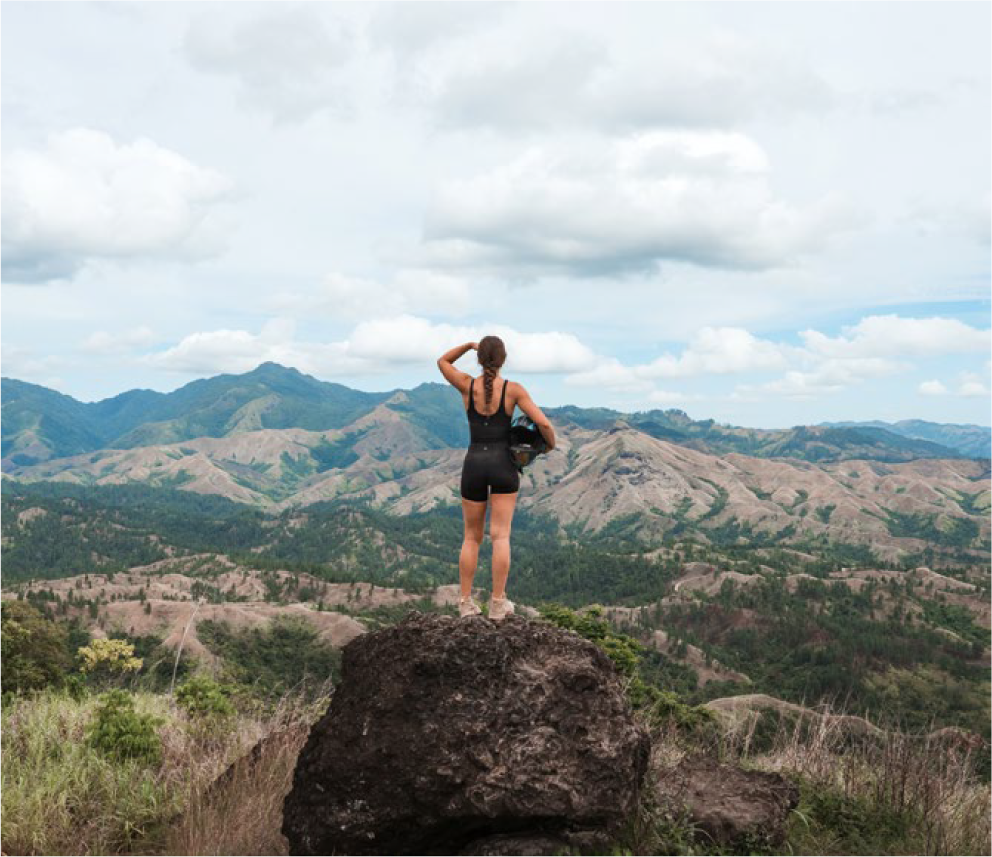
This region known as the Suncoast, is a strikingly beautiful stretch of countryside along Viti Levu’s western and northern coast with a cluster of resorts on the peninsula. This land of abundant sunshine, azure skies and dramatic grass-covered peaks is chequered with sugar-cane fields, rural villages and quaint market towns. The offshore island of Nananu-i-Ra offer great hiking, snorkelling and diving.

Mamanuca And Yasawa Island

The Mamanuca Islands lie in a majestic arc only a short distance from the coast of Nadi, curving northwest, and almost touching the Yasawa chain of islands.

There are 20 islands and they all share in common pristine white sandy beaches, waving palms, crystal blue waters and, at night, the cooling influence of the trade winds.

The Mamanuca Islands (pronounced Mah-mahnoo-tha) are essentially volcanic outcrops pushed up from the ocean floor in a gigantic earthquake thousands of years ago. Some are especially significant in Fijian folklore.

Most islands in the Mamanuca group have resorts. Malolo hosts a handful but so does Mana and Tokoriki and smaller satellite islands like Matamanoa, Castaway, Namotu and Tavarua. Each offers bure accommodation, a relaxing holiday atmosphere and a range of water activities.

There are boat excursions, fishing trips, and watersports including surfing, SUP, jet ski safaris, parasailing, kiteboarding, kayaking and coral viewing for the kids. The islands of Malolo are the centre for most tourism to and from the Mamanucas. Because of their proximity to Nadi and plethora of watersport activities, the Mamanucas have become a day tripping hub.

There is safe anchorage at Vunabaka Marina and the Musket Cove Marina, a cosmopolitan community and an airstrip. The movie Castaway was also shot on Monuriki Island in the Mamanucas.

At the southern end of the chain, Cloudbreak is a world-class wave that hosts the WSL Fiji Pro International Surf Competition. Nearby off Malolo Island, there are two floating bars – Cloud 9 and Seventh Heaven and a sandbar that’s popular with day-trippers.

The Yasawa Islands have a different ambience and are dotted with small resorts and backpackers’ accommodation. They are a chain of 16 volcanic islands and dozens of tiny islets stretching 80 kilometres in a northeast direction off the west coast of Viti Levu. They are special because their beautiful, isolated beaches, cliffs, bays and reefs and are less commercialised than the neighbouring Mamanuca Islands.

Islands in the group include Waya, the highest with amazing scenery and Tavewa, a strikingly beautiful, small island that is about two kilometres long. In 1972 Richard Evanson bought Turtle Island while others in the group include Sawa-i-Lau Island with ancient limestone caves and Yasawa Island that has small villages and a five-star resort. Naviti is the largest island while Viwa is the most remote, sitting alone 25 kilometres northwest of Waya. The Blue Lagoon movie was filmed in the Yasawas.

Top Yasawa Island activities include the Sawa-i-Lau limestone caves in the northern part of the group. You can also snorkel or dive with sharks at locations near Kuata Island or snorkel with manta rays near Drawaqa Island during the manta season (May-September).

You can also take a day trip to beautiful Kuata Island where you can enjoy a cultural cave tour, snorkel with sharks or join a conservation experience to their coral garden with marine scientists.

There are also multi-day island-hopping on a chartered private yacht or on a small ship cruise with Blue Lagoon Cruises to the Mamanucas and Yasawas with three- and seven-day itineraries that cover many of the region’s top activities.

Denarau Island

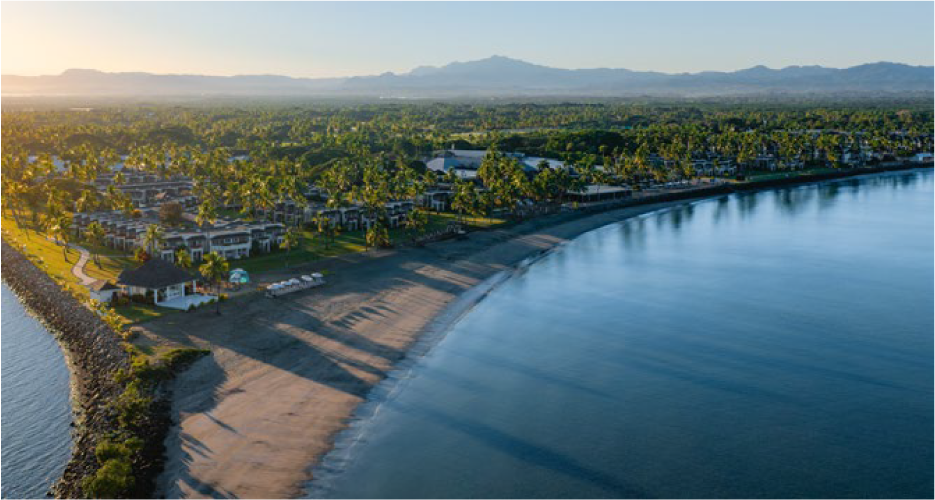
Situated on Viti Levu, the largest of the 333 Fijian islands, Denarau Island is located across a tiny causeway separating the island from the Nadi end of the mainland.

This major tourism complex is a 20-minute drive from Nadi International Airport and includes the Sheraton Fiji Resort, Sheraton Denarau Villas, Fiji Beach Resort & Spa (Hilton), Sofitel Fiji Resort & Spa, Radisson Blu Resort Fiji, Club Wyndham Denarau Island, Golf Terraces, The Palms Denarau, an 18-hole championship golf course, a golf and racquet club, waterpark and a private-berth marina.

The resorts boast ocean frontage, and the Bula Bus island shuttle runs frequent transfers between the resorts and Port Denarau, while golf carts whiz guests around and between the resorts.

Apart from offering a sophisticated hotel and residential experience, Port Denarau, with its shops and growing marina, has become a major marine transit hub for Fijian tourism. With many of the smaller islands in the archipelago primarily accessible by boat, it is now the main transfer point for the resorts off the coast of Nadi in the Mamanuca and Yasawa Islands.

Port Denarau is the principal departure point for vessels. Departing from the port are water taxis, chartered yachts and catamarans, island day cruises, multi-day island-hopping cruises and brigantines offering sunset dinner cruises.

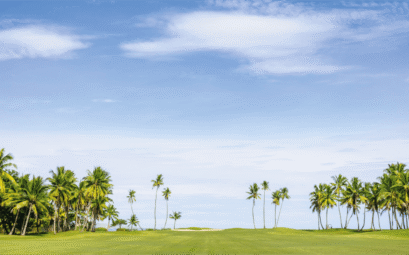
Sport is big on Denarau with the Denarau Golf and Racquet Club offering a spectacular 18-hole championship golf course. The course has been designed around the island’s extensive waterways. An impressive clubhouse comprising a pro shop and restaurant that overlooks the 9th, 10th and 18th holes. A driving range and adjacent tennis courts extend the club’s facilities. There is a yacht club and development is continuing on Denarau with other major up-market hotels under construction. Port Denarau is a commercial and retail centre, food and beverage outlets, and cultural attractions, making Denarau one of the leading integrated tourism destinations in the South Pacific.

Fiji

The Fiji archipelago comprises 333 islands, located at the crossroads of the South Pacific. Fiji’s main and largest island is Viti Levu, the next largest is Vanua Levu, and together they make up 85 percent of the country’s total land area, of which a little over a third of Fiji’s islands are inhabited.

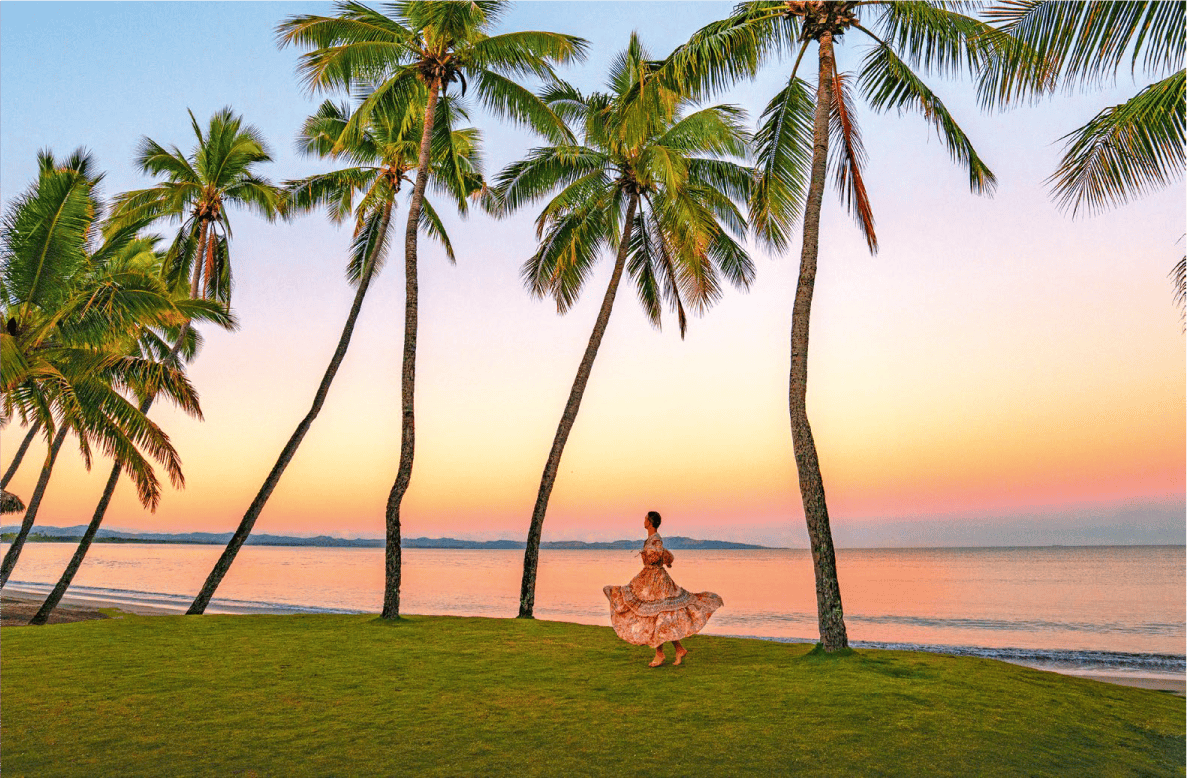
All the islands have picturesque coastlines, tall coconut palms nodding over still waters of brilliant turquoise, lagoons fringed by coral reefs and soft white sandy beaches.

Capital and major centres
Fiji’s capital city, Suva, is located on the south-east corner of Viti Levu, although most visitors have their first taste of Fiji via the international airport at Nadi, one of the other major towns on the western coast of Viti Levu. From there it is only a quick hop to one of the offshore island resorts, or less than an hour of flying time to Vanua Levu or Taveuni, the second and third largest islands. Nearby are the Mamanuca and Yasawa Islands that offer picture-postcard beautiful lagoons and beaches. The old capital of Levuka on Ovalau Island has been carefully preserved as a UNESCO World Heritage Site.

The people
Fiji is the ‘hub’ of the South Pacific, a melting pot of both the Polynesian and Melanesian races. The nation comprises of many different races and people. From 1879 to 1916, under British Colonial rule, Indians came as indentured labourers to work on the sugarcane plantations. After the indentured system was abolished, many Indians stayed on as independent farmers and businessmen. The principal language is English, however, Fijian, Hindustani, Chinese and other Pacific Island languages are spoken. Most of the population is bilingual.

Nature
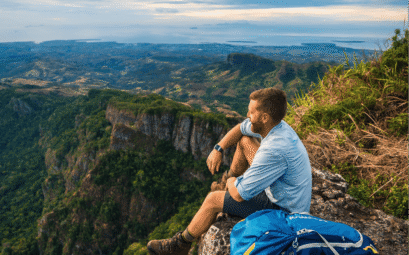
Fiji’s larger islands are volcanic while smaller islands are limestone or sand cays. Coral reefs and lagoons abound. High mountain ridges in the centre of the two main islands manipulate rainfall leaving regions with marked vegetation. The rain-drenched eastern regions are carpeted in thick, vine-covered forest while the drier, western regions showcase rolling grasslands and pine-covered hinterland. Typical coastal trees like coconuts and pandanus hug the coastal regions of every island.

Fiji’s unique land fauna includes native bats, birds, lizards and frogs. There are no large predators, and the islands are free of all serious plant and animal pests and diseases that plague other countries and endeavours to remain that way. Preserving the beautiful environment is an exercise that the Ministry of Agriculture, Fisheries and Forests takes very seriously, strictly regulating the importation of any matter that may affect the country’s plant and animal life.

The sights
A striking feature in Nadi is the Sri Siva Subramaniya Hindu temple at the southern end of town. This is the largest Hindu temple in the southern hemisphere and the traditional Dravidian architecture is rarely seen outside of India. Natadola Beach is one of the most outstanding swimming beaches on the main island of Viti Levu and only a 45-minute drive south of Nadi. A trip to the Sawa-i-Lau Caves in the Yasawas is one of the ‘must-do’ activities for travellers.

A trip to Fiji’s most picturesque village, Navala Village in the Nausori Highlands is a trip back in time. On the banks of the Ba River against the stunning backdrop of the Ba Highlands, the villagers of Navala still live in traditional thatched roof bures. Enquire with the various sightseeing tour companies that operate out of Nadi to find out more.

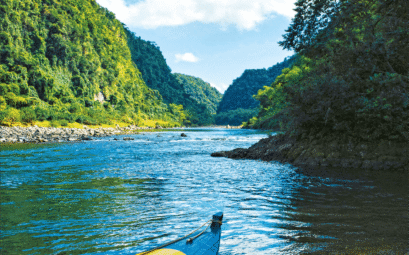
On the road from Nadi to Suva are the Sigatoka Sand Dunes, Kula Wild Adventure Park and rafting Navua Gorge near Pacific Harbour. In the capital city of Suva, the Fiji Museum in the historical Thurston Gardens stands right next to Government House with its colourful guards dressed in red tunics and white sulus. Founded much earlier than other Pacific Island museums, this national museum is unrivalled in the islands for the extent of its collection of anthropological and historical material.

Savusavu – on the island of Vanua Levu – is home to the unusual attractions of the Nakama thermal springs and Namale blowholes. Wasali Nature Reserve is an untouched rainforest with hiking trails leading to spectacular views.

Where to stay
Accommodation is prolific and there’s something for every budget from luxury hotels, boutique resorts and villas to Fijian bures with modern facilities, cottages, lodges, townhouses and apartments. Bures, based on traditional village thatched roof houses, are very popular with tourists as they provide an authentic Fijian atmosphere. The Fijian design incorporated into most hotels helps maintain the exotic ambience of this South Pacific paradise.

Food and entertainment
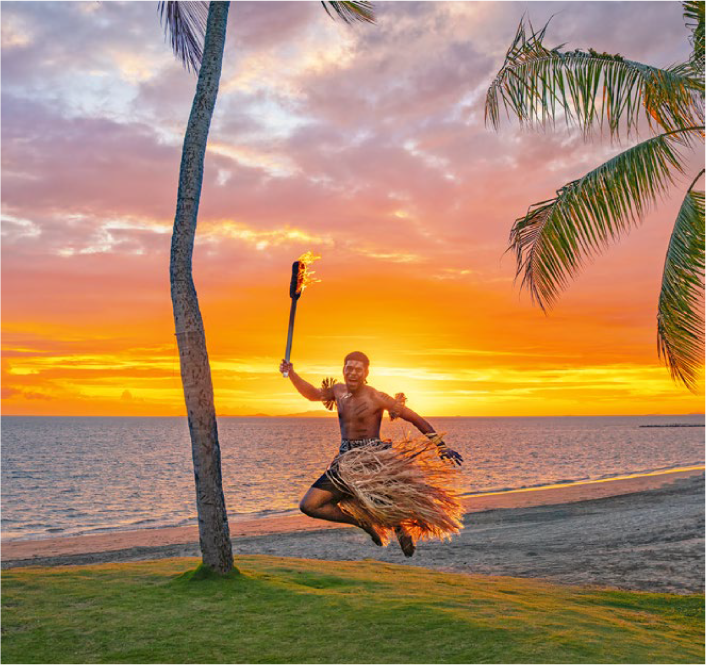
Most nightclubs, restaurants and cinemas are located in the urban centres such as Nadi, Lautoka, Suva and Savusavu, with most of the larger hotels and resorts providing their own entertainment in the form of Fijian nights that include a lovo (food cooked in an underground oven), sometimes the yaqona ceremony (kava drinking) and always a meke (song and dance).

There’s a good selection of restaurants in the major centres featuring Chinese, Japanese, Indian, French, and European foods. A number of places offer traditional Fijian cuisine that is most often seafood, cooked in lemon or coconut milk and steamed or boiled rather than fried.

Getting around
In Fiji motorists drive on the left side of the road, and overseas or international driving permits are valid for six months. There are a number of rental car agencies, an extensive local bus service on each of the main islands and deluxe coach tours. Taxis are inexpensive and predominantly metered. If you are travelling by public transport (buses & taxis), ensure that you carry local currency and that the taxi meters are turned on before you start your trip. Ferries, helicopters and seaplanes provide transportation between an extensive network of docks and airfields throughout the islands and resorts. Rideshare companies like Uber, Ola or Lyft do not currently operate in Fiji.

Activities
Fiji is renowned for the variety of activities available. Water-based activities include snorkelling and diving spectacular reefs, surfing and SUP on world-class waves like Cloudbreak or Frigates, kayaking to secluded bays, jet ski jaunts, challenging game-fishing and inter-island sailing. Land activities rival their watery counterparts for thrills with skydiving, cross-country cultural treks, canyon whitewater river rafting, river tubing, tree-top ziplining and off-road buggy adventures.

Rarotonga

Surrounded by a clear, turquoise blue lagoon, Rarotonga is 32 kilometres in circumference.

The lagoon often extends more than a hundred metres to the reef and then slopes steeply to deep water.

The reef fronts the shore to the north of the island, making the lagoon there unsuitable for swimming and watersports, but to the southeast, particularly around Muri, the lagoon is at its widest and deepest. This part of the island is the most popular with tourists for swimming, snorkelling and boating. Agricultural terraces, flats, and swamps surround the central mountain area.

Rarotonga is the main island of the Cook Islands and caters to almost 90 per cent of the country’s tourist accommodation and offers many activities. The population is approximately 13,000, mostly indigenous Cook Islands Maori and almost half living around Avarua on the north coast. The Maori ancestors landed on the Cook Islands in their magnificent, giant double-hulled canoes that are still proudly part of the traditional way of life. They were guided by their knowledge of the stars and the famous power of Polynesian navigation.

Rarotonga is a small volcanic island with a landmass of only 26 square miles. It is dotted with pretty villages, a friendly atmosphere, lovely mountain views and hiking trails. It has a reputation for excellent snorkelling off the beaches that line most of the coast. Rarotonga enjoys a climate that is warm and sunny all year round.

There is more rain and higher humidity between the summer months of December to March. The high season for tourism is during Christmas when New Zealanders and Australians visit during their summer school holidays.

Tradition and a cultural heritage are trademarks of the island. Music is an integral part of the culture and part of the islander’s daily routine. Stunning chants and hymns emanate from the churches and local string bands use a combination of electronic and traditional ukuleles made from coconut shells to entertain. Visitors will often be invited to join with the hip-swaying dancers when the music begins. Fishing, paddling, sailing, stand up paddle boarding, snorkelling and swimming are just some of the activities that abound in this tropical paradise. If you feel like more adventure, take a trip into the hinterland and experience the unique flora and fauna of the lush rainforests. Take time to listen to the legends of ancient wars and love affairs that stretch far back into an almost forgotten time.

Getting around Rarotonga is easy. With no traffic lights to be seen, relax and meander on a bus around the island. Buses uniquely travel both clockwise and anticlockwise on the road that circles the island and obliging drivers will pick-up and drop-off at will. Scooters are also a popular mode of transport.

While nurturing its culture and tradition with sensitivity and pride, Rarotonga is also very much part of the present and offers everything today’s visitors expect. Experience Rarotonga and you will not be disappointed.