Philippines

The Philippines is divided into northern, central and southern regions by the three island groups of Luzon, the Visayas and Mindanao. As many as 2500 Philippine islands are not named and the nearest neighbours are Taiwan in the north, eastern Malaysia and Brunei to the southwest, and Indonesia in the south.

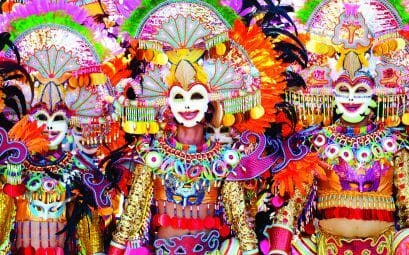
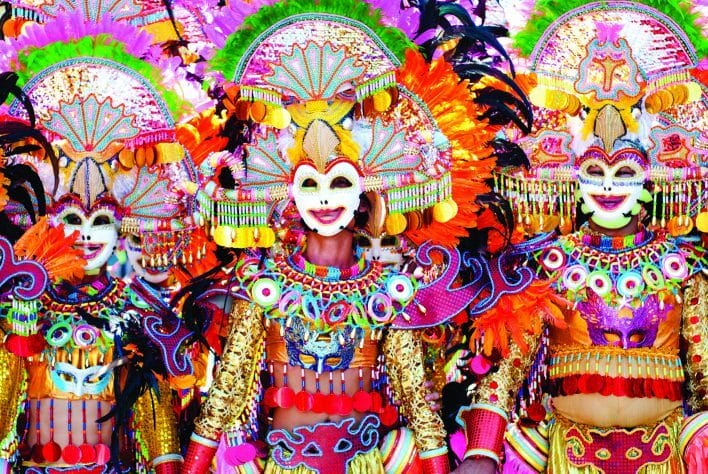
The archipelago has a dramatic and varied landscape, ranging from volcanoes to narrow coastal plains and waterways, ancient rice terraces, rugged coastlines and fine white beaches. In addition to its natural assets, the Philippines has a rich history and unique culture resulting in a multitude of festivals and celebrations.

Capital and major centres
The capital and by far the largest city, Metro Manila, has a population of more than 10 million. Located in the northern region of Luzon, it is the capital and principal centre of government, commerce and education. Baguio City is five hours from Manila, in the Cordillera Mountains of Luzon. From March to May it experiences a population surge, and during Holy Week its population has been known to triple.

Cebu City is the capital of the Visayas, at the centre of the Philippines’ major island group of 167 islands. Davao City on the lush island of Mindanao is one of the largest cities in the world in terms of landmass.

The people
The people are mostly of Malay stock with a mix of Chinese, American, Spanish and Arab blood. Most of the population claims to be Christian, and 80 percent are Roman

Catholic. Muslim communities make up around five percent of the population and most live in Mindanao and the Sulu Islands.

The two official languages are Filipino and English. Filipino is based on Tagalog, the predominant dialect from the Luzon mainland, and is used nationally to communicate among the ethnic groups. There are also seven other widely used languages and over 176 local dialects.

Nature
The Philippines has white sandy beaches, lush green forests, mountain peaks and clear blue waters teeming with marine life. The islands are a hotbed of life, with nearly 200 mammal species, 600 species of birds, and at least 400 coral species.

There are only about 100 of the magnificent haribon (Philippine Eagles) around Mt Apo, and the once abundant dugong are now rare, however, small gravity-defying geckos can be seen everywhere. The tarsier, one of the smallest primates in the world, can be found in Corella in Bohol.

The yellow flowering narra is the national tree of the Philippines. The nipa palm is seen all over the country and the orchid could also stake its claim as the national flower, with almost 1000 endemic species, including the Waling- Waling variety of Mindanao.

The sights
With more than 7000 tropical islands to choose from, the Philippines has something for everyone. The Philippines boasts some of the best dives sites in the world. Its warm waters are home to wrecks, ocean walls and reefs that are teeming with coral, small marine life and even whale sharks, thresher sharks and manta rays. Inland, mountainous interiors are the avid trekker’s and adventurer’s dream.

Boracay is arguably one of the most known beach destinations in the Philippines. During the day, strong winds make for prime kite boarding and windsurfing conditions. Come nightfall, White Beach comes alive with busy restaurants and bars that stay open til late. Away from White Beach, a quieter island beach vibe can be found for those looking for a more relaxed atmosphere.

The island province of Cebu is another popular tourism hotspot. In contrast to the bustle of Cebu City, the rest of Cebu’s 167 islets and islands are lined with serene beaches, spectacular dive spots and a diverse mix of wildlife and marine ecosystems.

Amidst lush green forests, Kawasan Falls are three waterfalls, the largest cascades from 20 metres. Dip into the inviting blue swimming holes or climb up the highest waterfall to find a more secluded spot. Canyoning trips are also offered.

The island of Bohol is also famous for its Chocolate Hills. Bantayan is perfect for those looking for a solitary beach and some quiet time and Malapascua, off Cebu’s northern tip has become more and more popular among diving enthusiasts. Monad Shoal is home to a thresher shark cleaning station, located on a plateau at a depth of 25 metres.

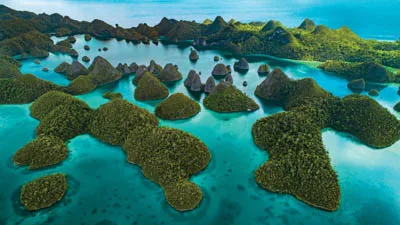
Palawan and its archipelago boasts more than 1700 islands. In the north, off the coastal town of El Nido are majestic limestone formations, secret lagoons, marble cliffs, hidden caves and waterfalls. Take a short boat ride from El Nido to Bacuit Bay in Palawan. This archipelago will thrill island lovers with imposing limestone escarpments, palm-tree-lined white sand beaches and coral beaches.

The Puerto Princesa Subterranean River National Park features a spectacular limestone landscape with an underground river. One of the river’s distinguishing features is that it emerges directly into the sea, and its lower portion is subject to tidal influences. The site also contains a full “mountain to sea” ecosystem and has some of the most important forests in Asia.

The tranquil island of Siargao is popular with seasoned surfers. Most head to the wooden pavilion on Cloud Nine for the infamous Siargao break. But waves for both experts and novices abound elsewhere on this island too. Siargao is also home to some of the most postcard-perfect islands in the country.

Apo Reef is the largest atoll-type reef in the Philippines. The crystal clear waters are home to 285 species of fish and 197 species of coral home to large fish, such as white and black tip sharks, reef sharks, jacks, tuna and even hammerhead, whale shark and manta ray.

Banaue is tucked in rugged terrain brimming with spectacular scenery, breathtaking mountains ranges, ancient pine forests, tumbling waterfalls, and fern-filled glades. It’s also home to some of the most spectacular, 2000 year old, World Heritage Listed rice terraces in the region.

The Banaue Rice Terraces of the Ifugao Province have been dubbed the eighth wonder of the world, covering an incredible 22 400 kilometres.

Sagada offers many treks, of which Echo Valley is considered one of the best. This trek includes Sagada’s famous hanging coffins. The coffins, some centuries old, belong to the Applai tribal elders and can be found in the caves surrounding Sagada. It is commonly believed that hanging the coffins higher up brings the dead closer to their ancestral spirits.

The Bicol region is blessed with beautiful rivers and lakes, mountains, tiered waterfalls and hot springs. It’s also dotted with volcanoes and home to the ethereal Mount Mayon.

Vigan is one of the few remaining 16th century towns in the Philippines known for its preserved Spanish colonial and Asian architecture.

Manila’s historical district Intramuros “the walled city” was the centre of Spanish rule in the Philippines. It was home to the Spanish colonists, their families, and their Filipino servants.

Head to Davao for a volcano that has never blown its top. Standing at 2954ft, Mount Apo is the highest peak in the Philippines. A hike up this mountain will take you through virgin forests so keep your eyes peeled for pitcher plants, orchids and wildlife that include the Philippine eagle.

Sibuan Island is a wonderland of biodiversity with animals and plants that can be found nowhere else in the world except Sibuyan. It’s also home to the 2058m Mount Guiting Guiting.

Where to stay
The Philippines offers a wide range of accommodation for all budgets. Metro Manila has everything vistors need from deluxe hotels and serviced apartments to hostels and homestays.

There are comfortable deluxe hotels in all the big cities, first-class resorts in Batangas, Palawan, Cebu, Boracay and Bohol, and Davao in Mindanao.

Shopping
Every major city in the Philippines has a shopping centre. SM Mall of Asia or SM North in Manila are two of the biggest in the world. Greenhills Shopping Centre in Mandaluyong City or Market Market mall in Taguig City are popular for bargain hunters The Divisoria area and its 168 Mall is the backbone of Manila’s buy and sell trade with an abundance of no-frills bargain-shopping.

There is an abundance of local markets with an exciting selection of local handicrafts, antiques and souvenirs

The Philippines also produces fine furniture, basketry, exquisitely crafted jewellery, and gift items made of shell, wood, and stone.

Getting around
It is possible to travel by air-conditioned bus from Manila to nearly all major destinations in Luzon, Visayas and Mindanao. The variety of bus services running are generally very economical, and departures are frequent, although buses sometimes leave early if they’re full. Making a reservation is recommended. There are more buses in the morning, as people try to beat the heat.

Roads often have potholes and it takes a while to get anywhere but hire cars, taxis and the colourful and individually decorated jeepneys are easily found. Although jeepneys are the cheapest way to negotiate the traffic, they do tend to be driven at an alarming and erratic speed and are not air-conditioned.

The elevated Light Rail Transit (LRT) system, also known as Metrorail provides the best and most efficient way to travel from Baclaran in the south to Caloocan City in the north. The Metro Railway Transit (MRT) traverses the length of Edsa and connects Quezon City to Pasay City, passing through the major arteries of Makati’s financial district.

The roll-on-roll-off (RORO) ships between Manila and the country’s major ports. To and from smaller islands, take fast sea crafts and other ferry services. Resorts also offer island hopping by banca (small, local boat), or fishermen and other locals offer their boats for hire.

The Visayas region in particular, has a robust network of inter-island boats. For commercial options, tickets are available through ticketing and travel agents.

There are also car rental and motorbike services available in major cities.

Food and entertainment
Filipino cuisine has Chinese, Malay and Spanish influences, making dining quite an adventure. Rice is the staple, usually served with meat and vegetables that are fried or sauteed.

Soups of every kind are popular, as is the delicacy, crispy pata (deep fried pork knuckle).

Adobo, stewed chicken, pork or squid pieces in vinegar, is a national dish, and inihaw (grilled fish or meat), fresh or fried lumpia (spring rolls), siopao (Chinese-style pork or chicken bun) and pancit (noodles) are widely eaten. Gata (coconut milk) is used in just about everything!

While most dishes are heavier on the meat than vegetables, the country’s vast coastlines ensure Filipino restaurants also offer an
abundance of seafood: shrimp, rock lobster, crab, oysters, squid and fish.

A wide range of international food is available from fast food outlets and fine dining restaurants. For dessert, halo-halo is made from crushed ice mixed with sweets and fruits, and smothered in evaporated milk and topped with ice cream.

For something less indulgent try fresh fruits such as mango, pineapple and papaya.
Maldives

The 1190 low-lying coral islands that make up the Maldives are so small that dry land makes up one percent of the country’s total territory. The 26 coral atoll nation is situated southwest of the southern tip of India and Sri Lanka in the Indian Ocean, extending across the equator in a north-south strip.

Capital and major centres
Male is a small, quaint capital city and the hub of the Male Atoll. This chain, comprising the old North and South Male Atolls, stretches for more than 120 kilometres from north to south, but only 10 of its islands are inhabited; some used for specific purposes. For instance, Funadhoo is an island where oil is stored; Thulusdhoo has two factories, Dhiffushi is a fishing island and Kuda Bandos is a picnic island for the general public.

Male is tiny when compared to other capital cities, however, it houses one third of the total population of the Maldives. Male is different to the other atolls in the archipelago with its high-rise buildings, paved streets and small parks dotted about the city. Seawalls surround Male and there are no beaches although an artificially landscaped beach now stretches to the new harbour in the southwest. To the west is the Alifu or Ari Atoll, in the north is the large island of Thoddu, and to the south of Alifu Atoll is the Faafu Atoll and the island of Nilandhoo. In the Laamu Atoll are Isdhoo and Gadhdhoo, both of which feature impressive ruins.

The Huvadhu Atoll is the largest true atoll formation in the world, with a huge lagoon and in the Gnaviyani Atoll is Fuamulaku, one of the most fertile areas in the Maldives.

Meedhoo is located in the southernmost atoll of Seenu and is one of the rarest naturally protected atolls in the entire archipelago.

The people
The inhabitants of the Maldives are thought to have descended from both Southern India’s Dravidians and Aryans from India and Ceylon. Dhivehi, the national language, is Indo-Aryan in origin and found only in the Maldives. A contemporary Dhivehi culture is strong, despite many foreign influences, which range from Hindi movies and oriental martial arts, to Western music and Muslim fundamentalism.

It has been an Islamic nation since 1153 AD when the king converted the entire country from Buddhism. The religion is a delicate blend of traditional and modern ideals, with women having more freedom than in other Muslim countries. English is widely spoken in Male, the capital, and on all the resort islands, and on Seenu, or Addu Atoll, where a British air base was formerly located.

Nature
The brilliantly coloured coral reefs result in the Maldivian seascape being among the most beautiful in the world. Since natural fauna is sparse, the most exciting wildlife is found under the water.

If you visit the Maldives, make sure you grab a mask and snorkel so that you can discover amazing corals and fish such as butterfly fish, angel fish, parrot fish, rock cod, unicorn fish, trumpet fish and bluestripe snapper. Other marine life includes molluscs, clams and crabs while sharks, stingrays, manta rays, turtles and dolphins may also be spotted.

While the larger, wetter islands have small areas of rainforest, for the most part plant life is limited. The most common plants include pandanus, banana, mangroves, breadfruit trees, banyans, tropical vines and coconut palms; and the main crops are sweet potatoes, yams, taro, millet and watermelon, citrus fruits and pineapples.

Tropical flowers are found in abundance and grow either in the wild or are cultivated in gardens. There are 100 species of birds, most of them migratory. Other fauna includes giant fruit bats and tree shrews, lizards, skinks, rhinoceros beetles, paper wasps and colourful butterflies.

The sights
The capital city of Male is only about two kilometres long and one kilometre wide but is neatly packed with buildings, roads and public spaces. The mosques, markets and small streets give it a charm of its own.

The National Museum houses exhibits of the sultans’ belongings and some archaeological discoveries, while the nearby Sultan Park is a pleasant place for a stroll. The imposing white three-storey Islamic Centre & Grand Friday Mosque holds more than 5000 worshippers and dominates the city’s skyline. The oldest of the 20-plus mosques in Male is the Hukuru Miskiiy, famed for its intricate stone carvings. Friday Mosque on Isdhoo is more than three centuries old and features lacquered supports, flowing calligraphy and finely carved rafters. Gadhdhoo is home to one of the Maldives’ most impressive ruins, from which rises an enormous stupenda, formerly a huge, white limestone pyramid.

The solitary and exceptionally fertile island of Fuamulaku produces vegetables and fruits such as mangoes, oranges and pineapples, which are not grown anywhere else in the country. Baa Atoll is famous for its handicrafts, which include lacquer work and finely woven cotton felis (traditional sarongs).

Where to stay
The wide variety of accommodation ranges from island resorts and hotels to modern, motel-style rooms and guesthouses, with more on offer in the high-end range. Hotel rates usually include full board. There are also yachts and yachtdhonis, specially converted Maldivian vessels licensed to sleep guests. Developed on uninhabited islands, some exclusive hotels accommodate a limited number of guests while some cater more or less exclusively to certain nationalities, notably Italian, German, French and Japanese visitors.

Some resorts have better access to specific dive sites, local villages, or Male than others and while all offer scuba diving, some are known as hardcore divers’ destinations. Bungalows equipped with modern conveniences and en suite facilities offer magnificent views.

Getting around
Transfers between the islands are by either dhoni (local boats), speedboat or seaplane. Transfers for visitors with confirmed reservations in the Maldives are arranged by the host. Taxis, private cars, motorcycles and bicycles are used for transport on the larger islands including Male and Addu Atoll. There are two companies operating regular seaplane services in the Maldives. Tourism is strictly regulated, and independent travel is discouraged as it is seen as disruptive to traditional island communities. Cruising across all atolls is now allowed with a permit.

Food and entertainment
Almost everything needs to be imported in the Maldives, except for fish, coconut and some fruit such as watermelon and banana. Fish and rice are the staple foods of Maldivians, with meat and chicken eaten only on special occasions. While there are strict local laws against the consumption of alcohol, liquor is freely available at the resorts. The local brew, raa, is a sweet liquid from the crown of the palm trunk. Maldivian men enjoy ‘short eats’ (small snacks) in the many small teahouses. Nightlife in Male is confined to these teahouses and a few Western-style restaurants. Various resorts offer weekly dances with live music from local musicians and tourists are encouraged to hire boats and attend the dances on other islands.

Activities
Seenu, the ‘second city’ of the Maldives, is the best base from which to visit traditional Maldivian island communities, while Gan is linked by causeways to the adjacent islands and a bicycle is the easiest way to get around and see village life. For those keen to learn to dive, all resort islands have schools run by fully qualified instructors, while some offer training up to professional diver level. The warm lagoon has coral gardens, turtles, shells, crustaceans and schools of brilliantly coloured fish. Trips in dhonis visit some of the best fishing grounds in the world. Night fishing expeditions for snapper and barracuda or dawn excursions seeking tuna, dolphin, fish and rainbow runners are excellent. Other pursuits include cruising from atoll to atoll in boats with bunk beds or private cabins, yachting with professional crews, waterskiing, windsurfing, parasailing, and beach volleyball.

Shopping
Male is the best place in the Maldives for shopping, and has minimum duty on most items. Best buys include reed mats and lacquered wooden boxes, woven sarongs called ‘felis’ in wide black and white stripes, Chinese ceramics, electronic items and souvenirs such as coral rings and sea shells.

Climate
It is warm and tropical throughout the year with a cooling sea breeze. The average daily temperature is between 25°C and 32°C.

What to wear
Light, informal cotton and linen clothing is recommended. Most resorts do not enforce any dress regulations. In Male visitors must wear appropriate attire and cover up.

Currency
The currency is Maldivian Rufiyaa. Credit cards are accepted at resorts, as well as with travellers cheques and tipping is not discouraged.

Sabah

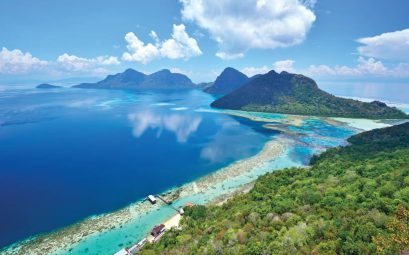
Situated on the beautiful island of Borneo, Sabah is one of the thirteen states of Malaysia.

It is the second largest state in Malaysia and shares the island of Borneo with Sarawak, Brunei, and Indonesian Kalimantan.

Sabah is richly blessed with nature’s diversity, unique cultures, fun adventures, beautiful beaches, and fantastic cuisines for the adventurous tastebuds.

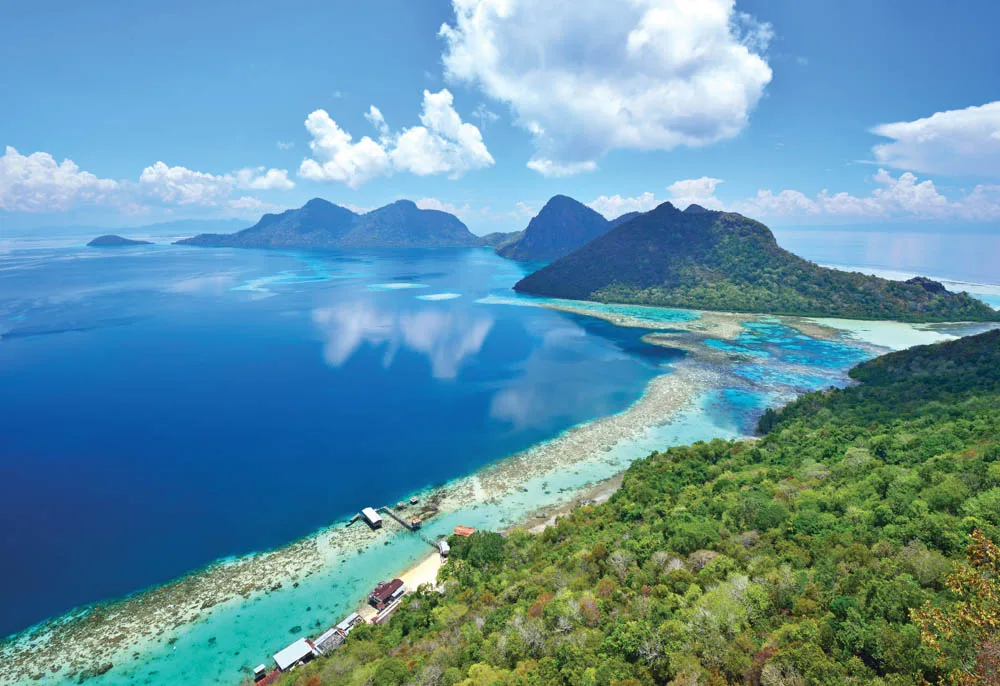
From the world’s largest flower, the rafflesia, to one of the highest mountains is Southeast Asia, Mount Kinabalu, and one of the world’s top dive sites, Sipadan Island, Sabah has it all.

Not only will you be amazed by the places to see and things to do here, you will also be treated with unique Sabahan hospitality. Explore the unique culture and tradition of Sabah and get ready to experience memories that will last a lifetime.

Traditionally, Sabah’s economy was lumber dependent. However, with the increasing depletion of natural forests as well as ecological efforts to conserve the rainforest, palm oil has proven to be a more sustainable resource. Sabah also exports other agricultural products including rubber, cocoa, vegetables and seafood. Tourism, particularly ecotourism, is presently the second largest contributor to the economy.

In the downtown area, you can get around quite easily on foot between hotels, restaurants, tour operators, markets, and the tourism office. For longer trips, taxis are readily available.

Just 24 kilometres from Tawau town is Tawau Hills Park with sprawling grounds, lush green foliage and a sparkling river. It is a popular destination for visitors who want to experience nature at its best. Enjoy the rich vegetation of the park that changes as the altitude increases. There are plenty of hiking trails with some leading to a hot spring area and waterfalls.

For a rich, cultural experience visit the Linangkit Cultural Village in Tuaran and meet the Lotud people, one of the 32 diverse ethnic groups in Sabah.

Situated in Kampung Selupoh, approximately an hour’s drive away from the heart of Kota Kinabalu, the Linangkit Cultural village offers an indepth look into the social and cultural heritage of the Lotud people.

The choice of accommodations in Sabah is endless. Sabah offers five-star resorts with the latest amenities and facilities to comfortable lodgings for the budget conscious.

They all feature Sabah’s common aspect of warm hospitality. Signature championship golf courses surrounded by serene vistas, a world-class marina for sailing enthusiasts, and endless island accommodations are just few reasons that will ensure that every moment of your holiday is lively and fun filled.

Cambodia

Angkor Wat is the world’s largest temple complex, consisting of sandstone temples, chapels, causeways, terraces and reservoirs.

Vast and awe-inspiring, it is a magnificent Hindu temple set in dense jungle, located 152 kilometres from the Thai border, at Siem Reap. The walls are covered in thousands of carvings of gods and events from classical Hindu mythology. It was abandoned in the 15th century when the people turned to Buddhism and rediscovered in 1861.

Elephant, Dangkrek and Cardamom mountains are in the southwest of Cambodia along the northern border with Thailand and the Eastern Highlands and in the northeastern corner are the three main mountainous regions. The majority of the population speaks Khmer, a non-tonal language closely related to Thai. French is the second language and English is taught in schools. Cambodia nationalities comprise of Chinese, Vietnamese and Cham Muslims. A form of Buddhism called Theravada is practiced by the majority of Cambodians, Animism and Caodaism are also practised.

Capital and major centres
Phnom Penh, the capital, has a population of around 1.5 million people and, despite its tumultuous past, its crumbling colonial architecture makes an attractive backdrop to streetside cafes and the redeveloped waterfront precinct.

Peaceful Udong, 40 kilometres north of Phnom Penh, was the capital of Cambodia between 1618 and 1866. The town of Siem Reap is only a few kilometres from the temples of Angkor.

Where to stay
International standard hotels are available in Phnom Penh and Siem Reap, and Sihanoukville is growing in popularity as the only beach resort destination in Cambodia. Facilities are being developed and the general increase in tourism in Cambodia has led to a boom in guesthouse accommodation.

Getting around
You can hire a car with a driver with taxis easily found in the cities. The tuk tuk (three-wheeled motor cycles) cyclos and motos (small motorcycles) can also be flagged down for short trips. Buses also have an effective network and they make travel to sights around Phnom Penh easier than driving. For longer trips, trains are a longer but more comfortable option. There are also boats and the most popular services operate between Phnom Penh and Siem Reap. Fast boats head up the Mekong to Kompong Cham, Kratie and Stung Treng.

Food and entertainment
Khmer cuisine is similar to Thai and there are sidewalk noodle shops, food stalls and markets. It is wise to avoid eating or drinking from street vendors. The influence of the French is manifest in the breads and frogs’ legs sold in the markets, and tea and coffee are widely available. Tap water and ‘muscle wines’ are best avoided.

There is a growing number of good restaurants, including Thai, Chinese, Indian, Malay and Western, both in the capital and in towns that attract tourists.

Activities
There are activities such as snorkelling in Sihanoukville and elephant rides in Ratanakiri and Mondulkiri, but you need a guide, as landmines, bandits, and other dangers make hiking, outdoor activities, or venturing off the beaten track, dangerous. There are many leisure activities in Phnom Penh such as go-karting, jet-skiing, mini golf and ten pin bowling. A network of national parks is being established, complete with visitor facilities; Kirirom, Ream and Bokor on the south coast are the most accessible and extremely interesting.

Nature
The number of national parks is increasing, but illegal logging has long been a problem. Parks include Bokor, on the south coast; Ream, near Sihanoukville; Kirirom, outside Phnom Penh; and Virachay, bordering Laos and Vietnam.

Endangered species which are elsewhere extinct are thought to be hidden in the more remote habitats, including elephants, tigers, leopards, gibbons, bats, rhinos and crocodiles. Butterflies, snakes and birds such as cormorants, cranes and ducks are most common.

Langkawi

The archipelago of 99 islands that make up Langkawi almost matches Singapore in land size and boasts modern amenities and infrastructure, while still retaining its traditional culture.

Shrouded in myths about ogres, gigantic birds, warriors, fairy princesses, battles and romance, it’s a natural paradise unmatched anywhere else in Southeast Asia. Its geological history dates back 500 million years and the islands contain many unique rock formations including numerous caves with stunning stalactites and stalagmites. The outstanding geological landscape and features of Langkawi led to its classification as the first Geopark, not only in Malaysia, but Southeast Asia by UNESCO, with the aim of preserving and maintaining its unique attributes through conservation and ecotourism.

The Chuping Limestone at Pulau Dayang Bunting dates back some 280 million years and it is this kind of history that makes Langkawi so spectacular. Nestled among Langkawi’s mist covered hills, limestone outcrops and lush forests are awe-inspiring waterfalls, like those of Telaga Tujuh, as well as mysterious caves and a rich diversity of f lora and fauna.

Those looking for a holiday with a difference might try jungle trekking or taking a boat trip up the rivers and around the many islands. Kuah, located on the southeastern side of Pulau Langkawi, is the capital and entry point to the islands by ferry. Kuah is a thriving centre of modern hotels and, because of its duty free status, a shoppers’ haven. A visit to the Teluk Burau Oriental Village is recommended. Designed as a new concept in resort shopping, more than 30 specialty outlets offer a diverse variety and range of brands and products which can often be purchased very cheaply, from alcohol and perfume to electrical goods and tobacco. Langkawi International Fashion Zone (LIFZ) is a prominent international factory outlet showcasing many international fashion brands, like Gucci, Versace and Hugo Boss.

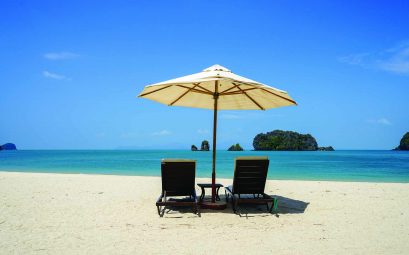
Beaches such as those of Pantai Cenang on the west coast and Pantai Kok on the opposite side of the island from the capital offer relaxation while the clear, emerald waters around the islands are ideal for watersports and recreation.

Nightlife is a special experience in Langkawi, as some of the bars are located right on the beach. Most popular nightclubs are located at the bigger resorts, however most of the local bars offer live music and performances as entertainment.

There is a wide choice of dining options, from local fare to Western and Eastern gourmet cuisines with Asian spices.

Malaysia

Geographically divided into two, Malaysia has a peninsula stretching from Thailand to Singapore, and is blessed with enchanting islands, beautiful mountains, tropical flora and fauna, as well as modern, thriving metropolises.

Capital and major centres

Malaysia consists of six major regions with Kuala Lumpur the capital city. Peninsular Malaysia’s central region is made up of the states of Selangor, Negeri Sembilan and Malacca, while the north is occupied by Penang, Perlis, Perak and Kedah. Terengganu, Kelantan and Pahang make up the east coast, and in the south is the state of Johor. The states of Sabah and Sarawak are on the northern third of the island of Borneo. Each region has unique qualities in terms of features, local culture, food and historical sites.

The people

Malaysia is a fascinating mix of ethnicities, ranging from the Malays, Chinese, Indians and indigenous Orang Asli (Original People) of Peninsular Malaysia to the diverse tribal communities of Sabah and Sarawak in East Malaysia. Although the national language is Bahasa Melayu (Malay), English is widely spoken amongst the population of around 31 million.

Nature

Malaysia has a precious collection of national parks and wildlife reserves, which have been established to protect flora and fauna unique to the region. More than 60 percent of the country is under rainforest cover, home to over 8000 species of flora in Peninsular Malaysia alone, as well as 2000 tree species. The fascinating wildlife in the country includes elephants, rhinoceros, tigers, leopards, tapirs, sun bears, orangutans and gibbons.

The designated Permanent Forest Estate covers 3.8 million hectares of virgin jungle, and more than 1.49 million hectares of conservation area. Peninsular Malaysia’s great Taman Negara National Park is one of the world’s oldest tropical rainforests. Taman Negara National Park straddles the borders of Kelantan, Terengganu and Pahang, the latter part being the most visited. Endau-Rompin, which covers the boundary between Johor and Pahang, boasts many unique and endemic varieties of plants that were discovered within the centuries-old forest. These include the magnificent fan palm, climbing bamboo and the slender stemmed walking stick palm.

Moths and butterflies of every kind, and deer and wild boar can be found in this lowland forest, one of the few remaining in Peninsular Malaysia. On the Borneo side of Malaysia, Gunung Mulu National Park in North Sarawak is one of the state’s most popular sites. It boasts an extensive limestone cave system including the largest cave chamber in the world, the Sarawak Chamberand is home to the second highest mountain peak in Sarawak as well as many plants and animal species. Kinabalu Park has the Poring Hot Springs, and Mt Kinabalu, the highest mountain in Southeast Asia. Another cave site, Niah National Park is one of the largest limestone caves in the world. On the wild side, Sepilok Orangutan Sanctuary is set in a virgin equatorial rainforest and has rare plants, animals and birds.

The sights

Kuala Lumpur (KL) delights visitors with its colonial architecture, which still manages to stand out against the shining office towers and multi-lane highways. Further south, waterfront developments are changing the face of Malacca (Melaka), Malaysia’s oldest town.

The island of Penang, the oldest British settlement in Malaysia, is one of the country’s top tourist attractions. It is renown for its beach resorts and the historical George Town, noted for its cuisine. Penang Hill offers a spectacular view of the island, and is particularly popular at dusk.

Langkawi’s archipelago offers stunning beaches and resorts, as well as myths and legends. There are also many spectacular mainland beaches such as Cherating in Pahang, where you can watch for turtles. Over on the east in Sabah, Mt Kinabalu, the Turtle Islands, Sipadan and the national parks are the main attractions. Sarawak’s capital city is ideal for travellers, with landscaped parks and historic buildings.

Where to stay

There are plenty of hotels, condos and apartments in Malaysia. There is plenty of budget accommodation such as traditional Chinese hotels and dormitory-style guesthouses that can be found in most cities. The homestay concept is still relatively new, but is a great way to learn first hand the Malaysian way of life.

Getting around

Taxis are very common in Malaysia, and although meters are often used, it is always helpful to agree on a price beforehand. For trips to airports and railway stations, purchase coupons at the taxi counter stationed at both places. Several car rental agencies offer self-drive and chauffeur-driven cars. The national KTM train runs from Kuala Lumpur to Padang Besar in the north, Singapore in the south, and up to Tumpat on the east coast. Buses are fast and economical, and seats can be reserved fairly easily.

Food and entertainment

The food in Malaysia is nothing short of fantastic. There is a choice of Chinese, Malay, Indian, Indonesian, Japanese, Thai, Korean and Western. Nyonya cuisine is probably the most famous of these fusions and is a blend of Chinese ingredients and Malay spices. Malay food uses seafood, meat, coconut and other indigenous fruits with rice.

Street stalls or hawkers are where the best local cuisines can be enjoyed cheaply. The theatrical ambience of these hawkers is like no other, with continuous demonstrations of wok tossing, teh tarik (tea pulling), the artful skill of flipping rotis (Indian bread), and barbecuing of satay sticks.

As a Muslim nation, there are restaurants offering halal food prepared in religiously approved conditions. Malaysia is famous for its wide variety of tropical fruits, including rambutans, mangosteens, jackfruit and durians. Sights of roadside vendors selling fruits and other snacks are common and the prices are usually cheaper than in supermarkets, especially when the special skill of bargaining is employed.

Although Malaysia is a Muslim country alcohol is widely available in bars and nightclubs, especially in capital cities and tourist areas. Nightlife in Malaysia is anything but boring. Kuala Lumpur offers a wide choice of nightspots with entertainment ranging from cultural shows to Western-style bars and discos. Hot spots include Petaling Street, Jalan Alor, the Asian Heritage Row, Bangsar and many neighbouring suburbs.

Activities

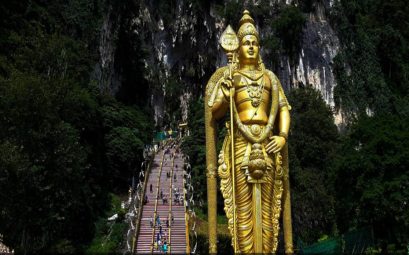
For those without much time in Kuala Lumpur, a city tour on the Hop-On Hop-Off bus is a great way to see the highlights. The huge Batu Caves will give tourists an unforgettable cultural experience. Golfing is on offer at 200 courses in diverse settings such as hill resorts, islands, beaches, cities, towns and off the beaten track.

The diving and snorkelling off Tioman Island and Redang Island is superb, both islands boast underwater caves and incredible coral reefs. Sipadan Island, off the coast of Sabah, is said to have some of the best diving in the world.

Trekking through the jungle trails of Taman Negara Park, visitors may see elephants, tigers, panthers and rhinos, although sightings are rare. A hike up Mount Kinabalu in Sabah is amazing as tourists can watch the sunrise from beneath the clouds that surround the peak.

Shopping

Kuala Lumpur is very good value, with a variety of fashionable products and handicrafts available from shopping complexes, department stores, boutiques and markets. The Central Market in Chinatown is a centre for handicrafts, antiques and art. Here visitors can employ their bargaining skills to get the best prices on ‘branded’ merchandise. There is also the Chow Kit Market, a Malay market with many roadside vendors lining Jalan Tuanku Abdul Rahman (also known as Jalan TAR).

On Saturday nights, some streets are closed to traffic and host lively night markets. Visitors should be prepared to negotiate a good price and go home with a bargain!

Currency

The Malaysian Ringgit is usually written as RM. Tipping is not expected although much appreciated.

Climate

Temperatures range from 21°C to 32°C with cooler temperatures in the hills, particularly during the evenings. The east coast, Sabah and Sarawak have heavy rainfalls during November to February. The west coast of the peninsula is wet from April to October.

Cool, lightweight summer clothing is best with medium-weight woollens at night in the cooler highland areas.

Entry requirements

All visitors need a valid passport/travel document with minimum validity of six months beyond the period of intended stay. Visa requirements vary for different countries so be sure to check.

Central Vietnam

Da Nang is central Vietnam’s largest city and is home to some extremely picturesque sites including the Ngu Hanh Son (Five Element Marble Mountains) which lie close to the sea and have caves and pagodas, and Da Nang Beach which stretches for several kilometres between Monkey Mountain and Marble Mountain.

The city of Da Nang is surrounded by the three UNESCO World Cultural Heritage Sites of Hoi An, Hue and My Son.

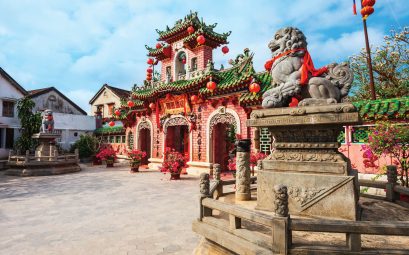
Thirty-two kilometres south-east of Da Nang is the ancient town of Hoi An, an important international port from the 17th to 19th centuries and now Vietnam’s most popular destination beyond Hanoi and Saigon. Its combination of charming heritage streets and riverside setting, bustling markets, Chinese assembly halls, Japanese remnants, quaint restaurants and cafes, and local tailors and handicraft outlets, have made it a must-see for visitors to Vietnam. It is also a rapidly developing beach resort, with a huge stretch of beach just five kilometres from the town and many modern resorts.

Outside Hoi An is My Son Sanctuary, the capital of the kingdom of Champa from the 5th to 12th centuries. From here, there’s a great view of Champa from the Mountain Church (Nha Tho Nui) which is on top of Buu Chau Hill in the town of Tra Kieu.

Hue, located approximately a 2.5 hour drive north of Da Nang, is widely regarded as the most beautiful city in Vietnam. Hue is situated alongside a large, deep river adjacent to a mountain range. Traditionally Hue was one of the country’s cultural, religious and educational centres, and was also Vietnam’s capital from the years 1802 to 1945. The city of Hue is known worldwide as an architectural treasure with palaces, royal tombs and mausoleums, pagodas, and temples all framed by the natural landscape on either side of the Huong (Perfume) River. The ruins of its huge, moated citadel contains many interesting sites, such as the Nine Holy Cannons, the Imperial Enclosure, the Palace of Supreme Harmony and the Halls of the Mandarins, although the Emperor’s Getaway, the Purple Forbidden City, was largely destroyed during the wars. The Royal Tombs are 15 kilometres south of Hue. One of Vietnam’s best beaches, Thuan An is just 13 kilometres north-east of Hue, and from here visitors can take sampan trips up the Perfume River. From Hue, tourists can go by car to visit the Ho Chi Minh Trail and the remarkable tunnels of Vinh Moc, used during the wars.

The Hai Van Pass divides North and South Vietnam. A 21 kilometre-long road over Hai Van Pass, opened at the end of the 19th century, winds back and forth to a height of 435 metres above sea level. Its name means ‘Pass of the Ocean Clouds,’ since the peak of the mountain is in the clouds while its foot is close to the sea. Hai Van is considered to be the largest frontier post in Vietnam From the top of the pass, one can admire Lang Co Beach to the north and Da Nang to the south. The curving railway through Hai Van Pass is 3200 metres long with sections running through seven tunnels. There are endless forests to the west of the pass and the ocean is to the east. Hai Van Pass is a real challenge for drivers, as well as for adventurers.

Dalat located in the Central Highlands region is renown for its relaxing, natural verdant environment. A popular tourist destination, it is probably one of Vietnam’s best-known vacation sites and is a popular honeymoon mecca. The many sites include Emperor Bao Dai’s Summer Palace and the colourful fresh food and flower markets. Picturesque crumbling French Villas from the 1930s dot the surrounding hillsides.

Nha Trang is on the south central coast of Vietnam and arguably boasts the best beach in the country. Its turquoise waters are perfect for swimming and boat trips are available to interesting offshore fishing villages and islands including Monkey Island with diving options also available.

Vietnam Halong Bay Hotels

Vietnam

Vietnam has incredible scenic beauty, featuring two main cultivated areas of the Red River Delta in the north and the Mekong River Delta in the south. It is made up of equatorial lowlands, high, temperate plateaus and alpine peaks.

Stretching over 1600 kilometres along the eastern coast of the Indochinese peninsula, Vietnam is bordered by China to the north and Cambodia and Laos to the west.

Capital and major centres
Whilst Ho Chi Minh City is the country’s largest population centre, the capital, Hanoi is the political and cultural centre of Vietnam. Haiphong is the Northern region’s main industrial centre and a major seaport, while Da Nang in the Central region, is promoted as the gateway to Indochina. Other major centres include Dalat in the Central Highlands, renown for its cool climate and beautiful mountain scenery and Kontum in the Central Highlands.

The people
Vietnam’s population is about 90% Viet (Kinh) ethnic people and the rest are 53 other ethnic groups such as Tay, Nung, Muong, Cham, Khmer, Ede, and Hoa. The native language is Vietnamese with the northern and southern dialects differing slightly from each other. Now many Vietnamese young people can also speak English, French, Japanese, Chinese, and Korean.

Confucianism, Taoism, Buddhism and Christianity have all served to shape the rich spiritual life of Vietnam, along with the indigenous religion of Caodaism. The main temple for Caodaism is in Tay Ninh city, 90 kilometres northwest of Ho Chi Minh City. It offers daily ceremonies and educational tours.

Nature
Vietnam is lush and tropical with much jungle and vegetation ranging from the green Mekong River Delta to forests containing an estimated 12,000 plant species. The country’s wild fauna is enormously diverse and includes elephants, rhinos, leopards, black bears and a variety of monkeys, birds and reptiles. Ho Chi Minh City’s zoo and botanic gardens are a delightful place for a stroll, as are the tree lined avenues in the Cultural Park (Tao Dan Park).

Food and entertainment
Vietnam offers the opportunity to sample some truly amazing cuisine. There are said to be nearly 500 traditional dishes, ranging from exotic meats such as bat and cobra, to a variety of fish, vegetables, spices and sauces. As a guide, food in the Central region tends to be spicy, while the Northern region cuisine is mild. The Southern region has an understandable accent on pepper, as Vietnam is the world’s largest producer of the spice. ‘Pho’ is the noodle soup eaten at any time of day and ‘com’ means ‘rice dish’. Because Buddhist monks of the Mahayana tradition are strict vegetarians, many dishes contain tofu, mushrooms and raw, cooked and fermented vegetables. While Vietnamese desserts such as pastry, sticky rice and beans tend to be a little sweet for foreign palates, the selection of local fruits is amazing. Try green dragon fruit, jujube, longan, pomelo, three-seed cherry and water apple. A word of warning, smoking is still allowed in most hotels and restaurants in Vietnam, so it’s advisable to get a table outside or by a window.

In Ho Chi Minh City, entertainment can be found at discos and hotel nightclubs, while bars and cafes are popular throughout the rest of the country. For a local experience, enjoy a ‘Beer Hoi’ at a road side bar. It’s cheap, refreshing and a great way to meet the locals.

The sights
Vietnam’s national parks include: Cat Ba, Ba Be Lake and Cuc Phuong national parks in the north; Bach Ma National Park in the Central region (sponsored by the World Wildlife Fund); and Nam Cat Tien National Park in the south to name a few. In 2003, another national park, Phong Nha-Ke Bang was recognised as a World Natural Heritage site by UNESCO. Phong Nha- Ke Bang National Park offers mountains that are ideal for climbing and exploring and it is also home to archaeological and historical relics along with a range of geographic attractions. The most recent to find favour with visitors is the Son Doong (Mountain River) Cave. Discovered in 2009, it is claimed to be the world’s largest cave. The other UNESCO recognised sites in Vietnam are Halong Bay, the imperial city of Hue, the ancient quarter of Hoi An and the My Son Sanctuary, the Trang An landscape complex, central sector of Imperial Citadel of Thang Long – Ha Noi, and citadel of the Ho Dynasty.

Getting around
There is a major airport serving each of the three major tourism zones: Ho Chi Minh City serves the Mekong River; Da Nang serves Hue, Hoi An and My Son; and Hanoi provides access to Halong Bay and the mountains. Travel between the three gateway cities is available by air, train and bus. Overnight travel by train or bus is a popular choice for visitors and is inexpensive and relatively comfortable. Chartering a minibus or hiring a car and driver are other viable alternatives. Cabs (some metered, some not) operate in Hanoi, Ho Chi Minh City and most of the major cities. As a rule, it’s best to avoid travelling by car in major cities during peak hour unless you are not in a hurry. Visitors can hire cyclos (pedicabs) to get around, or there is the option to travel the way the locals do and hire a motor scooter. With a population of about 95 million, it is easy to think that all Vietnamese people own a scooter. The roads are full of them. Traffic in the major cities is something that needs to be seen to be believed. Despite the vast numbers though, scooter traffic moves like water. It is constantly flowing, sometimes fast, usually slow and occasionally it will pool due to an obstacle, but then find a way to break through and move on. Walking can prove to be a bit of a challenge, as most footpaths are lined with parked scooters, left there by the locals while they shop or eat.

Shopping
Vietnam is known for its handicrafts, including lacquerware, mother-of-pearl inlay, ceramics, bamboo products, jewellery, silk goods, intricately carved statues and paintings. In Hanoi, two popular areas are Hang Gai Street and Hang Bong Street which stock embroidered tablecloths, greeting cards with traditional hand-painted silk covers, water puppets, clothing and antiques. In Ho Chi Minh City, Ben Thanh Market is a good place for shopping. (Vendors will willingly bargain but as a courtesy, do not ask the price of something unless you want to buy it.) Dong Khoi Street is an arts and crafts tourist bazaar.
Currency The currency is the Vietnamese dong. The US dollar is widely accepted and several big cities accept Euro. Traveller’s cheques are easily exchangeable in banks and credit cards.

Climate
Vietnam has three climatic zones with temperatures ranging from 22oC to 27oC. In the north, the best time to visit is between October and March. Central Vietnam is protected by the Hai Van Pass Mountains and travelling is recommended year-round. In the south, there are two seasonsdry and rainy. March, April and May are the hottest months. Lightweight clothing is sufficient for the south all year round but warmer clothing is needed during winter (November through April) in the north and in the highlands.

Indonesia

The size of Indonesia is over whelming and offers visitors a very individual experience.Whether you are shopping, visiting temples, enjoying the beaches and resorts in Bali, or venturing further to discover remote villages or the jungles of Borneo an Papua, visitors are sure to be amazed by Indonesia’s diversity.

Capital and major centres
As the nation’s centre of government, business and industry, the capital Jakarta is a modern society that reflects recent decades of remarkable economic growth. The mega city has a population of 10 million and is surrounded by the metropolitan area, Jabotabek, with a population of around 28 million.

The island of Bali, a tropical paradise and tourism hot spot, lies off the eastern tip of Java. A rich culture, beautiful landscapes, coastline and rural villages keep visitors returning in droves. The islands of Lombok, Sumba, Flores and others form a chain all the way to the easternmost province, Papua.

Sumatra, the world’s sixth largest island, is located to the west of Jakarta. The equator divides it in two just north of Bukit Tinggi. The scenery in Sumatra is amazing, offering incredible mountains, rivers and almost 100 volcanoes, 15 of which are active.

Kalimantan, the southern two-thirds of the island of Borneo, was once, and still is for the most part, a vast, jungle-covered wilderness. Boats and ferries are the main modes of transport, and the native Dayak tribe is a main attraction. The highland region of Sulawesi offers national parks, and a festive culture that includes the famed funeral festivals of Tana Toraja on the south western peninsula. Further east still, in the islands of Maluku previously known as the Moluccas, lie the fabled Spice Islands. Many of these areas are just a two-hour flight from Jakarta, and an extensive and convenient network of air services connects the major cities and towns.

The people
The fourth most populous nation in the world, Indonesia’s estimated 257 million people speak more than 500 different languages and dialects, and range from city dwellers to sea gypsies. Sixty percent of the people inhabit a mere seven percent of Indonesia’s land area on the island of Java, while most of the archipelago remains unexplored.

Nature
Indonesia has one of the world’s richest natural environments, offering an incredible diversity of animal and plant life. While a number of species of fauna are familiar to both Asia and Australia, there are many indigenous species in Indonesia such as the orangutan apes of Sumatra and Kalimantan, the giant Komodo dragons, the only ones of their kind in the world still roaming free, the one-horned rhinoceros of Java, the wild banteng oxen, tigers, and many other species now protected in wildlife reserves.

East of Komodo is the island of flowers, Flores, where Komodo dragons can be found along the west coast, the only other place apart from Komodo. Also on Flores is Kelimutu with three coloured lakes in the caldera of the volcano. These lakes change colour depending on the oxidation state of the water and go from bright red through to green and blue.

Papua, once part of the Australian landmass, has kangaroos, marsupial mice, bandicoots, ring-tailed possums, crocodiles and frilled neck lizards. Indonesia has 400 volcanoes and a spectrum of landscapes from lush green mountain slopes to warm sandy beaches; from rice fields to rain forests and mountains topped year round with snow.

The sights
The most visited islands tend to be Sumatra, Java and Bali, and there is a great diversity of landscapes and cultures in these regions alone. There are also many temples from the Buddhist and Hindu dynasties such as those in Borobudur, Prambanan and the Dieng Plateau, the palaces of the sultans in Surakarta and Yogyakarta, the Maimoon Palace of the Sultanate of Deli in Medan, and the Hall of Justice in Bali. There are remote villages, the ruins of ancient fortresses and museums, mosques and churches.

Where to stay
Accommodation in Indonesia ranges from deluxe hotels and resorts through to simple economy hotels, ‘wisma’ (guesthouses) and ‘losmen’ (rooms to let). Deluxe hotels complete with convention facilities can be found in places such as Medan, Yogyakarta, Surabaya, Bandung, Jakarta, Bali and Makassar, while Jakarta offers a good mix of elegant five-star hotels and quality three- and four-star establishments.

In Bali, accommodation is available in all price categories, in the mountains or along the beach. In Bandung in West Java two old hotels have been restored to their original art deco style. Most hotels in major towns have air-conditioned rooms, but budget hotels are very basic.

Getting around
Indonesia has a huge variety of local transport, with public minibuses found in cities and villages. Many towns have bemos, three wheeled pick-ups with two rows of seats down the side, while the bajaj is found only in Jakarta. Becaks, or bicycle rickshaws, operate mainly in the suburbs of Jakarta and Surabaya, and are increasingly being banned from the central areas of major cities.

In Bali, Yogyakarta and many other centres you can hire self drive cars, bicycles or motorbikes. Taxis are available in Jakarta, Surabaya, Bandung, Solo, Semarang, Medan and Bali. Fares are generally low, and most taxis use their meters. If you choose not to use the meter make sure to agree on a price with the driver before you set out for the destination.

Food and entertainment
As with the cuisine throughout Asia, Indonesian food is largely based on rice. Nasi goreng, fried rice with an egg on top, is one of the most popular dishes. Seafood, including fish, lobster, oysters, prawns, shrimp, squid and crab feature prominently in the Indonesian diet and the cuisine is bold, rich in flavour and heavily spiced. Coconut is also very common and is produced for its cooking oil as well as its milk and white flesh that are used as ingredients in many dishes. A rumah makan, ‘house to eat’, is generally the cheaper equivalent of a restaurant.

Markets are a good food source, especially night markets. Jakarta and Bali have a wide range of excellent restaurants offering all types of cuisine from ethnic Indonesian to Chinese, Japanese, and also Western and European fare. There’s entertainment in Bali almost every day with exhibitions of Balinese dancing either in villages or at hotels.

Entry requirements
All visitors need a valid passport/travel document with minimum validity of six months beyond the period of intended stay. Free visa entry on arrival for 30 days is now available for Australians.

Activities
Beach resorts offer sailing, surfing, scuba diving and windsurfing. Many areas are legendary for good diving, snorkelling and surfing. Of the 60-plus golf courses in Indonesia, Bali offers three of international standard, including the Greg Norman-designed Bali Nirwana Golf Course.

The more adventurous climber can tackle Mt Bromo in Java or Mt Agung in Bali for a day climb, or try more strenuous climbs such as Gunung Rinjani, the volcano that dominates Lombok. Traditional spectator sports include bull races, bull fights, rowing and unique ram fights, all held during festivals.

Silat, a martial art, is regularly performed as a dance or an exercise and is similar to karate. Camp Leaky, in the jungles of Tanjung Puting National Park in Kalimantan, is the site of Dr Birute Galdikas’ study of wild orangutans and is the longest continual study by one principal investigator of any wild animal, enabling visitors to witness the rehabilitation of these amazing primates.

On the island of Sulawesi is the impressive Lore Lindu National Park, home to over 200 species of bird, the cuscus, tarsiers, anoa (a rare dwarf buffalo) and babirusa (an animal resembling both a pig and a hippopotamus). The park has been largely untouched by tourism and offers many different treks. Within the park are ancient stone megaliths, waterfalls, hot springs and the large lake of Danau Lindu. Sea walking is a new and popular activity that allows anyone to walk at a depth of three metres along the ocean floor without carrying heavy oxygen tanks. The Sea Walker helmets permit close observation of the myriad fish and sea life Indonesia offers.

Shopping
While Indonesian cities have air-conditioned shopping centres, supermarkets and department stores with fixed prices, bargaining is customary in smaller shops and particularly in the markets. The wax-and-dye art of batik is one of the country’s best-known crafts, and silverwork, wayang puppets and leatherwork are all found in Java. Wood carvings, leather goods, paintings, clothing, bone work,bronze castings and stone statues are all available in Bali.

Beautiful furniture and homewares are for sale or made to order in Kuta, and from a number of warehouses between Seminyak and Ubud. Sumba blankets, the song-kets of Sumatra, the silks of South Sulawesi and the jumpuntan (tiedyed) items of Palembang can all be found in Jakarta.

Climate
It is hot throughout the year with daily temperatures from 26°C to 33°C with the wet season from October to April. Wear informal, light cotton clothing. In the highlands a sweater may be required. Discreet clothing should be worn at festivals, ceremonies and villages. A sarong or sash may be required for temple visits.

Currency
The rupiah is the currency unit of Indonesia. Most major foreign currencies can be easily changed in city banks, bureaux de change and large hotels. Credit cards are accepted in major hotels and restaurants.

Bali

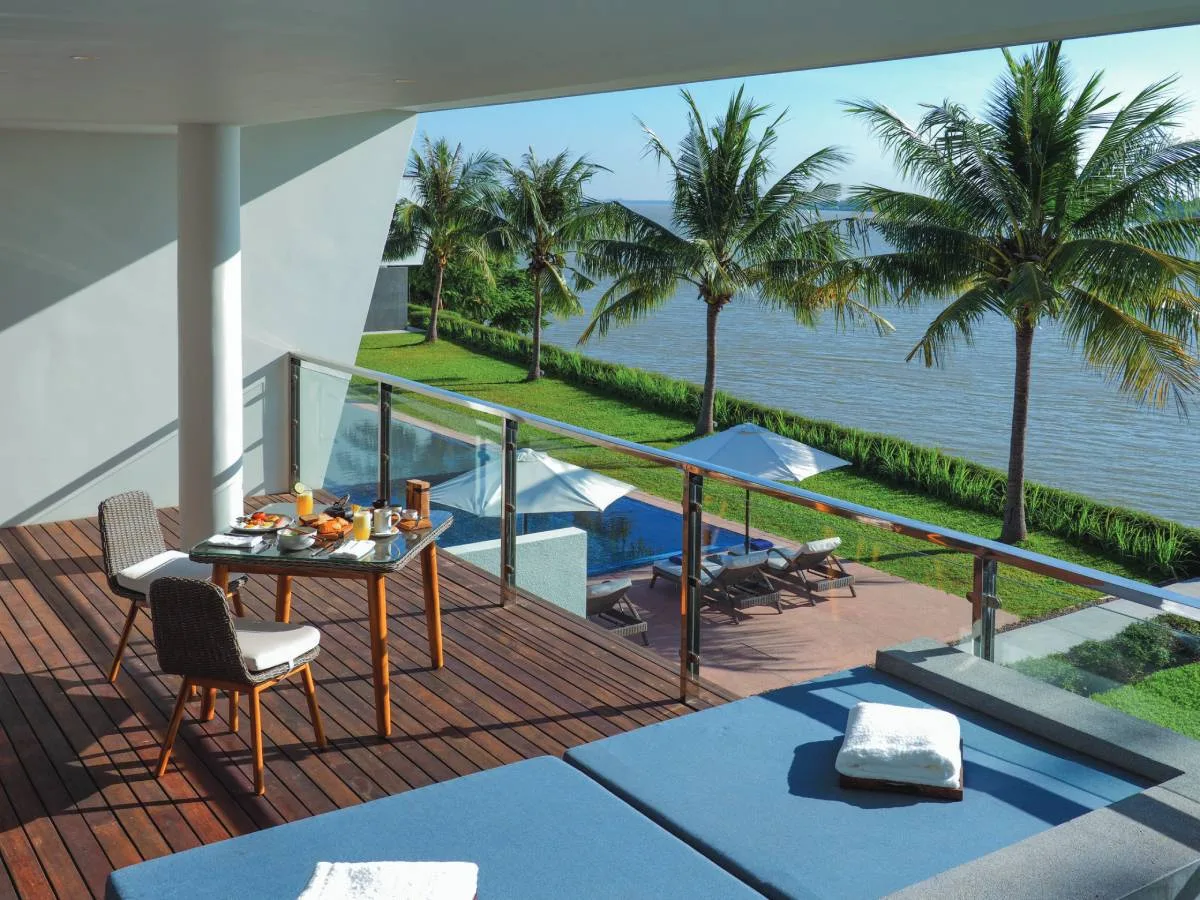
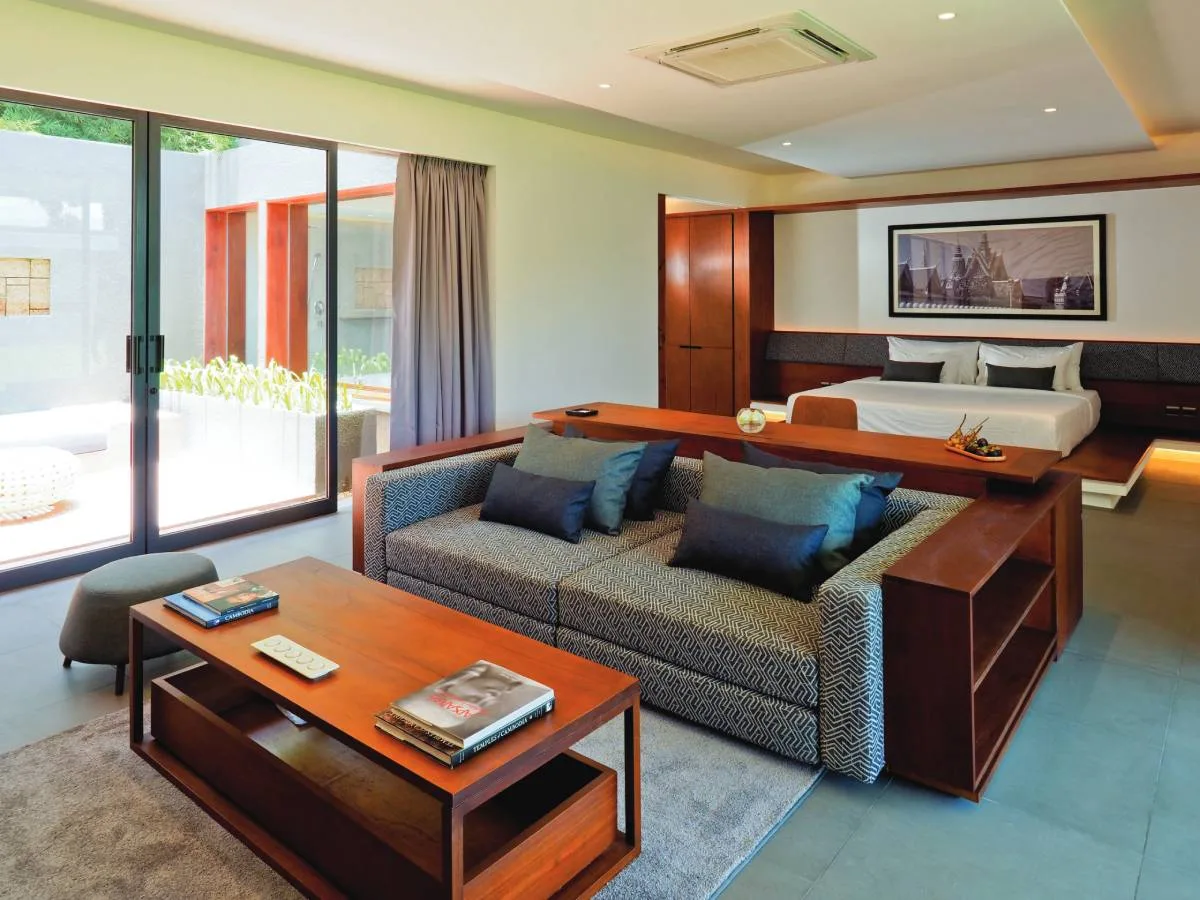
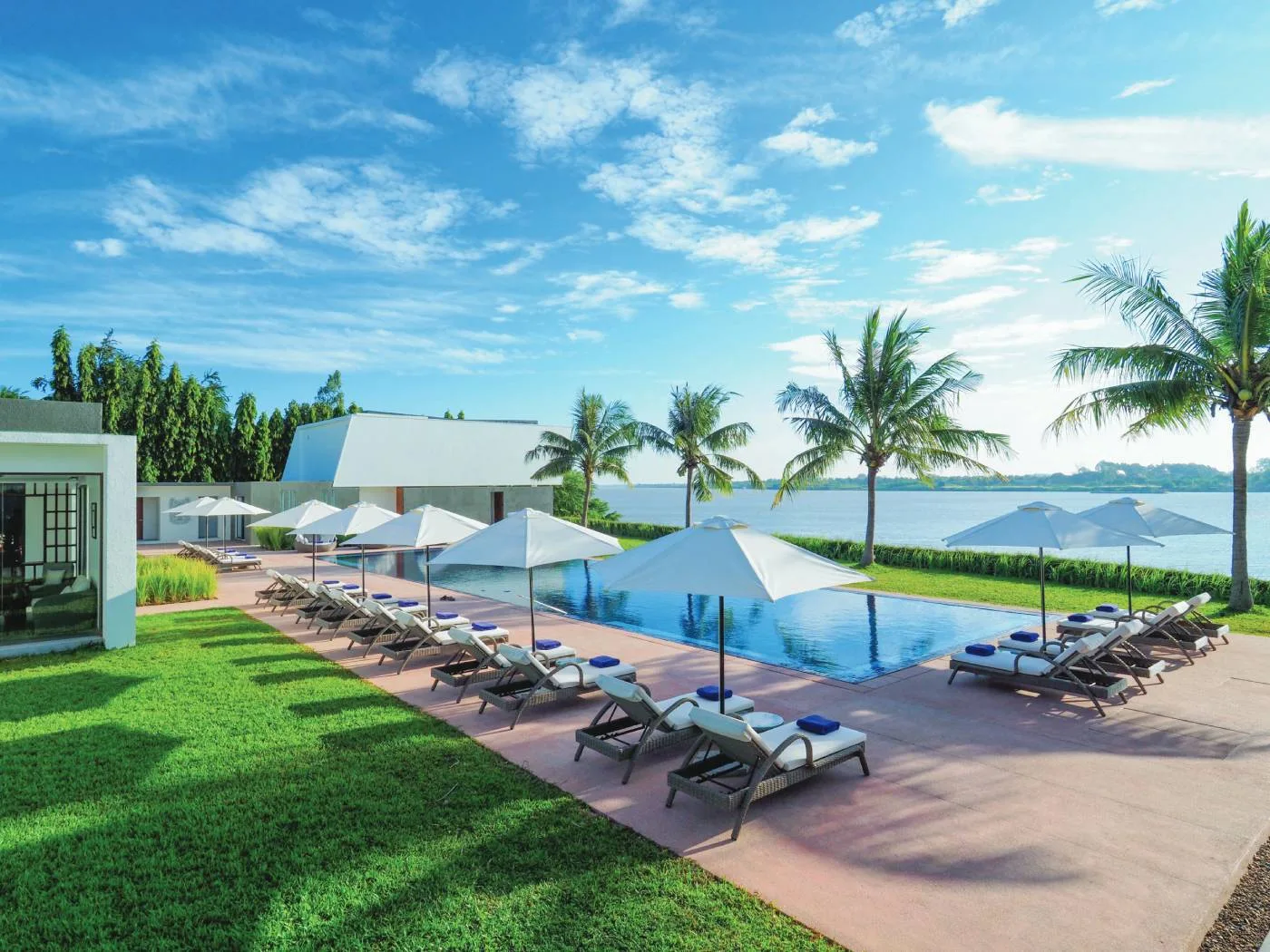
THE BALE PHNOM PENH

Cambodia

Bali is a tropical paradise with an abundance of fresh fruit always available. Bali boasts lush green forests, beautiful beaches and incredible rice paddies that spill down the sides of dramatic mountains.

It has a strong Hindu spiritual life, with thousands of temples and a rich culture of dancing, music, art, architecture, rituals and festivals.

The capital Denpasar in the south is a lively town, particularly after dark, when locals visit Pasar Badung, the biggest and busiest market on the island.

It is worthwhile hiring a car, jeep or moped, or chartering a private cab to visit the island’s villages. Among those worth a visit are Celuk, which is noted for its silver and goldsmithing, and Mas for its excellent woodcarving. Near the village of Kutri is Pura Kedarman, which has a hilltop shrine with a panoramic view and stone statue of the eight-armed goddess, Durga. Ubud, at the base of the mountains, is the cultural centre of Bali and home of much traditional Balinese dance and music. This is where most accomplished painters, dancers, musicians, carvers and weavers live and work, so there are a number of excellent museums, art galleries and shops selling quality handicrafts.

Not far from Peliatan is Goa Gajah or the Elephant Cave, carved into a rock face. Visitors enter the cave through the cavernous mouth of a demon. Also near Ubud, Tampaksiring is a small town where the most impressive ancient monument on Bali can be found: Gunung Kawi. The temple consists of 10, seven-metre high, rockcut memorials.

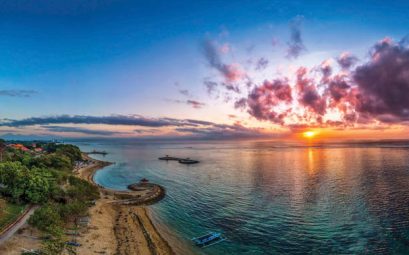
The spectacular 16th century Tanah Lot is probably one of Bali’s best known and most photographed temples. Perched on a rocky islet and encircled by the sea, droves of visitors go to see it at sunrise or, more commonly, silhouetted against a brilliant red sky at sunset. On Bali’s western tip, the Bali Barat National Park covers nearly 20,000 hectares and includes 7000 hectares of coral reef and coastal waters. The region is ideal for trekking, has outstanding dive sites and pristine beaches. East Bali has Gunung Agung, and West Bali has the Gunung Batur crater, a magnificent sight at sunrise.

Penelokan, on the edge of the crater, offers superb views of Mt Batur and down to the lake. The village of Batur used to be inside the crater, but after a violent eruption in 1917 when thousands were killed, the village was relocated onto the crater’s rim, with the village of Kintamani. Kedisan, by the lake, is the base from which you can take a boat across to Trunyan. Or walk for a couple of hours on the track around the lake to Toyah Bungkah passing through the old village of Songan. Nearly 1000 metres up the slopes of Gunung Agung is Bali’s most important temple, Besakih.

North of Denpasar is the temple of Taman Ayun in Mengwi, spacious and memorable for its moat and large grassy outer courtyard; and Bedugul, which has a leisure park at the southern end of Lake Bratan and lovely botanical gardens. It is the south of Bali that is the real tourist mecca: the areas of Kuta, Tuban, Legian and Seminyak. Kuta has an incredible concentration of shops and services, as well as Bali’s most famous beachthe only place in Bali where the surf breaks over sand instead of coral. Kuta and Legian come alive at night, with shops and market stalls selling every Balinese handicraft imaginable. Various cultural performances are staged nightly, with one of Bali’s best Kecak (traditional dance) performances to be seen in Kuta.

The increasingly busy area of Tuban is situated close to the attractions of Kuta and Legian but with a more tranquil beach. Safer swimming combined with Bali’s only watersports park, Waterbom Bali, makes it an appealing option for family holidays. Southern Bali, encompassing Nusa Dua, Sanur and Tanjung Benoa, is where most of the island’s international five-star hotels are located. Sanur has a palm-lined beach and its waters are protected by reefs making it ideal for watersports. Reasonably priced restaurants are found in Tanjung Benoa and Bualu village, and the nightlife is relatively sedate. There are other beaches at Lovina in the north, and Candi Dasa in the east. Popular activities on Bali range from surfing, scuba diving and sea walking to indulging at pristine spas or attending an exciting cooking school.

As it continues to attract an increasing number of international visitors every year, dining in Bali is very cosmopolitan yet inexpensive. Bali has amazing fresh seafood and the local lobster, sold at prices that will have you coming back again and again, is not to be missed.

A huge range of international cuisines including Chinese, Malaysian, Italian, Greek, Moroccan and Mexican, to name just a few, are available. Be sure to enjoy local delicacies such as nasi goreng and sate campur.

Bali is also recognised as a shopper’s paradise. Whether you are looking for casual or tailored clothing, locally crafted jewellery, handicrafts, antiques and artefacts or leather goods including leather coats, jackets and handbags, you will find it all at amazing prices.

Don’t forget, bartering is the local custom at the markets so have fun and get the best price you can. If you need a quieter pace, try the fixed-price department stores in Denpasar.

Bali offers every standard of accommodation ranging from modest, yet charming bungalow-style hotels nestled in lush tropical gardens through to some of the most exclusive and sophisticated hotels in the world. There is without doubt something to suit every budget.

The abundance of cultural and historical sites here makes for a fascinating holiday.