Aitutaki

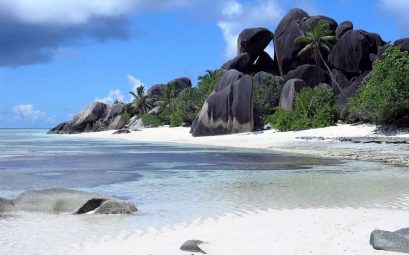
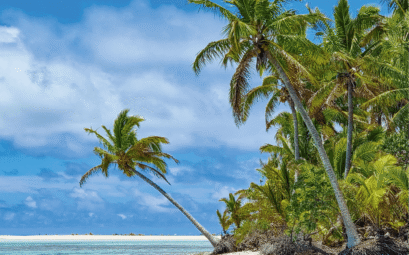
Aitutaki, the second most visited island in the Cook Islands group, is geologically part volcanic and part atoll.

Just 220 kilometres north and an easy 50-minute flight from Rarotonga, its lagoon is considered one of the most magnificent in the world.

Local legend claims that its highest hill, Maunga Pu, is said to be the top of Rarotonga’s Raemaru mountain that was chopped off and brought back by victorious Aitutaki warriors.

Polynesian myth holds that beautiful Aitutaki is a giant fish tethered to the seabed by a vine from the air. The light turquoise lagoon looks like a huge pale oyster against the vivid blue ocean.

Captain Bligh first sighted Aitutaki in 1789, only 17 days before the notorious mutiny on the Bounty. Christian missionaries followed which meant it was the first island in the Cook Islands to receive Christianity.

Today the people live in villages along the coastline and island interior. Most roads are tar sealed and transport is mainly by motor scooter, although bicycles and cars are also used to get people around.

The low rolling hills of the island are flanked by banana plantations and coconut groves.

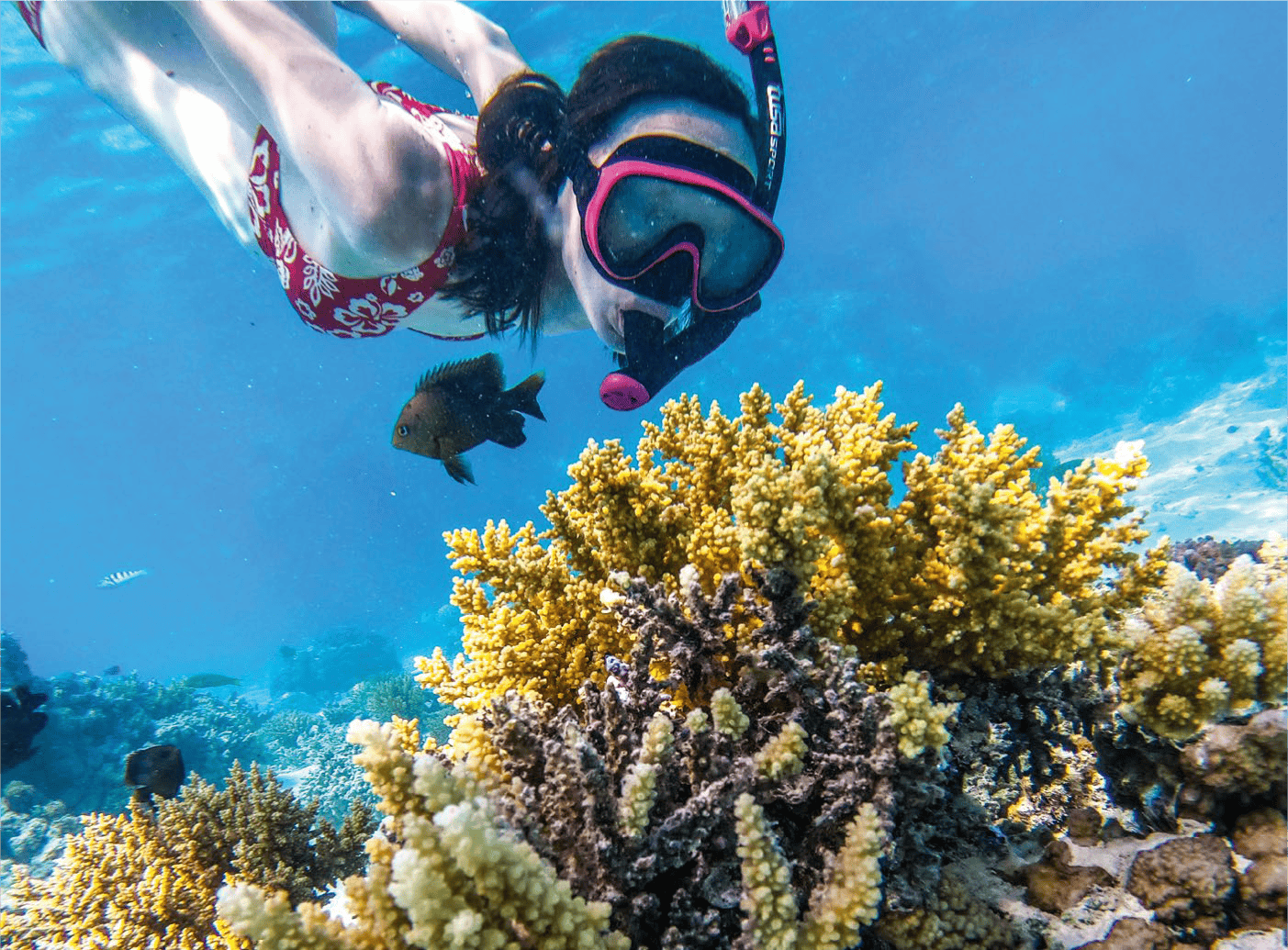
A triangular barrier reef seems to catch the exquisite turquoise Aitutaki lagoon like a giant fish hook. The crystal-clear water in the lagoon is ideal for sailing, swimming, snorkelling, kitesurfing, stand-up paddle boarding, kayaking, and scuba diving and beneath the blue surface is a world of sea creatures that will leave you fascinated. There’s also the elusive fighting bonefish which is favoured by anglers.

To reach the summit of Maunga Pu, take a leisurely half-hour walk to the west side of the island. At its peak you’ll discover a breathtaking view of Aitutaki. The shopping and business district is between Amuri and Ureia, and also clustered near the wharf at Arutanga.

Aitutaki offers a range of accommodation for any budget and there are a few restaurants and cafés on the island for your dining pleasure. Live entertainment can be found at hotels or local watering holes.

Be sure to book a full-day lagoon cruise. There will be plenty of snorkelling opportunities and you can even hand feed schools of tropical fish and see giant clams up close. Some operators offer snorkelling gear and towels and serve a barbecue lunch when you arrive on an island. During whale season (July – October) you can book a tour to respectfully swim with the humpback whales that migrate to the Cook Islands each year.


South Vietnam

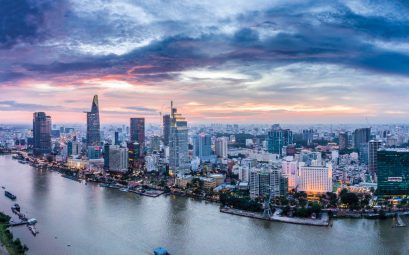
Ho Chi Minh City, formerly known as Saigon, is Vietnam’s most dynamic city. With a population of 8.6 million, its streets are brimming with shops, stalls and busy vendors with their wares spread out on sidewalks.

Popular sights include the Doc Lap Palace, the War Remnants Museum and Notre Dame Cathedral, built in neo-Romanesque style. The central Ben Thanh Market is the best for souvenir bargains and delicious street foods.

You can also visit Giac Lam Pagoda, one of the oldest pagodas in the city, and the spectacular Chinese-style Emperor of Jade Pagoda.

The flat but lusciously green Mekong River Delta is the southernmost region of Vietnam and is an attractive patchwork of rice paddies, swamps and canals. The Cai Rang floating markets are the hub of the Mekong River Delta’s fishing and farming trades. These markets appear frantic but tourists should not be discouraged. Everything on sale usually hangs off the front of each boat, and bargaining is encouraged.

A sampan boat is the perfect way to watch the Mekong River come alive, and tourists can expect to find everything from fish to jack fruit. The riverbank is dotted with stilted, wooden houses that are built right on the water’s edge.

My Tho is a quiet city, a day trip from Saigon, with an interesting central market. Take a boat trip to explore local canals and nearby islands including Tan Long, where longan orchards are found.

Further into the Delta lies the colourful town of Can Tho, the biggest city in the Mekong River Delta, with rice the most important industry. Can Tho has an array of delicious, local cuisine and photogenic floating markets nearby, and is close to the Cambodian border. Here you can also find the lively river city of Chau Doc, with beautiful sunset views from the top of Sam Mountain.

Off the far southwest coast of Vietnam Phu Quoc Island has beautiful white sandy beaches and a choice of resortstyle hotels. It is famous for its black pepper and nuoc mam, or fish sauce, as well as its pearl factories. While it is not considered a prime nightlife destination, for peace, tranquility and relaxation, it is the perfect holiday spot.

Phuket Ko Samui Ko Pha Ngan Ko Tao Holiday Beach Resort Villas

Phuket

A holiday in Phuket gives travellers the chance to escape to pristine beaches, crystalline waters, sumptuous cuisine and a pulsating nightlife.

Phuket has it all. Dubbed ‘Pearl of the South’ by the tourist industry, Phuket is Thailand’s largest, most populous and most visited island. A whirl of colour and cosmopolitanism, Thailand’s only island province revolves around and thrives on tourism but still retains a spark of the real Thailand.

Phuket has a long history. In centuries past, it was an important trading post. Two centuries ago, extensive tin mining drew thousands of Chinese labourers to the island and their influence has remained, leaving the province of Phuket with the highest percentage of ethnic Chinese in the country. The southern and coastal areas of the island were predominantly inhabited by Muslim fisherman.

Whether it’s world-class diving in the Andaman Sea, golf at the world standard championship courses or exciting eco-adventures in tropical forests, it is the place to extend your horizons. Take an exhilarating speedboat ride to the surrounding islands or enjoy a serene cruise around mystical Phang Noa Bay.

Or why not enjoy the vibrant nightlife at legendary Patong Beach with its bewildering mix of restaurants, bars, discos, live music clubs and cabarets. Inexpensive deals abound for this stunning destination and there is a wide variety of holiday packages available that need not break the budget.

Phuket is more than a provincial capital; it is also a fascinating location for enthusiastic shoppers with all kind of budgets. You will find items ranging from antique Asian art and crafts, clothing boutiques, household knickknacks to bolts of famous Thai silk with bargaining the order of the day. With its idyllic tropical weather, Phuket is a favourite with beach lovers. There are, broadly speaking, two seasons: the dry and the wet. The dry season begins in December and lasts until April, when the rainfall increases. Wet or dry, temperatures remain remarkably consistent, nestling around 30°C and always with a dash of humidity.

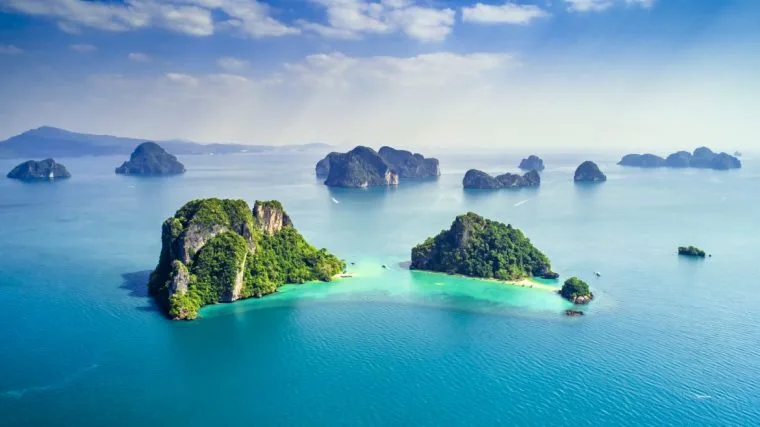
Just a 45-minute speedboat jaunt and a 90-minute ferryboat ride from Phuket are the towering limestone outcrop of the twin Phi Phi Islands.

The larger and inhabited island, Phi Phi Don attracts hundreds of visitors to stay on its lovely shores. It is paradise perfected with beautiful beaches, stunning rock formations and vivid turquoise waters teeming with colourful marine life. Without roads, there is no hustle and bustle, no reason to hurry. Longtail boats make the many secluded beaches around Phi Phi Don accessible.

The sheer limestone walls of the smaller Phi Phi Leh are dotted with caves and passages and the island’s shallow blue-green lagoons and coral gardens are a snorkeller’s paradise.

So whether you want to snorkel the day away, relax in the sun, dance ‘til dawn at a club, or indulge in Thai specialty cuisines, it’s not difficult to see why Phuket is considered the ultimate holiday destination in Thailand.

Koh Samui

Koh Samui

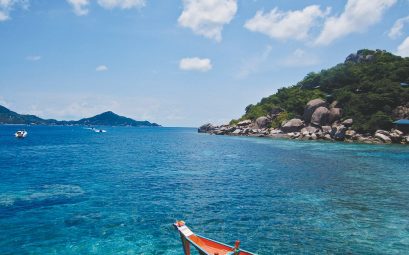
Koh Samui is an oasis of natural beauty with white sandy beaches and crystal clear water.

Roughly circular in shape, the island is the third largest island in Thailand after Phuket and Koh Chang and one of the most popular destinations for international travellers. The central part of the island is an almost uninhabitable jungle where Samui’s highest mountain, Khao Pom, peaks at 635 metres. The various lowland areas are connected together by a single 51-kilometre road that meanders mostly along the coast to encircle the bulk of the island.

The old capital Nathon is located on the southwest coast of the island and remains the major port for fishing and inter-island transportation. Nathon is the seat of the regional government and for Samui locals is the recognised commercial hub. It has a charming pace, and is almost small enough to walk everywhere. The old Chinese shophouses along the middle street whisper of an exotic history.

Although Koh Samui is in southern Thailand where Islam has a strong inf luence, the original inhabitants of the island, known as Chao Samui, are predominantly Buddhist.

In the past, most of the locals made their living in the coconut farming business. Today, however, most islanders work in jobs related to tourism because in recent years Koh Samui has developed into a popular, tropical beach resort destination. While still maintaining its unique charm, from coconut tree fringed beaches to tropical jungles and a vibrant nightlife, it has something for everyone.

Accommodations range from bungalows and villas to five-star boutique resorts and are suitable for all budgets. There are fine dining restaurants that offer a wide range of international and exotic local Thai dishes. If pampering is high on your list, there are many day spas available.

Koh Samui offers an abundance of activities including elephant trekking, canoeing, sailing, diving, golfing, fishing, cycling and almost anything else you can think of! Nature lovers will find it a paradise of waterfalls, temples and jungles. There is a butterf ly garden, aquarium, tiger zoo, monkey theatre, snake and crocodile farm to visit. Day tours to the neighbouring islands of Koh Phangan, Koh Tao and the Angthong Marine National Park are also highly recommended.

With direct f lights to Samui Airport from Bangkok, Singapore and Hong Kong as well as ferry services from Suratthani, Koh Samui is conveniently accessible.

Koh Samui boasts many popular beaches including Chaweng and with its white sandy beaches, coral reefs and coconut trees it is easy to see why travellers from all over the world make it their preferred holiday destination.

Modern Commercial City (Bangkok)

Central Thailand, Bangkok & Hua Hin

From bustling cities, serene temples and beautiful relaxing beaches, Central Thailand has something for every traveller.

On the fertile plains stretching north from Bangkok are 21 provinces, sometimes called ‘the rice bowl of Asia’, that are responsible for producing much of the country’s rice.

Ayutthaya was one of the greatest mercantile centres in Asia and its incredible temples and palaces are built around the confluence of the Chao Praya, Lopburi and Pasak rivers. Hundreds of visitors on day trips from Bangkok are drawn to the remains of monuments that stand among more modern buildings.

At Kanchanaburi is the infamous River Kwai bridge and ‘Death Railway’, the Japan-Burma railway built by the Japanese during World War II, when thousands of Asian labourers and Allied POWs died. Nearby are two war cemeteries, Kanchanaburi War Cemetery and Chong Kai Cemetery and the JEATH (Japan, England, Australia, Thailand and Holland) War Museum is housed in a reconstructed POW detention hut.

Bangkok
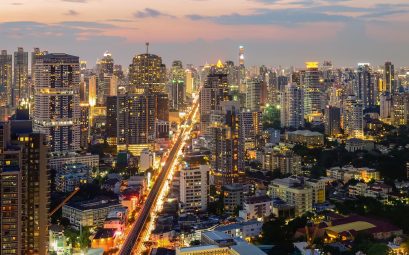
Bangkok is a thriving, bustling capital city catering to all kinds of tourists. Taxis or minibuses take visitors directly to their hotel via the convenient new expressway.

Bangkok proper seethes on the east side of the Chao Phraya River and can be divided in two by the main north-south train line. Old Bangkok glitters in the portion between the river and the railway and it is here that most of the older temples and the original palace are located while new Bangkok is east of the railway

For a bustling city, Bangkok surprisingly offers quiet escapes. Step out of the street noise and into the calm of one of the city’s 400 temples and monasteries. The Grand Palace and Wat Phra Kaeo complex is the city’s premier tourist attraction and home to Phra Kaeo, the small, sacred and renowned emerald Buddha, the most revered image of Buddha in Thailand.

The Grand Palace is a must-see for visitors, with temples and pavilions shimmering in gold leaf, porcelain and glass while not far away is the Marble Temple, considered one of the country’s most beautiful buildings.

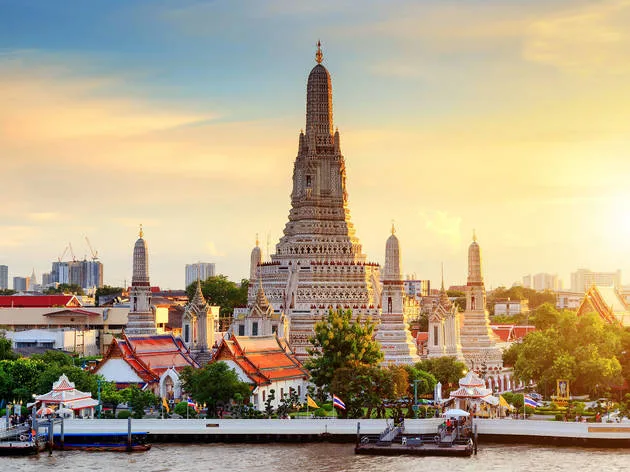
The Dusit Zoo is near the Royal Plaza, where the Thai royal family live in the Chitralada Palace. Wat Arun, or the Temple of Dawn is one of the city’s major landmarks with its central monument symbolising Hindi-Buddhist cosmology.

The Temple of the Golden Buddha houses a unique, gleaming, 18-carat gold, four-metre high, 13th century Sukothai Buddha.

Other sights include the Wat Sai floating market in Thonburi, a boat trip through the city’s extensive network of canals, and the renowned Oriental Hotel. For a shopping indulgence, head to central Bangkok’s Siam Square. This bustling shopping mecca is littered with alleyways jam packed with cheap, independent designer boutiques as well as numerous major shopping malls.

Hua Hin
Hua Hin is a favourite coastal destination for Thais who flock there to enjoy its beaches, multicultural buzz and numerous cafes and bistros that offer a wide range of cuisine. It is situated in the southwest of Bangkok and is recognised as Thailand’s first beach resort and extends some kilometres to a headland where Buddhist temples cling to the cliffs. Powdery white sand, resort hotels lining the coastline and visitors enjoying numerous watersports give the beach town its distinctive ambience.

Stunning Khao Sam Roi Yod National Park, 45 kilometres south of Hua Hin is one of the best-managed protected areas in the country. Kaeng Krachan National Park, northwest of Hua Hin, is Thailand’s largest protected area and is home to elephants, tigers, leopards, gibbon and many species of birds.

Thailand

Situated midway between India and China in a fertile monsoon belt, Thailand shares its borders with Myanmar (Burma), Laos, Cambodia and Malaysia. Its east coast is on the Gulf of Thailand and the west coast on the Andaman Sea.

The country is divided into four main regions: the Central Plains of the Chao Phraya River; the region of the northeast plateau; the fertile valley and mountains of Northern Thailand; and the rainforested southern peninsula. Each region has its own topographical identity and subtle differences between both the people and dialects.

Capital and major centres
It is worth enduring the inevitable traffic jams, pollution and humid weather to experience Bangkok, easily one of Asia’s most exciting cities. Known in Thai as Krung Thep, the ‘City of Angels’, Bangkok is the spiritual, symbolic and geographical heart of Thailand, and home to nine million people.

Chiang Mai is Thailand’s second largest city and an ideal base from which to explore the mountains and villages. The region is famed for its many fine temples and handicrafts. Ban Chiang, found in the northeastern province of Udon Thani, is most fascinating for its archaeological site which was discovered by accident in 1966. Artefacts on display are thought to date back to around 3600BC. Khorat, or Nakhon Ratchasima, was part of the ancient Khmer empire, and is today a rapidly expanding business centre.

Along the east coast, on the Gulf of Thailand, lies Pattaya, which offers many beaches and is popular with families. On the sunrise coast of the Gulf of Thailand are Cha-am and Hua Hin. The former has experienced a dramatic surge in popularity since the mid-80s and catering mainly for Thais, its quiet village atmosphere has become a lot livelier. Nearby Hua Hin was Thailand’s first beach resort and in the 1920s was a popular retreat for minor Thai royalty. Nowadays the King and Queen reside here when they’re not in Bangkok.

Further south along the east coast, beautiful Koh Samui is covered with coconut plantations and circled by palm-fringed beaches. The twin Phi Phi islands in Krabi are famed for their unusual and spectacular landscapes, while the country’s largest island, Phuket, lies in the Andaman Sea off the country’s southwestern coast. All of these places are popular tourist destinations.

The people
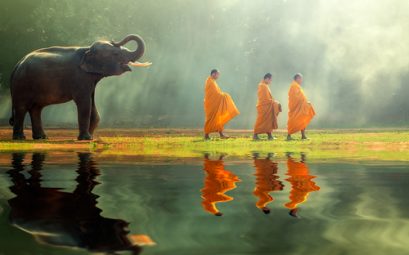
The majority of Thailand’s 68 million people are concentrated in the fertile Central Plains and in the capital, Bangkok. An easygoing people, Thais are known for their tolerance of other cultures and friend liness to visitors. Thai people will be offended only if there is any perceived disrespect to the king or Buddhism. Constitutional since 1932, the monarchy is revered almost as much as when kings were chakravartin, or ‘lords of life’. Buddhism is the dominant religion and orange-robed monks and gold, marble and stone Buddhas are common.

Nature
One-quarter of Thailand is covered by monsoon forest or rainforest, and the country has an incredible variety of fruit trees, bamboo and tropical hardwoods. National parks and wildlife sanctuaries cover 11 percent of the country and contain more than 850 resident and migratory species of birds and dwindling numbers of tigers, leopards, elephants and Asiatic black bears.

The sights
The Chao Phraya River, ‘river of kings’, is Thailand’s most important waterway, draining some of the country’s fertile rice growing land, and providing another means of travel in Bangkok. A few kilometres inland from Bang Saen, a beach resort popular with Bangkok residents, is the Khao Kheow Open Zoo, which has more than 50 wildlife species roaming its spacious, semi-free enclosures. Stretching north from Bangkok are the picturesque Central Plains with their checkered patterns of green rice paddies. In the heart of this region is Ayutthaya, the nation’s second capital. Buddhamanthon, a Buddhist park, lies on the western edge of Bangkok.

Featuring a 16.25-metre statue of Buddha, the park commemorates the 2500th anniversary of the religion. Further west is the world’s tallest Buddhist monument at Nakhon Pathom. Not far from there is the infamous Bridge over the River Kwai as is the newly popular “Tiger Temple” or Wat Pha Luang Ta Bua. South from Chiang Mai are the numerous ruined temples of Thailand’s first capital, Sukothai, founded in the early 13th century. Further north from Chiang Mai is teak country where elephants used to work in the forests. Elephants can still be seen displaying their forestry skills at several training camps.

Chiang Rai is a good centre for exploring the far north where visitors will find stunning jungle covered mountains, hilltribe villages, and Doi Tung, a mountain where Her Royal Highness the Princess Mother has a hilltop palace.

Where to stay
While Bangkok offers some of the most superb hotels in the world, Thailand and its capital have a wealth of accommodation options, from luxury and reasonable resort accommodation to simple comforts on islands or beaches. There are also bungalows, guesthouses and more basic native style hotels in regions such as Chiang Mai.

Getting around
Bangkok is possibly the world’s most congested city, and its traffic jams and pollution are notorious. It is, however, very easy to find transport of all kinds, including riverboats, public buses, limousines and tour buses run by hotels, as well as taxis, colourful tuk-tuks and samlors (bicycle rickshaws) that are found throughout the country. Songthaews, vans with two rows of seats in the back, are more common than city buses outside Bangkok and run popular routes for set fares. The Bangkok Metro (BMCL-Subway) operates every day from 6am until midnight every five minutes during peak hour and seven minutes in off-peak times. It is clean and extremely efficient. The BTS Skytrain covers much of the central city and its many commercial, residential and tourist areas. It gives the added bonus of seeing the city from a bird’s eye perspective.

Food and entertainment
Renown for its quality and diversity, Thai cuisine is as much a feast for the eyes as the stomach. And while eating for most Thai people is an informal, social activity, even the simplest of dishes are served with a carved carrot flower or spring onion tassel, and sometimes fruit and vegetable sculptures. Meals are rich and spicy, and seafood, including crab, fish, lobster and shrimp, feature heavily. Bangkok has restaurants of all nationalities and styles, from street stalls to elegant restaurants at deluxe hotels. The Dome at State Tower, for example, has a number of trendy bars and restaurants. Outside Bangkok, there are restaurants specialising in various national cuisines as well as the typical spicy northern delicacies.

In Chiang Mai, the best way to sample the local fare is to order a Khantoke dinner which features a variety of dishes served with sticky rice. Rayong and Chanthaburi on the east coast are known for their succulent seafood as well as tropical fruits including durian, rambutans, custard apples and mangosteens.

Those looking for nighttime entertainment will find all sorts of action in Bangkok. Neon-lit bar districts, pubs, discos, live music, theatre, classical dance, cultural shows, night markets and many other distractions abound. Check out the night markets behind Ratchaprarop Road in Pratunam. A night market in Hua Hin displays locally produced silk and cotton items and the region’s famed ‘kanom’ Thai sweets.

Activities
Thai boxing, or Muay Thai, Thailand’s national sport, is fast gaining popularity worldwide. The sport is highly ritualistic, but fights are fierce and furious. The ultra fit combatants use their elbows, knees and bare feet as well as gloved fists. Professional bouts are held almost every night at either of the two boxing stadiums in Bangkok. Golf, tennis, squash, darts and table tennis are also popular, and every imaginable watersport is available at the seaside resorts.

Shopping
The good quality, wide variety and reasonable prices of many Thai goods have long been a major attraction for tourists. Arts and crafts range from wicker rice steamers and triangular, patterned cushions to antiques. Internationally renowned Thai silks are available in a fascinating array of colours and designs. Tailors, particularly in Bangkok, can make clothes in any fabric to high standards at low prices. There are huge, modern shopping malls and other retail shops, but it is at the colourful markets at the heart of every Thai town that visitors can have fun bargaining with vendors.

Climate
The climate varies from north to south. There are three seasons, with March to May reaching 40°C. June to October is the wet season and November to February is the cool season at 27°C. Casual clothing is worn by most visitors to Thailand. Respectable attire is recommended for top hotels and restaurants. Skimpy clothing is forbidden in religious places.

Currency
The currency is the Thai Baht. A service charge is included in most bills. Only tip for special service. Porters expect a tip per piece of luggage. Remember that a tip consisting of coins is considered offensive.

Sri Lanka

Sri Lanka is steeped in heritage yet its essence is also a result of a myriad of influences from three colonial rulers. The Portuguese, Dutch and the British interacted with Arab, Chinese and Malay merchants, a combination that is amply reflected throughout the country by way of customs, cuisine and architecture.

With a history that dates back over 2000 years, Sri Lanka is home to some of the best preserved Asian monuments and showcases no fewer than eight UNESCO World Heritage sites, all remarkably preserved to surpass more well-known world-class attractions. To this day Sri Lanka’s centuries old heritage lives on, in the culture and the way of life of the Sri Lankan people. The rich tapestry of cultural practice, beliefs and the traditional way of life renews and revives this island nation’s historic ties, creating an oasis of cultural richness in the modern day.

Sri Lanka has been known by many names. The early Europeans in Asia knew it as Zelian or Seilan, the British as Ceylon, and it has also been called the Teardrop of India, Resplendent Isle, Island of Dharma and Pearl of the Orient. Colombo, the commercial capital has lots of open spaces and gracious colonial buildings.

The governing capital was shifted in recent years to Sri Jayewardenepura, 15 minutes from Colombo. Other major cities include Jaffna, Kandy and Galle. Anuradhapura is Sri Lanka’s first capital and the most important of Sri Lanka’s ancient cities.

Nature
The southern half of Sri Lanka is dominated by rugged hills, while the north is mostly a large plain from the edge of the hill country to the Jaffna peninsula.

The southwestern tropical rainforests are home to ebony, teak and spectacular orchids. The country has an abundance of fauna including elephants, monkeys, leopards, wild boar, crocodiles, dugong and turtles. Flamingos and other migrating birds flock to the lagoons, wetlands and sanctuaries during the northern winter.

The sights
Sri Lanka offers over 1300 kilometres of idyllic sandy beaches. With its year-round summer and two different weather systems, whatever the time of year, there’s always a beach with sunshine and a choice of calm seas or steady surf depending on what you feel like. Beyond the stretch of calm, indigoblue sea, a line of breaking waves marks the coral reef where recreational divers discover vividly coloured tropical fish and living corals.

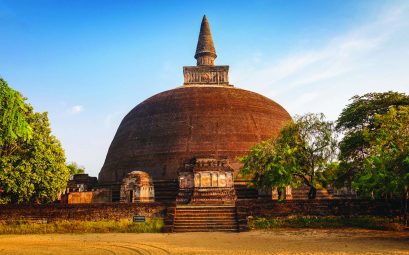
The ancient city of Anuradhapura was the capital of the island for more than 1400 years with its Buddhist monuments and royal ruins dating back 2000 years. Some best known sites include the Sacred Bo-Tree grown from a sapling of the tree under which Buddha achieved enlightenment; the Thuparamaya Dagoba, built in the third century BC and believed to contain the right collarbone of Buddha; Ruvan, the oldest historically documented tree in the world; and the seven storey Lovamahapaya, also known as the Brazen Place.

The ancient city of Polonnaruwa is southeast of Anuradhapura while the amazing Sigiriya Rock Fortress is the site of a sixth century fortified palace. Built by an obsessed monarch in the fifth century, Sigiriya, or Lion Rock, is an astonishing feat of engineering and construction.

The most striking portion of Sigiriya, a terracotta and grey core of rock set in the cultural heart of Sri Lanka, rises a sheer 200 metres above a forested plain, its flattened summit sloping gently. A series of moats, ramparts and water gardens, remnants of an ancient city, spread out on two sides of the rock, with the remains of a pair of giant stone lion’s paws still guarding the staircase that leads to the summit, once occupied by a royal palace.The sacred tooth relic of the Buddha is preserved here at the Temple of the Tooth.

Visit Kandy, which is 116 kilometres from Colombo and built around a peaceful lake that is surrounded by picturesque hills. Enroute to Kandy, and about 90 kilometres from Colombo visit the Pinnawala Elephant Orphanage, home to more than 109 elephants including adorable baby elephants that you can bathe and feed (with gigantic milk bottles!). Bathing time is 10am and 2pm, with feeding time an hour before.

Unawatuna Beach is a lovely semi-circular stretch of golden sands bordered with coconut palm trees located four kilometres southward around the coast of Galle. This is paradise for those who just want to enjoy to the silence of the sea and dive deep into the blue waters of the ocean.

There is a reef protecting the beach making it perfectly safe for bathing. Unawatuna Beach was voted as one of the “Top 10 most beautiful beaches in the world” by the Discovery Channel and Mark Ellingham, the founder of Rough Guides.

Where to stay
Travelling in Sri Lanka is quite economical and travellers can experience five-star luxury at very reasonable prices in the countryside, while budget travellers can find delightful traditional ‘rest houses’.

Food and entertainment
Traditional Sri Lankan food is dominated by rice and curry, and is usually very spicy and hot. Colombo teems with restaurants that offer a spectrum of international gourmet and fusion cuisine. If the high end fine dining isn’t what you are after, there a number of places offering good and reasonably priced fare. To experience local cuisine and roadside dining, Colombo offers numerous roadside cafes that serve up the tantalising kottu, a Sri Lankan favourite, and string hoppers (a tangle of rice flour noodles that are eaten with curry), pittu and rotti. Sinhalese dancing resembles Indian dance but the story is told using acrobatics and symbolism. Sri Lankan folklore is recreated in theatre using dance, masked drama, drumming and exorcism rituals.

Things to do
The southwestern coast offers good swimming beaches. The dive centre at Hikkaduwa is a good base to explore the reefs in the region such as Dodanduwa, Gintota and Ralagala.

The Bentota River is ideal for sailing, windsurfing and waterskiing. Climb Adam’s Peak for a taste of trekking, or walk across the Horton Plains near Nuwara Eliya to see the 700-metre drop at World’s End.

Shopping
On the road linking Colombo and Kandy is a series of ‘monoculture’ villages. One sells clay pots while others sell brooms, roof tiles, cane chairs, cashews and coconuts. Not surprisingly, the most popular purchase is tea, sold in many flavours and all manner of gift containers and teapots.

Woodcarving, weaving, pottery and metalwork are all popular crafts and Sri Lanka is especially renown for its gems and jewellery.

Currency
Sri Lankan rupee (SLR) consists of 100 cents. Tipping is appropriate and major credit cards are widely accepted in shops Most hotels, restaurants and shopping centres accept credit cards.

Climate
The climate is tropical, hot and humid during the day, cooling off in the evening while in the hilly regions cooler temperatures prevail.

Getting around
Train travel is comfortable but slow, with modern coaches a better option. Local transport consists of buses, taxis and auto-rickshaws. Car and motorbike hire is becoming increasingly popular. Renting a car with a driver is not expensive, but it is important to negotiate beforehand.

What to wear
Cotton clothes are useful at any time of the year but you will need light woollens for the hills and waterproof clothing or an umbrella. Modest dress for women is advisable especially off the beach and when visiting religious sites.

Don’t forget comfortable shoes, sandals or trainers and cotton socks. If you are planning to trek and climb go prepared with suitable gear.

Visa information
Nationals from several countries who visit Sri Lanka for tourist purposes are exempt from visa requirements and automatically receive a free 30-day visa on arrival.

Singapore


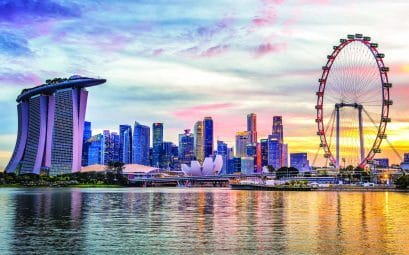
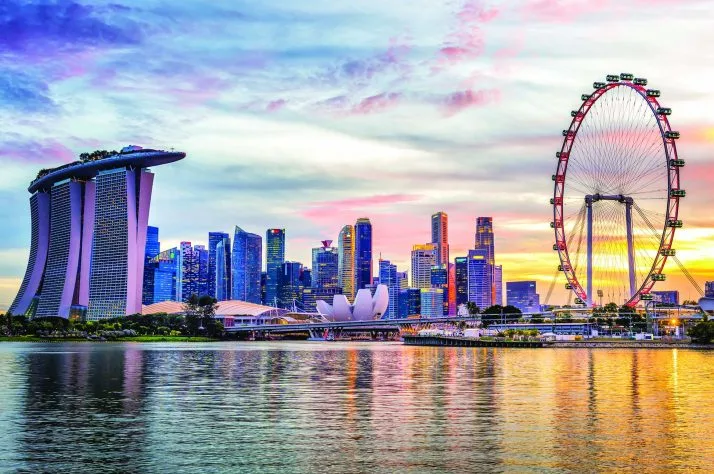
Lying virtually on the equator, Singapore is a gateway for the millions of tourists who visit South East Asia each year and an exciting destination in its own right, its colonial past not lost to modern development.

The people
Chinese make up the majority of the population and the remainder is a blend of Malay, Indian and ethnic groups including Eurasians. There are also small Arab, Armenian and Jewish communities.

The sights
The Merlion, a water-spouting statue, has become the symbol of the nation and now stands at its new location at the head of the Singapore River. For a great view of Singapore, head to Fort Canning Hill. Worth visiting is the Asian Civilisations Museum at Empress Place, the Singapore Art and the Singapore National. Minutes from Orchard Road, Singapore’s Botanic Gardens sprawl over 54 hectares. Cultivating orchids is big business in Singapore, and National Orchid Garden at Botanic Gardens provides a year-round colourful collection. Chinatown is a busy place full of restaurants, shops, temples and herbalists. Little India is also a hive of activity. Less known by visitors is Singapore’s Peranakan culture, a mixture of Malay and Chinese traditions. Visit Katong and view the beautifully restored shophouses, traditional ornate jewellery and clothing before dining on traditional dumplings.

The beautifully landscaped open-concept Singapore Zoo is a highlight of any trip to Singapore. The nearby Night Safari is the world’s first safari park for nocturnal animals. Sentosa Island has beaches, walking trails, golf courses, restaurants, hotels and fun family attractions including Universal Studios Singapore and Marine Life Park, the largest oceanarium in the world.

Singapore is so close to Malaysia and Indonesia, it is possible to do day tours to places like Johor Bahru, and Malacca. The Indonesian islands of Bintan and Batam are just a short boat ride across the Singapore Strait.

Where to stay
From the luxurious to backpacker hostels, there is a range of accommodation readily available in Singapore mostly found around the CBD, Orchard Road and marina areas.

Getting around
Mass Rapid Transit (MRT) is the most convenient way to travel, with trains running every three to eight minutes from 6am to midnight. Singapore has a good bus network with frequent services and a ready supply of taxis. Hiring cars or bumboats (motorised boats that ply the Singapore River) is easy, and there are regular ferry services and luxurious junk tours. Tri-shaws have disappeared from Singapore’s main streets, but can still be found operating in Chinatown, Little India and back streets. Agree on a fare beforehand.

Food and entertainment
Singapore is the food capital of Asia. Chinese, Indian, Malay, Indonesian and Western foods are all on offer, and some of the tastiest creations are those from the colourful hawker (street) stalls. Peranakan or Nonya cooking is a local variation on Chinese and Malay food, mixing Chinese ingredients with local spices such as lemongrass and coconut cream. The spicy, coconut-based soup laksa is a popular Nonya dish. Singapore is also a great place to discover exotic tropical fruits.

Activities
Walking is one of the best ways to see all that the compact city district offers, while sporty types will enjoy golf, computerised bowling alleys, archery, canoeing along the East Coast and the lagoon at Sentosa Island. Nature-lovers can visit parks and trek through reserves, and aquatic sport enthusiasts can waterski, windsurf, jet-ski, and wakeboard.

Shopping
In Singapore, shopping is not just a casual activity to fill in time; it is the mainstay of the culture. Orchard Road offers a dazzling array of stores, and then there’s Chinatown, Arab Street and Little India is home to the Mustafa Centre, Singapore’s first 24-hour department store. The east coast suburb of Katong is 15 minutes from town, and the yuppie haunt, Holland Village, 10 minutes away.

Climate
The climate is hot and tropical year round. Cool, loose fitting summer clothes are recommended.

Currency
Singapore dollars and cents. Tipping is not generally expected at hotels or restaurants as they have a 10 percent service charge.

Visayas


Within this stunning island group is Borocay Island, home to White Beach, which is considered the best tropical beach in the world.

The Visayas is the Philippines’ main island group. Situated to the east of Palawan, and between Luzon in the north and Mindanao in the south, there are multitudes of islands in the Visayas, large and small.

The province of Cebu, probably the most well-known destination, comprises six of the 11 major islands in the country, and 161 smaller islands. Cebu retains much of its Spanish heritage in its historical and cultural attractions. It also provides an idyllic starting point for island hopping holidays, many within a couple of hours’ drive from downtown.

Cebu City is a major gateway to the Visayas and, being the oldest city in the Philippines, it is often referred to as the ‘Queen City of the South’. Cebu’s five main cities are Cebu City, Toledo, Danao, Mandaue and Lapu-Lapu (on Mactan Island). Cebu City is home to the Basilica Minore del Santo Nino, the oldest fort in the country, Fort San Pedro, and the restored 19th century home Casa Gorordo.

Mandaue on the coast is the manufacturing centre, with the San Miguel brewery, Coca Cola plant, and a number of other factories from glass to rattan furniture and handicrafts.

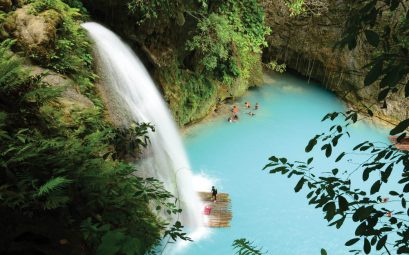
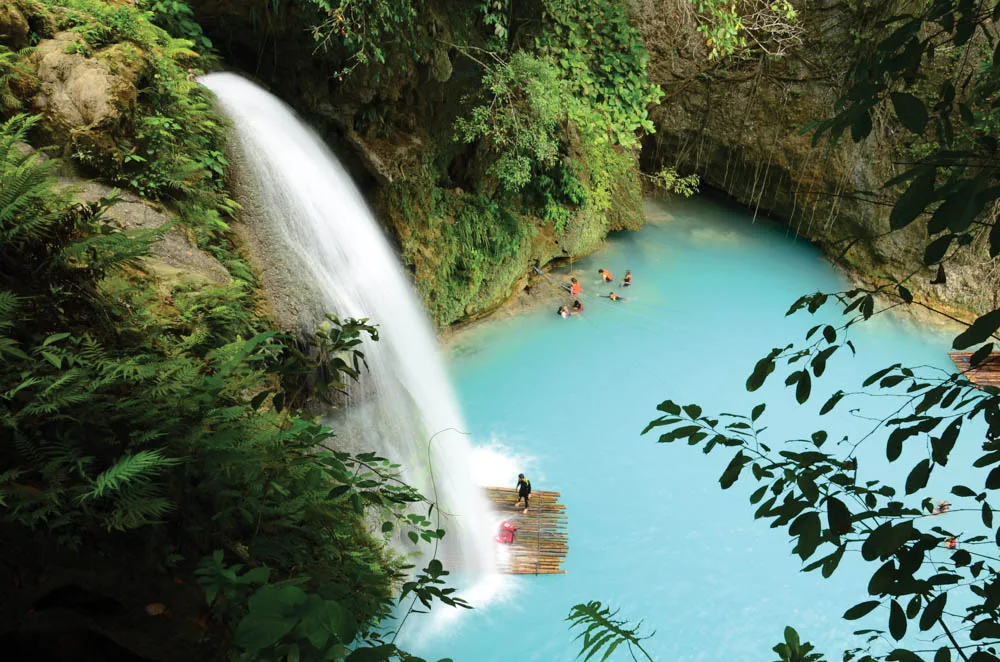
While in the Visayas it is a must to visit Bohol, the tenth largest island in the Philippines, famous for its Chocolate Hills comprising more than 1000 oval limestone mounds. A cruise down the Loboc River passes through the towns of Loboc, Loay and Bilar, which has a man-made forest that is home to the tarsier, one of the world’s smallest primates. Like Cebu, Bohol has a range of resorts, especially in Panglao, and also boasts dive spots. Iloilo in the western Visayas is an hour from Manila by plane. The city has wide, attractive streets and a number of historical monuments including churches and ancestral houses.

The island of Negros, wedged between Cebu and Panay, is divided into two provinces, Negros Occidental and Negros Oriental, each with an impressive number of well-maintained historic buildings. The province of Aklan, also in the western Visayas, lays claim to two attractionsthe fantastic religious and festive zeal of the Ati- Atihan Festival, the nation’s week-long mardi gras held in Januaryand Boracay Island.

The seven-kilometre long Boracay is widely thought of as the ultimate island in the Philippines. On Boracay is White Beach with fine white sand and clear water. White Beach is considered by many to be the best tropical beach in the world.

Luzon & Manila

The city is a mix of old and new, of traditions and modern customs, of quaint street stalls and modern shopping malls.

Luzon, where Manila is located, is the largest island in the Philippines and many of the provinces are just a few hours drive from the city. Northern Luzon is rich in panoramic views, green landscapes and old Spanish houses. Nicknamed the Summer Capital, Baguio City is a cool climate escape for Manila’s wealthy. The neighbouring city of La Trinidad, the provincial capital just north of the city, has some interesting sights. You can visit the vegetable market, climb Mt Pulag or see the well-preserved Kabayan mummies from burial caves in the north. Visit Asin, a woodcarving village with a hot spring swimming hole, natural streams and relaxing steam bath. A side trip to the tranquil mountaintop town of Sagada offers beautiful scenery and a cool climate. Its claim to fame is the hanging coffins, seen on cliff sides surrounding the town and in limestone caves.

Hugging the northwestern slopes of Luzon are the provincial towns of Ilocos Norte and Ilocos Sur. There is a strong Spanish influence in Vigan Ilocos Sur, with 16th century Spanish houses lining the streets of the old section and a museum full of Spanish treasures.

Antipolo is the centre of the May-time pilgrimage, while Angono is home to the Higantes Festival, held in November, when gigantic papier-mâche figures of men and women are paraded down the streets.

Northern Palawan is home to some of the most diverse ecosystems in the country. The El Nido-Taytay Managed Resource Protected Area showcases extraordinary flora and fauna, including mammals, reptiles, and birds that are abundant in the area. The dramatic landscape boasts of soaring limestone cliffs standing guard over crystal-clear waters, forests over limestone, and beaches with powdery white sand. Dramatic lagoons, mysterious caves, and colorful reefs are among the facets for Bacuit Bay in El Nido and Taytay Bay.

A couple of hours by boat from El Nido are the snorkelling havens of Simisu Island and Cathedral Cave, Snake Island and Cudugman Cave. South Palawan is quite different to the north. Quezon is situated around 100 kilometres from Puerto Princesa, and is the nearest town to the archeologically interesting Tabon Caves, a half-hour boat ride away. Quezon is famous for its Pahiyas Festival celebrated in the towns of Lucban and Sariaya in mid-May

Manila
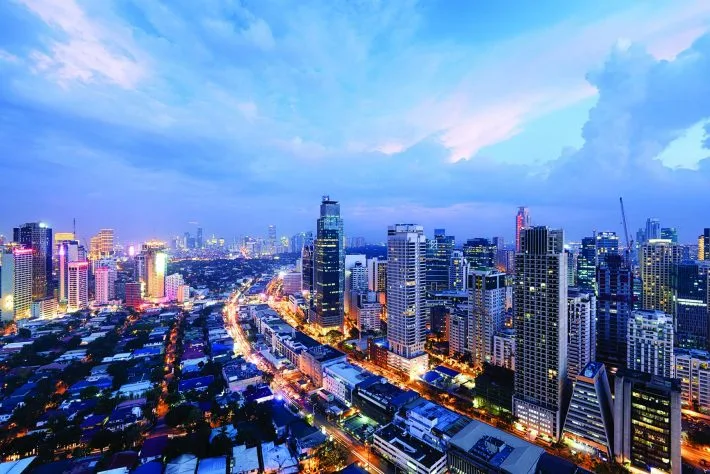
Manila has a population of around 10 million. The city is a mix of old and new, of traditions and modern customs, of quaint street stalls and modern shopping malls, of excellent museums and happening restaurants, bars and nightclubs.

Although the city spreads a great distance along Manila Bay, the main places of interest are fairly central, concentrated just south of the Pasig River. Immediately south is the fortress of Intramuros (literally ‘within the walls’), once the preserve of the ruling classes.

The Manila Cathedral and San Agustin Church are two of the oldest churches in the country. Nearby, Casa Manila is a beautifully restored Spanish colonial home. The Cultural Centre of the Philippines is the central venue for all the diverse arts of the provinces, including ballet, concerts and stage plays. Within the complex is the stately Coconut Palace, made of materials from the coconut tree and other indigenous materials. This is also a great place to view the spectacular sunset across Manila Bay.

At the huge Chinese Cemetery in Santa Cruz, tombs are fitted with crystal chandeliers, air-conditioning, kitchens and flushing toilets, to ensure comfort on the trip to paradise.