North Vietnam

Some of the most spectacular scenery in Vietnam is in the Tonkin region stretching from the Hoang Lien Son Mountains (Tonkinese Alps) eastward across the Red River Delta to the islands of Halong Bay. This area is home to many hilltribes, some of which have not been influenced by Vietnamese or Western life.

A favourite vacation spot for Hanoi locals is Sam Son beach, 16 kilometres south-east of Thanh Hoa. The Tam Dao Hill Station, founded by the French in 1907, consists of weathered grand colonial villas. Here there is superb scenery, refreshing weather and good hiking trails.

Hoa Lu was the capital of Vietnam under the Dinh Dynasty (968-980) and Pre-Le (980-1009). The ancient citadel covers an area of three square kilometres and the outer ramparts enclose temples, shrines and the place where the king conducted his court.

Two sanctuaries worth visiting are the temples of King Dinh Tien Hoang and King Le Dai Hanh. A short boat trip away is Bich Dong Grotto in the village of Van Lam, and the Tam Coc Caves and the Xuyen Thuy Grotto.

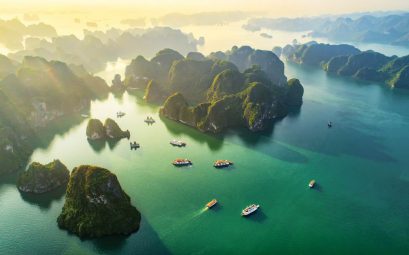
Close to the town city of Ninh Binh is the Cuc Phuong National Park, great for nature lovers. The Perfume Pagoda is one of several pagodas and Buddhist shrines built into limestone cliffs in the Huong Tich Mountain. A few hours drive from Hanoi is Halong Bay. With its 1969 islands rising from the waters of the Gulf of Tonkin, it is an awe-inspiring sight and an absolute must on any itinerary. Day or overnight boat trips are easily arranged and are the ideal way to take in the spectacular islands.

Hanoi
Hanoi is Vietnam’s capital as well as the political, economic and cultural centre of the country. This beautiful, charming city was chosen as the capital by King Ly Thai To in 1010 and was renamed Thang Long (the Soaring Dragon) and Hanoi has been the capital ever since. Rich in ancient history, Hanoi preserves almost 600 pagodas, temples and many streets with centuries-old architecture busy with trade activities. The city also preserves its poetic features with rows of trees lining both sides of the streets, parks covering dozens of hectares and natural lakes.

Tourists can visit President Ho Chi Minh’s Mausoleum, Co Loa Citadel, the One Pillar Pagoda, the Temple of Literature (Van Mieu Quoc Tu Giam, the oldest university in Vietnam), Quan Su Pagoda – the official centre of Vietnamese Buddhism, Chua Thay, the Master’s Pagoda, Tay Phuong Pagoda, Lenin Thong Nhat and Thu Le Parks, the Hoan Kiem Lake and the West Lake.

Other attractions include Vietnam National Museum of History, the Vietnam Military History Museum, the Museum of Fine Arts and a suburban village, where visitors can acquaint themselves with the life of Vietnamese peasants. The Old Quarter of 36 ancient trading streets is a fascinating area to explore, with its bustling trade and tunnel houses. In some of the quiet streets off beautiful Hoan Kiem Lake are an increasing number of boutiques and gift/ souvenir shops that combine local and modern styles, with delightful restaurants and cafes in historic shophouses.

South Thailand

The region abounds in sandy beaches fringed with palm trees.

The narrow peninsula of southern Thailand stretches from the border of Myanmar to Malaysia. The region has a rich multi-cultural heritage, and abounds in sandy beaches fringed with palm trees.

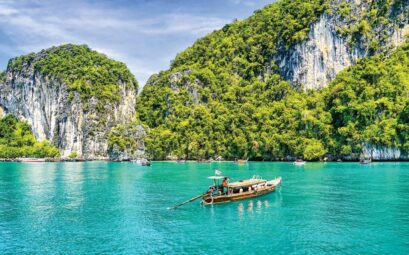
Phuket is Thailand’s largest island and one of the most popular holiday destinations in Southeast Asia with many traditional fishing villages transformed into holiday resorts. Longtail boats take visitors to sights such as the extraordinary limestone stacks of Phang-Nga Bay. Phuket Town is a perfect place to shop for truly unique gifts, as well as giving tourists the opportunity to see Thai and Chinese temples.

Covered in lush green hills and rice paddies, Phuket’s major attractions include Karon, Kamala and Kalim beaches, as well as Patong Beach and Promthep Cape.

The clearest waters, best sand and most luxurious hotels are found on the west coast. Patong is the most densely developed resort while Karon and Kata are quieter.

Patong Beach owes its popularity to its easy access and long stretch of beach. Most of Phuket’s evening entertainment is found here, as well as cheap shopping opportunities. Patong Beach is where Phuket’s action is, and it is by far the most frequented destination on the island. It has several white sandy beaches and is packed with restaurants, hotels, bars and shops and is a great place to start your exploration of the surrounding areas.

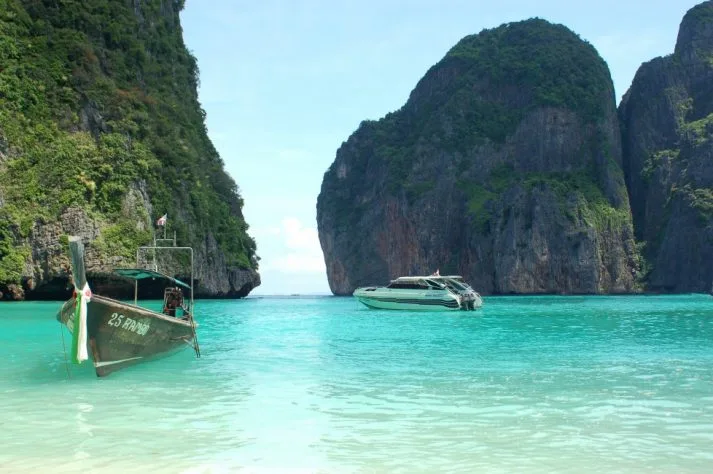
Nature lovers won’t want to miss Mai Khao Beach, where sea turtles lay their eggs between December and February. A visit to a pearl farm is also a popular day trip for tourists. Krabi, 180 kilometres from Phuket, is a small fishing town with an important role as the ferry connection point for islands such as Ko Lanta, Ko Phi Phi and the beaches around Ao Nang. Towering limestone outcrops have become the signature of the twin Phi Phi islands, and the challenging conditions attract rock climbers from around the world.

The beautiful paradise of Koh Samui is Thailand’s third largest island. It has a forested hinterland of granite and limestone hills and a shoreline of world famous palm-fringed beaches. Koh Samui is the second most popular island destination in Thailand.

Chaweng Beach has a reputation as a hangout for the international party crowd while those looking for peace and quiet should try Mae Nam, Bo Phut and Big Buddha on the northern coast. Trang is a coastal province on the Indian Ocean that was the first area in Thailand to grow rubber, which is now a major part of the economy.

Hat Chao Mai Beach is of particular interest to tourists, and on offer are amazing experiences such as paddling on Phang-Nga Bay, allowing adventurers to explore a network of interesting caves and scenic deserted beaches.

Phang-Nga, located next to the Andaman Sea, has amazing natural beauty and offers breathtaking scenery and landscapes, with mountainous areas alongside forest and some wonderful islands and beaches. It has a charm of its own, without the hustle and bustle of Phuket, and is nestled amongst soaring mountains that rise up around the town.

East Coast Thailand

The Gulf of Thailand offers a host of resorts where Thais and foreigners can unwind, relax on the superb beaches and enjoy the succulent bounties of the sea.

It is also home to magnificent mountains, waterfalls and lush tropical vegetation.

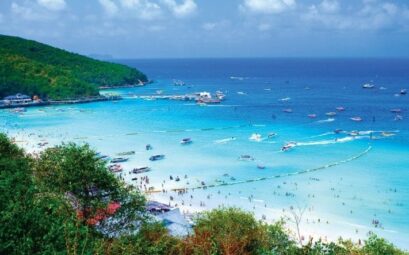
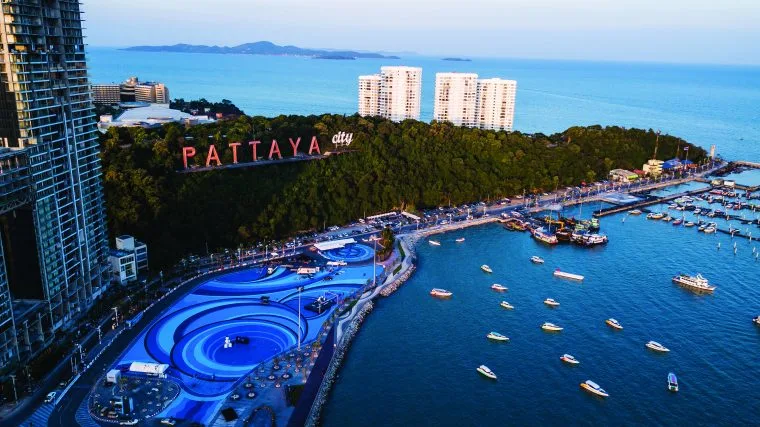
Pattaya, in the province of Chonburi, lies 150 kilometres east of Bangkok and is one of Thailand’s best known beach resorts.

It is a developed, vibrant city that draws families (mostly to Jomtien, two kilometres south of Pattaya) and singles (mostly to South Pattaya Road).

It attracts visitors who love watersports and golf, as well as those looking for entertainment, dancing and action in its neon-lit go-go bars, nightclubs, cabarets and discos.

For visitors looking for other activities, the Khao Kheow Zoo has more than 50 species of birds and animals, including deer, zebras and tigers, many of them indigenous to Southeast Asia. Each October, buffalo racing is held in conjunction with a fair, and there’s also a buffalo beauty contest.

Since the 15th century, Chanthaburi has been known to Western travellers for its abundance of gemstones, and is as renown for gems worldwide as Bangkok. More than 70 percent of the world’s rubies come from Thailand, and Thai workers have a reputation for their skill and dexterity in faceting stones. Of all the Thai gemstones, deep blue sapphires and blood red rubies are the most highly prized, as are unusually coloured (such as yellow) sapphires.

Covering an area of just 59 kilometres, Khao Kitchakut National Park is one of the country’s smallest and boasts a 1000-metre granite mountain after which the park is named. Many people make the four-hour climb to the summit of the impressive Phrabat mountains to see an image of the Buddha’s footprint and collections of natural rock formations shaped like an elephant, a large turtle, a pagoda and a monk’s bowl.

Nearby, the far larger but less visited Khao Soi Dao Wildlife Sanctuary provides a home to many endangered species, including sun bears, spotbellied eagle owls, silver pheasants and elephants.

Mountainous Ko Chang is the largest of the 50 or so islands that form the Ko Chang National Marine Park, two-thirds of which is sea. Inland exploration is difficult due to the rugged terrain, but it has excellent beaches, including the popular Sai Khao Beach, prettier and quieter Khlong Phrao Beach and the particularly beautiful beach of Ao Bang Bao in the southwest corner. The tourism industry in Ko Chang is in its infancy, a contributing factor is probably the fact that several of the islands consist solely of exclusive, privately owned resorts.

North Thailand

Northern Thailand offers a great diversity of interests, from ancient monuments and the markets of Chiang Mai, to the incredible mountains, rice fields and spectacular national parks.

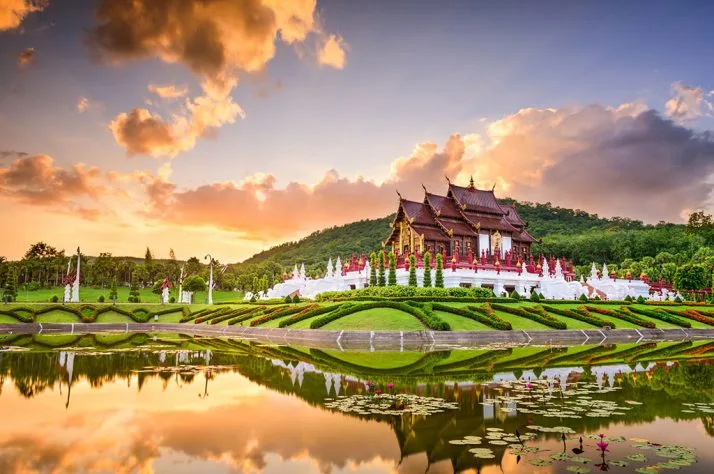
Northern Thailand, home of the ancient Lanna kingdom, offers a great diversity of interests, from ancient monuments and museums, the markets of Chiang Mai and Chiang Rai, to the incredible mountains, forests (some of them teak), rice fields and spectacular national parks. Located 700 kilometres north of Bangkok, Chiang Mai, the ‘Rose of the North’, has numerous ancient Buddhist temples and other monuments within its city gates.

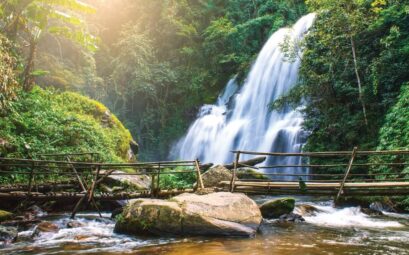
Close by are Wat Prathat Doi Suthep, one of the most revered Buddhist shrines in Northern Thailand. Major attractions on the thickly forested mountain of Doi Suthep include waterfalls, a Hmong village and the English-style gardens of Phuping Palace, the summer residence of the Royal Family.

Chiang Mai is Thailand’s second most important city, the literal meaning of its name is ‘new city’ though it was founded back in the late 13th century. It is one of the world’s largest centres of cottage industries and it is interesting to visit the numerous craftspeople making anything from jewellery to umbrellas and silks, using skills passed down through the generations. While the city is an ideal base for mountain treks, it is also well known for its excellent shopping, fine restaurants and accommodation. Compared to Bangkok, Chiang Mai’s evenings are cool and conducive to strolling around the central night bazaar.

Pai has a fast-growing reputation as one of Northern Thailand’s top beauty spots, and is popular with trekkers and lovers of mountain scenery. The town and surrounding area include amongst their population Lisu hill tribes, Muslims from Myanmar (Burma) and Yunnanese from China.

One of the most unusual sights in Mae Hong Son is the Padaung, or Karen, a hilltribe community farming rice, tea and tobacco. The women are distinguished by their long necks, lengthened from childhood by brass rings. The countryside east of Pai is famous for a seasonal phenomenon known as Thale Mok, or Sea of Mists, when from November to December mountain valleys fill with clouds and provide a spectacular sight in the early morning.

The far northern region of Chiang Rai is developing as a popular tourist destination for its spectacular geography. The area remains synonymous with the Golden Triangle, where Thailand, Laos and Myanmar meet, historically connected to the opium and heroin trades. There’s much more to the area than this, however, with superb views, hilltribe villages and the historical towns of Chiang Saen and Chiang Khong.

Mae Sai is Thailand’s northernmost town, separated from Myanmar only by a bridge. South of Mae Sai is Tham Luang, a large cave complex with crystals that change colour in the light. Further south are more caves, Tham Pum and Tham Pla, which have lakes inside.

W Koh Samui

W Koh Samui, an all-pool villa beachfront resort, is located at the peak of the north shore of Thailand’s famed Samui Island amidst a modern paradise of vibrant foliage and pristine beaches.

A modern playground for the discerning leisure traveller, the retreat offers signature services and amenities bringing a new level of indulgence to this renowned Thai island. Exclusive experiences include W’s signature Whatever/Whenever® service philosophy, providing guests with whatever they desire, from an exclusive private dinner on a deserted beach to an intimate sunset wedding, or an impromptu island hopping excursion.

A contemporary paradise
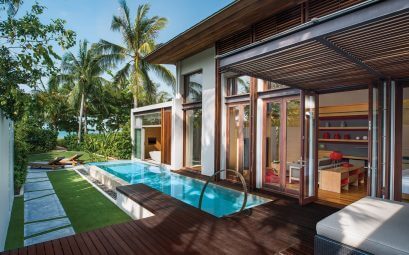
W Koh Samui has been designed as a contemporary paradise, offering an escape for guests who seek something extraordinary. The retreat features 74 private pool villas, designed using a blend of modern elements. The luxurious villas are equipped with modern lifestyle innovations and boast their own private pool, daybeds and also feature luxurious bathrooms and an outdoor shower. All villas enjoy modern conveniences such as a Yamaha sound system, 46” plasma screen TV, wine refrigerator and the signature W bed.

The W Lounge, magnificently designed and offering stunning ocean vistas, welcomes guests as they arrive at the retreat. Upon entry, guests will experience interactive digital floor projections that give way to an environment accented with off-white terrazzo floors, high ceilings clad in angular bleached wood veneer panels and oversized lamps. Inspired by the shape of a lotus flower, a key element of the W Lounge is the water feature and relaxation area that gives guests spectacular panoramic views of the islands and seascape. Enjoy exceptional dining options at The Kitchen Table that serves freshly baked treats, gourmet pizzas and buffets. Sample Japanese at W Koh Samui’s signature restaurant, Namu, that offers a modern reinvention of Asian cuisine styles in an intimate, sensual dining atmosphere.

Indulge at Away Spa, W’s signature spa for a blissful escape. Away Spa comprises of 576-square metres of indoor and outdoor spa treatment areas and features signature treatments including Thaimazcal®, massages, facials and body treatments, manicures and pedicures as well as a range of therapies incorporating local Thai influences. Guests will also be able to enjoy the WET pool, a state-of-the-art fitness centre (FIT), watersports centre (WAVE) and tennis court (SWING).

The Nai Harn Phuket

Welcome to a world of contemporary grandeur at this romantic sanctuary by the sea. Nestled in a tropical hillside rainforest, above a pristine beach, The Nai Harn is an icon of Phuket.

The resort unveiled a complete transformation in 2016, with a host of new features and culinary experiences including a stunning 50-metre rooftop pool lounge, a cocktail list prepared by former legendary barman Salim Khoury at The Savoy in London plus glamourous additions such as a press-for-Champagne button in all suites, a mini putting green on select balconies and a BBQ Butler for bespoke sizzle sessions on private terraces.

Settle into your own private sanctuary. As the only member of the Leading Hotels of The World in Phuket, The Nai Harn offers the largest non-villa rooms on the island.

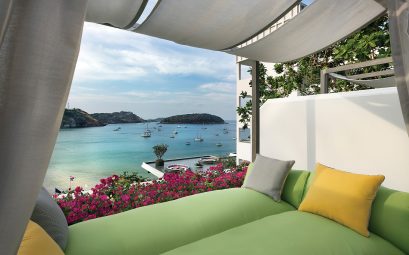
The expansive rooms showcase the glorious view of Promthep Cape, with thoughtfully laid out floor plans leading out to spacious terraces and are complete with cutting-edge technology, contemporary design, plush fabrics and luxurious amenities.

The Nai Harn cultivates the ultimate in seaside luxury. Discover all this enchanting sanctuary has to offer through a range of sophisticated amenities. Luxuriate by the swimming pool as you take in stunning views of the azure bay.

Delight in fresh and contemporary dining concepts combined with a stunning seaside location. Enjoy Mediterranean delights and local delicacies at Cosmo, or lounge at the glamorous, chilled-out beachside restaurant Rock Salt as you sip colourful cocktails and nibble on wood-fired pizza or spicy satay. Innovative, international menus and one of the finest dining-with-a-view experiences on the island make The Nai Harn the pre-eminent Phuket dining destination.

The Spa at The Nai Harn offers a mix of traditional treatments, cutting-edge therapies and sought-after indulgences. Throw in a few eclectic inventions from the spa’s team and you’ve got an ocean of treats derived from the purest natural ingredients and handpicked products.

Considered one of Thailand’s best beaches, Nai Harn Beach is one of Phuket’s most popular destinations. Its tranquil waters are perfect for swimming and are a great starting point for island excursions.

Other local attractions include Ya Nui and Ao Sane, both great for snorkelling, as well as the majestic overlook at Promthep Cape. Key entertainment and shopping areas are only a short drive away.

Amuna Ayurveda Retreat

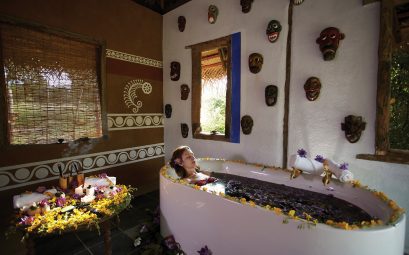
Embark on a wellness journey and immerse yourself in traditional and ancient treatments that will revitalise your mind, body and soul.

Amuna Ayurveda Retreat carries the concept of providing a holistic and authentic Sri Lankan traditional wellness experience to ensure a relaxed, healthy holiday. Ayurvedic traditional medicine is a major part of Sri Lankan culture and ranges back nearly 3,000 years, sustained by kings who were also skilled physicians.

Ayurveda is a holistic path that looks at all aspects of one’s life. Not only will your body receive healing, but your mind and soul will also be rejuvenated. It is through creating a balance with the healing of all components that Ayurveda offers a treatment path unlike any other.

Benefits which can be obtained from Ayurveda Therapies include curing nervous disorders, prevention of ageing process, improvement of eye sight, nourishment of the tissues, correct sleep disturbances, stress, joint and bone disorders, improvement of digestive tract functions, enhance beauty and complexion and cure various diseases.

Amuna Ayurveda Retreat is well equipped and all therapies are conducted by experienced therapists under the supervision of professional Ayurvedic Physicians. Many different types of traditional Ayurvedic treatments and therapies along with yoga and meditation, and a strict in-house diet coupled with rest and relaxation are offered. All-inclusive packages are available and include accommodation, airport transfers, and all meals which are prepared according to your treatment.

Amidst a verdant oasis bordering the awe-inspiring Kandalama Lake in the horizon, the resort blends naturally with its surroundings and the facilities and amenities keep to this honoring of nature by using eco-friendly and recycled materials throughout.

Surrounded by nature, accommodation offers guests a blissful environment to meditate, relax and rejuvenate. Choose from eight dwellings, one villa and three tree houses, each elegantly designed with traditional touches.

Amuna is located at Kumbukkandanwala in Dambulla in the heart of the cultural triangle in the Central Province. Sri Lanka’s cultural triangle is a treasure trove of ancient sites and monuments, making it the perfect location to call upon ancient treatments and traditions to fulfill your wellness journey. Spread over a lush site of around 20 acres, come experience the green cultivation all around you and the serene Lake Kandalama glittering in the distance.

Excursions of Cook Islands

RAROTONGA

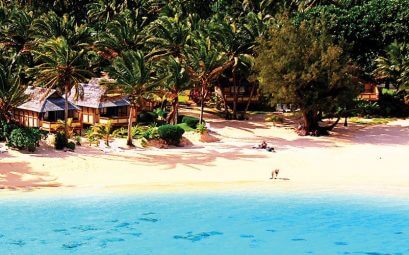
With its jagged peaks and sparkling aquamarine lagoon, Rarotonga is a jewel in the Pacific Ocean. This beautiful Island was one of the last in the Cook Islands to be visited by European ships and has since become a favourite of sailors from all over the world. Rarotonga is surrounded by a lagoon which extends several hundred yards to the edge of a fringing reef The lagoon is a focal point of interest for visitors to Rarotonga. As the largest, most populated and main island, Rarotonga has most of the hotels and tourist activities and services. There are some excellent resorts on the island, including the Edgewater, and Rarotongan Sunset.

The island is only 32 kilometres in diameter and is easily explored by bus (leaving every half hour from Avarua), motorbike, bike and even foot. Beaches and accessible reef are within easy reach and swimming is safe in most places, but the most popular beaches are Muri Beach and Titikaveka.

Surfing is growing in popularity, especially near the wreck of the Matai and at Avatiu, Avarua and Matavera. Windsurfing is particularly good at Muri Beach and the lagoon at Nagatangiaa.

The capital, Avarua, is the main administrative, commercial and service centre, with a lot of tourist attractions. For example, the National Cultural Centre shares a compound with the National Library and Museum and has some excellent displays of the islands’ history and handicrafts. The National Library and Historical Society Museum are also in the town and worth visiting.

Artwork and crafts can be viewed and purchased at the Women’s Handicraft Centre, Akatikitiki Art Gallery, Island Crafts and Perfumes of Raratonga, as well as in artists’ homes and several of the hotels or small shops. Also not to be missed is the market on the waterfront at the western end of Avarua. This is open every day except Sunday.

Avarua also has many other shops, including some duty-free shops that sell clothes, food and tourist paraphernalia. It also has well-stocked supermarkets.

With religion playing such an important part in the people’s lives, the churches in Rarotonga are an attraction of their own. The old London Missionary Society schoolhouse, built in 1845, has been restored and is now an art gallery and sales outlet for Cook Island black pearls and jewellery and local arts and crafts. The Takamoa Mission House, believed to be the second oldest building in the South Pacific, was built as a school in 1842 by the London Missionary Society. The Avarua Cook Islands Christian Church was built in 1855 of coral and lime and has an interesting churchyard. Other churches around the island are also interesting edifices, made as they are from coral.

Archaeological remains are also dotted around the island and are easily accessible. The palace of Makea, Pare O Tane, is at Taputapuatea in Avarua. 

The Arai-Te-Tonga is one of the most sacred spots on the island, being home to the royal court in pre-European times; the stone structures (Koutu) were used for the investiture of high chiefs, annual tribal feasts and the ‘presentation of the first fruit’.

The ‘Great Road of Toi’, the Ara Metua, is an all-weather inland road, made in part with paved stones, that almost encircles the island, and was built 1000 years ago. There is also the Black Rock or Tuoro, which is the traditional point of departure for souls as they commenced their journey back to the fatherland. It’s now a popular swimming place.

There are a number of treks on Rarotonga, from easy walks to strenuous hikes. One of the more popular is a four-hour guided walk across the island that stops at the Needle, a rock formation with fabulous views. Papua Waterfall at Vaimaanga, the largest waterfall on the island, dropping into a large pool. Visitors can also walk through the Takitumu Nature Reserve with its abundant plant and bird life.

More and more divers are coming to the Cook Islands and top quality dive operations are available. Diving features visibility up to 200 feet, a spectacular drop-off, canyons, caves and wrecks. The most popular places are the Ngatatangiia Swim through, Matavera Drop off, Mataora Wreck, Pappu Canyon, Sand River and Koromiri Coral Garden. Fishing is another growing sport and ranges from night fishing with the locals to serious game fishing. There are a number of companies that offer fishing charters for both novices and experienced fisher people for deep sea fishing, saltwater fly fishing and light tackle game fishing. Game fishing starts right outside the Avatiu harbour, which is where most of the charter boats are based.

Sailing is also available at the Rarotonga Sailing Club, based at Avatiu Harbour. This is usually home to most visiting yachties, too.

Whale watching tours are available from July to September as humpback and pilot whales ply the waters and calve here. While the whales can be seen from shore, some tours go right up to the curious whales.

CAPITAL CITY

Avarua is the main town, situated on Rarotonga, and is the centre of development on the island.

AITUTAKI

Like Rarotonga, Aitutaki has a large range of activities but has a very different ambience from its larger neighbour. It’s lush tropical gardens and pristine beaches are very special, as are the friendly people. Visitors, who cannot stay on the island, often find it very worthwhile to take a day trip from Rarotonga.

The Aitutaki lagoon is arguably one of the most beautiful in the world and abounds with marine life to delight the snorkeller, particularly the iridescent giant clam. Due to the shallow lagoon, snorkelling is easy. The most popular swimming, snorkelling and picnic spots are on the small islets to the southeast, each of which has a legend associated with it, such as One Foot Island.

Sailing, diving and fishing (fly casters and light tackle anglers) are all available. For those wanting to explore the island, there is a thirty-minute trek to the highest point, behind the hospital, that has excellent views. The Te-Poaki-O-Rae (stone of Rae) is a marae with volcanic rocks arranged in rows facing the main pillar. Other maraes are nearby.

Vaipae and Tautu Villages are distinctive for their old coral and lime churches that add an extra dimension to worshipping.

Visitors are welcome at the Research Station of the ministry of Marine Resources, which is open daily and has species of giant clams and baby sea turtles for visitors to see and learn about.

The villages have handcrafts, souvenirs and island-style fashions for sale.

In the main village of Arutanga, a basic market sells all the things you’ve never wanted or needed but it is charming enough. Accommodation in Aitutaki ranges from budget to luxury. The Aitutaki Lagoon Resort offers private accommodation in an isolated corner of the Island. On the eastern side of Aitutaki, the Aitutaki Lodges offer six self-contained studio chalets on the edge of a lagoon with verandahs that face the rising sun. The Maina Sunset Motel is on the west side near the town area of Arutanga, Rino’s Apartments offers four garden units with balconies, separate bathrooms and full cooking facilities. Further, along from Ralphies Bar and Grill towards the north end of the island, the Sunny Beach Lodge is also good value. In Arutanga itself the Tupuna Cafe provides a good venue for breakfast. The high point of any visit to Aitutaki is a lagoon cruise. Several operators provide a lagoon cruise and most boats go to Tapuatae, One Foot Island, at the far south-eastern corner of the huge lagoon.

ATIU

The island of Atiu is the only other island that more than the occasional tourist visits, though there is only one small hotel there. But the beaches are beautiful and include Oravaru Beach, where Captain Cook was thought to the first land.

The island is only small, and it’s easy to see all there is in the way of plantations, crops, fruit trees, forest, the makatea and archaeological ruins. Atiu coffee is famous and sold throughout the Islands and exported.

While there are many beautiful beaches for lazing and collecting shells on, swimming isn’t easy, apart from the deeper water at Taunganui Harbour. However, at low tide there is some good snorkelling at Takauroa Beach and the Coral Garden, where tropical fish are trapped by the tide. Oneroa Beach has lovely shells.

Birdwatchers will love this raised coral island, which has a greater variety of land birds than any other island. They can be found nesting on the magnificent cliffs and pinnacles and in caves. The Anatakitaki Cave is spectacular in itself and for the Atiu swiftlet, which issues clicking sounds for echolocation.

The Vai Momoiri Track wanders through the beautiful scenery of the island and there are many caves in the makatea that can be explored.

Crafts are an important part of the women’s lives; they are very proud of their tivaevae, the colourfully patterned bedspreads, hangings, handbags and other accessories.

Atiu is also the home of tumunu, or homebrew and visitors often join in the elaborate ceremony that accompanies a drinking session.

The best place to stay is the Atiu Motel situated at the southern end of the Island.

MAUKE

Located in the south-eastern corner of the Cook Islands lies Mauke, a raised atoll named after its legendary founder, Uke. Encircled by the characteristic fossilised cliffs of makatea, Mauke is virtually flat with its centre about 100 feet (30 m) above sea level. The island has a circumference of 12 miles (18 km). Mauke has a special atmosphere. Its people cleave to the old customs of hospitality – the ui tupuna – and they are very friendly to visitors.

People from overseas need to adjust to a different pace and style. Shops are few and far between, are often closed and the range of goods on offer is limited. There are no cafés or restaurants, milk has to be bought in powder form in cans and fresh home-baked bread comes from an old gentleman in Ngatiarua village who bakes loaves in a wood-fired oven.

Mauke offers numerous coves and white beaches as well as caves in which to swim. Energetic travellers can enjoy hiking through the luxuriant jungle interior. Probably the best way to explore Mauke is by rented bicycle.

Visitors can stay at either the Mauke Cove Lodge, a guest house which is an old coral limestone cottage, or at the Tiare Holiday Cottages.

OTHER SOUTHERN ISLANDS

Mangaia Island is known for its arts and crafts, including a unique adze, and it’s interesting caves. Accommodation options include Babe’s Place on the west coast and the Ara Moana Hotel on the east coast.

Mitiaro has blue lagoons and white sandy beaches but is far from the usual tourist trail. It is one of the largest islands in the Cooks group; it rises deep from the ocean to 4500m and is fringed by fossilised coral 20 to 4o ft high. The centre is almost flat, quite swampy and contains two freshwater lakes. Beaches are limited on Mitiaro but there is crystal clear rock pools ideal for a cooling swim. Mitiaro is definitely a place for visitors who want to put their feet and unwind with a good book.

The only true atoll of the Cook Islands is Manuae.

NORTHERN ISLANDS

Not all northern islands have accommodation or tourist facilities but are slowly opening up to tourists, particularly yachties.

However, Penrhyn has a natural harbour and is a commercial centre for the northern islands and is easily accessible. It is famous for its natural coloured pearls. Visitors will enjoy the archaeological sites that dot the island. Rakahanga is a game fishing paradise, and host to the annual tuna competition. Manihiki is famous for its ‘black’ pearls; they are actually grey, blue, and green and glow with many colours of the rainbow.

Pukapuka, which has a reputation for romance, is tiny but compelling, with excellent swimming, snorkelling and handicrafts, particularly the fine weaving of mats.

Suwarrow Island is the original Treasure Island, where buried chests full of treasure from Spanish galleons were found last century. New Zealand author and recluse, Tom Neale, lived there as a hermit for six years and wrote An Island to Oneself about his experience. The island is now a national park due to its sea-bird breeding grounds and is uninhabited except for a caretaker. Suwarrow is a very special place for yachties to visit, with the magnificence of the birds and its large and beautiful lagoon.

WILDLIFE

The Cook Islands’ geographic isolation means there is a variety of wildlife not found anywhere else, including an abundance of native ferns, flowering plants, fish, lizards, insects and birds. The birds include the chattering kingfisher, Mangaia kingfisher, red-tailed tropic bird, kakerori, Atiu swiftlet (kopeka) and blue lorikeet. Humpback whales use the warm Cook Islands waters to calve after migrating north from their Antarctic feeding grounds and can be seen from July to October. Some islands are also nesting grounds for turtles.

NATIONAL AND MARITIME PARKS

Takitumu Conservation Area on Rarotonga, managed by traditional landowners, is home to the endangered Rarotongan Flycatcher and the Giant Kingfern and ‘gentle nature walk’. Suwarrow Island is the Suwarrow National Park, an important seabird breeding area in the South Pacific. Numerous large and interesting coral knolls also spot the lagoon.

Hanging Gardens Of Bali

Hanging Gardens of Bali is an award-winning, luxurious destination nestled deep in the heart of the jungle.

Overlooking the Ayung River and ancient Dalem Segara temple, the hotel stands on the edge of a stunning valley, surrounded by lush jungle and picturesque rice terraces. Revitalise in a lush and intimate paradise at Hanging Gardens of Bali, recently named the world’s first seven-star boutique Hotel and awarded one of the top destinations to visit in Asia.

Here guests can experience award-winning spa treatments, surprising gourmet creations and discrete privacy, all delivered with the warmth of Balinese hospitality at its best.

The 44 private villas are designed with traditional alang-alang thatched roofs in complete harmony with nature and reflect a sense of discrete luxury. There is a combination of contemporary and Balinese decor with signature handcrafted furniture, exotic fabrics, open-air dining areas and spectacular master bathrooms.

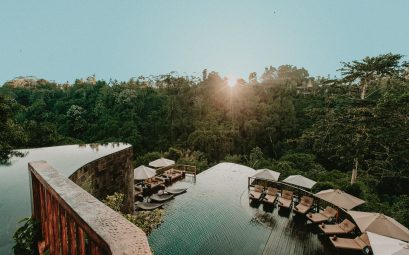
At the geographical epicentre and its spiritual core, is the world’s most remarkable swimming pool. It is without a doubt one of the most photographed pools and has the unique distinction of being named The World’s Best Swimming Pool by Conde Nast Traveller and number one on TripAdvisor’s list. The truly luxurious Spa Collection offers a once-in-a-lifetime spa experience using local ingredients and ancient techniques to create beauty therapies that soothe the mind, rejuvenate the body and energise the soul.

Embark on a five-star culinary journey orchestrated by creative chefs using a modern and innovative cooking approach that combines global flavours with a strong focus on the quality of the ingredients.

Select from a range of romantic dining experiences such as the notably renowned romantic temple dinner, set in a sacred and magical location, followed by a walk and purification ritual with a local mangku and a traditional Balinese blessing ritual, conducted by the local priest.

Guests may also try candlelit romance under the stars, dining à deux on a volcanic rock pillar in the iconic swimming pool or a gourmet picnic served in a secluded bale right on the banks of the spectacular Ayung River.

Explore the unique opportunities that one of the best resorts in the world can offer. The diversity of the award-winning resort, a variety of activities and restaurants means that every day is filled with inspiring experiences.

Heritance Aarah

Offering the perfect blend of luxury and comfort, this premium all-inclusive resort offers unparalleled luxury with a touch of Maldivian tradition.

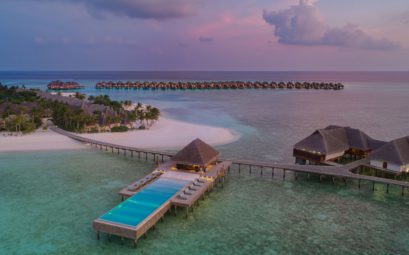
Accessible by a 40-minute seaplane journey from Male’s international airport, Heritance Aarah is nestled in blissful seclusion on a private island in the Raa Atoll, where pristine blue waters beckon.

Perfect tropical getaway

Heritance Aarah offers peaceful seclusion and much needed relaxation for the perfect tropical getaway. Having opened in mid-2019, this resort is the first from the Sri Lankan luxury hotel brand Heritance, in the Maldives.

Featuring plush accommodation options in the lap of paradise, the island is perfectly suited for couples, families, and groups with a choice of 150 accommodation options all designed and built with a fusion of indigenous Maldivian and modern architecture.

Beach Villas are available in four categories, some with private pools and available in family categories. Each villa offers direct beach access just a few metres in front of its large open-air veranda.

The 81 lavish Ocean Suites and Ocean Villas, available in three categories, are luxurious private sanctuaries overlooking a vast seascape. Unwind on the sun deck with direct access to the shimmering lagoon just steps below.

The premium all-inclusive package treats guests to a host of dining options with excellent service in a range of settings. Relax at the pool bar, enjoy a beachside barbecue or à la carte dining at one of the six restaurants and five bars. Dining by design is also available for an intimate and bespoke dining experience. Heritance Aarah is the ideal place to unwind any way you choose, whether you are seeking a haven for pure relaxation, or an active holiday retreat for the whole family, the choices are endless.

Total relaxation

Immerse yourself in total relaxation and choose from a range of lush holistic treatments to balance the body and mind at the first-ever Medi Spa featuring six treatment rooms with stunning ocean views.

The watersports centre includes a variety of non-motorised activities for guests to choose from, or explore the rich and diverse marine life under the water’s surface. The resort’s PADI licensed dive centre is run by a multilingual team of professionals, and the kids’ club offers a fun and educational range of activities for children to enjoy.

Heritance Aarah follows heightened safety practices. For more details, please check out Spencesafe on the website www.aitkenspencehotels.com/spencesafe