thailand bangkok mode sathorn hotel night view of bangkok

Exploring Bangkok

Bangkok is home to a number of attractions. Places such as the Temple of the Emerald Buddha, Wat Pho, Wat Arun (Temple of the Dawn), China Town, Siam Ocean World, Madame Tussauds Wax Museum, Bangkok Snake Farm and Safari World are very popular among tourists.

Do dress in full length clothes when you are visiting Wat Phra Kaew or you won’t be allowed inside. The same applies to the other famous Bangkok temples. Siam Ocean World Aquarium is located on the lower floors of the Siam Paragon Shopping Mall. It is spread over three Olympic size swimming pools and houses more than 30,000 sea creatures including sharks, rays and more.

To see lifelike wax figurines of international celebrities, head over to Bangkok’s Madame Tussauds Wax Museum. The museum contains wax figures of Bruce Lee, David Beckham, Brad Pitt, Angelina Jolie and many others. If you have some time, make a trip to the famed Jim Thompson House, close to Siam Square.

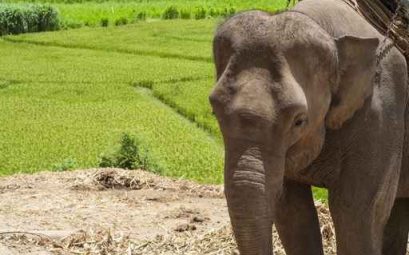
Young elephant in elephant camp, Thailand

Activities in Chiang Mai

Shopping is quite affordable in Chiang Mai. There are umpteen shops outside the historic city center, where you can find a large variety of items. The goods sold here are also of a very good quality. The Sunday Market is a good place for sightseeing and shopping. On Sunday, the place becomes packed with clothes sellers, art and souvenir sellers, jewelery sellers, food counters and more.

If you want to see a Panda, do make a trip to the Chiang Mai zoo. The zoo is home to two Pandas brought over from China via an animal exchange program. If you have some time left after all this, visit the Bo Sang Umbrella Village. This place is famous for its traditional Thai umbrella. You can also buy some souvenirs here.

You can easily spend a week in Chiang Mai doing sightseeing, engaging in outdoor activities and sampling different foods. Believe us, you won’t regret going to Chiang Mai.

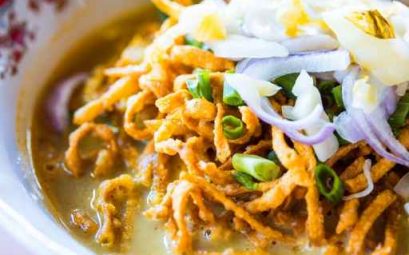
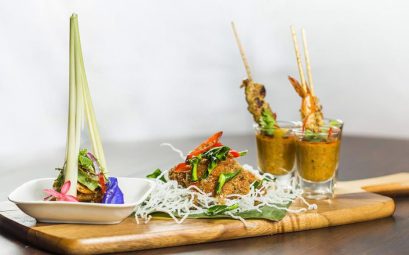
Thai food : Khao Soi

Chiang Mai’s Cuisine

Chiang Mai is considered the cultural capital of Thailand and that influence has also spread to the food served here. Being in the North, the food is heavily influenced by Burmese and Chinese cuisine. It is also quite distinct from the food served in the rest of Thailand. Here, the curries are milder and there is a heavier use of turmeric and ginger.

In Chiang Mai, they eat more sticky rice than steamed rice. The rice is complemented by chilli dips (nam priks) which are unique to the northern cuisine. Dishes such as egg noodle curry (Khao Soi), grilled herb sausage (Sai Qua), Burmese sweet curry (Gaeng hang Lay) and Jackfruit salad (Tam Khanun) are very popular.

The street stalls in Chiang Mai serve tasty northern inspired Thai snacks and cuisine. The food is hygenic (the Thai are known for their cleanliness) and will go easy on your palate, since it is not very spicy. Some common street food in Chiang Mai are Khao Soi (fried noodles in coconut milk gravy and cabbage), Sai Ua (minced pork sausages), Kaeb Moo (crispy fried porn rinds), Sarabao (steamed buns filled with minced pork, sausage and salted egg yolk). If you want to try something sweet, don’t miss Kalamae. It is created from molasses, coconut milk and coconuts and it comes in different flavors.

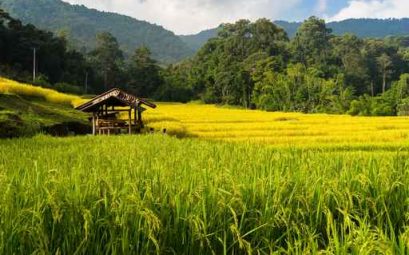
Small shelter

Exploring Chiang Mai

Chiang Mai is certainly more family-friendly compared to Bangkok. It may be a bit off the beaten path but if you want to glimpse the real Thailand, you must go to Chiang Mai. It is easy to travel in Chiang Mai. The city has a very relaxed pace of life so it is quite idyllic. The locals are friendly and there are many places where you can have many adventures. In Chiang Mai, you can ride an elephant, visit a night Safari and go swimming or picnicking at waterfalls.

The picturesque Mae Sa Valley is just 30 minutes away from the city. There is a multi-tiered waterfall here that is visited by many tourists. The Chiang Mai-Lampang Road Elephant Conservation Center is 70 km away from the city and is a nice visit for a day’s outing. There are daily elephant shows at the camp between 10.00 am and 11.00. You can help the trainers bathe the elephants and even feed them with your hand.

Exploring Koh Samui

The old capital Nathon is located on the southwest coast of the island and remains the major port for fishing and inter-island transportation. Nathon is the seat of the regional government and for Samui locals is the recognised commercial hub. It has a charming pace, and is almost small enough to walk everywhere. The old Chinese shophouses along the middle street whisper of an exotic history. Although Koh Samui is in southern Thailand where Islam has a strong influence, the original inhabitants of the island, known as Chao Samui, are predominantly Buddhist. In the past, most of the locals made their living in the coconut farming business.

Today, however, most islanders work in jobs related to tourism because in recent years Koh Samui has developed into a popular, tropical beach resort destination. While still maintaining its unique charm, from coconut tree fringed beaches to tropical jungles and a vibrant nightlife, it has something for everyone.

Accommodations range from bungalows and villas to five-star boutique resorts and are suitable for all budgets. There are fine dining restaurants that offer a wide range of international and exotic local Thai dishes. If pampering is high on your list, there are many day spas available.

Activities in Krabi

There are several family activities in Krabi. The most popular among which include elephant trekking, island hopping, snorkeling, kayaking, trekking, rock climbing or simply relaxing by the beach at sunset. The town doesn’t disappoint shopping enthusiasts either and you’ll be pleased to know that Krabi’s retail scene is as vibrant as its food scene.

Fruits stand on the local market in Khao Lak, ThailandThe local markets are mainly of three types – (1) Walking street markets, where you get everything from clothing, accessories and souvenirs to meat, fish and vegetables; (2) Night markets, where you get great bargains on household items as well as great street food; and (3) Daily local markets, where you get great fresh produce, dry goods and again, great street food.

Walking-street markets are exactly what they sound like, street markets where pedestrians walk and shop around. These markets are set up on a weekly basis by closing certain streets to traffic and setting up stalls on both sides. The Krabi Town Walking Street provides the most attractive set of activities and if you’re in Krabi over the weekend, it is a must-see. The market is open from 6pm to 9:30pm from Friday through Sunday.

Krabi Town hosts two night markets daily, one opposite City Hotel on Mahart Road and the other on Khong Kha Road. Local markets can be found in every Krabi village, on different days of the week. Most are found by the beach and if you have time to visit just one, head to the Klong Haeng Saturday market. The daily markets for fresh produce in Krabi Town are best visited early in the morning.

Krabi’s Cuisine

The local cuisine is marked by the heavy use of aromatic herbs and spices that make individual dishes look and smell as good as they taste. Try the seafood from Seafood Street and head to The Hilltop for fancy dining. The street food in Krabi is one of the best in the world and you can find every famous Thai dish to serve your taste buds.

In addition, there are several international restaurants, cafes and eateries headed by expats who treat fellow travels with popular food from their homeland. You will find Australian, Chinese, European, Indian, German, French, Italian, Irish, Japanese and Mexican cuisines with great ease in Krabi.

The most popular restaurants include Mr. Krab-i, Gecko Cabane, Frog and Catfish, Khaothong Terrace Restaurant and Chalita Cafe & Restaurant. Boogie Bar Ao Nang, Amy’s Bar, Smile Bar, Roots Rock Reggae Bar and Rick’s Bar are among the most popular bars for fancy beverages, alcohols and fun.

Exploring Krabi

Popular destinations include Phra Nang Beach, Poda Island, Railay Beach and Viewpoint, Tup Island and Phi Phi Islands. In addition, here are six family-friendly places to explore:

The Tiger Cave Temple or locally known as Wat Tham Sua is a temple complex with natural maze-like caves where monks live and pray. Susan Hoi is a shell cemetery with fossilized shells from 75 million years ago.

The Thung Teao Forest Natural Park is a stunning lowland forest with crystal-clear lagoon, natural trails and rich bio-diversity and Khao Phanom Bencha National Park, a popular attraction complete with waterfalls, trecking trails, sheltered flora and fauna plus more.

There is also the Klong Thom Hot Springs where its located close to the Khao Phra Bang Khram Nature Reserve, the springs are believed to be therapeutic as well. Last but not least, Krabi Town. Located at the heart of Krabi, the town has a provincial, wonderfully laid-back and charming feel to it. It is also the place to soak in authentic Thai culture, hospitality and food.

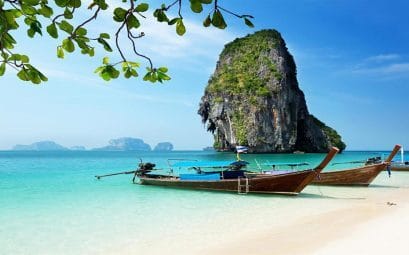
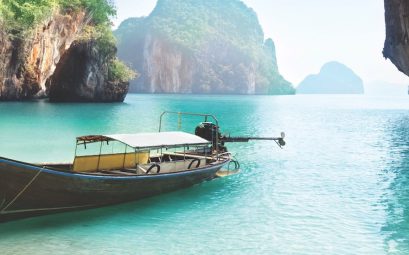
thailand phuket boat

General Overview Phuket

Going To Phuket

Flights to Phuket International Airport come in from many airports in the region and include direct charters to Europe and Australia. Low-cost direct connections are available from cities like Macau, Seoul and Busan too.

Several domestic airlines fly to Phuket from Donmueang Airport and Suvarnabhumi Airport in Bangkok. There are no direct train services to Phuket, but you can hop on one of the sleeper trains leaving Bangkok’s central station, or a public BKS bus at Bangkok’s Southern and North-Northeastern Bus Terminal.

If you are driving to Phuket, it is connected to the mainland by the Thao Thepkasattri Bridge. Ferries and speedboats to Phuket are the way to go if you are entering from the neighbouring islands.

Accommodation in Phuket

Accommodation in Phuket has choices aplenty, but you are advised to book at least a couple of months earlier during the high season from November to May if you are eyeing hotels and resorts in popular locations. Online bookings are usually cheaper, with best rates guaranteed, compared to walk-ins. As a guide, the lowest air-con room rates begin at around 1,000 baht in beachside areas and 500 baht away from the beach. Resort rates start go from just under 100 USD and up.

You can also rent two to three bedroom furnished houses and luxury villas at a range of prices, depending on the season, location and size. Another alternative is the homestay, thanks to the rise of accommodation-sharing sites like Airbnb.

In general, lodgings in town are cheaper than those near the beach. Those who are not looking to splurge can head to the budget hotels and hostels near Phuket Bus Terminal 1 around Old Town. From there, the beach is still accessible by bus or rental motorbike.

Getting around Phuket

Public transport is very limited in Phuket. A radial bus network links Phuket Town to the beach towns. Most lines operate at half-hour intervals with songthaews, which are converted pick-ups serving as buses. Drop offs can be requested and there are no set stops. Do note that there are no cross-beach connections.

Phuket has three types of taxi – many songthaew-style minivans, called tuk-tuks, a smaller number of sedan-style cabs and random vehicles serving unofficial taxis. Tuk-tuks have no meter and hard bargaining is usually required or you will risk getting overcharged. Metered cabs are safer, comfortable and usually cheaper. However, they may be harder to find, so it is highly recommended that you arrange one by phone.

Motorcycle taxis, with drivers sporting fluorescent numbered vests, are another way to travel short distances in Phuket. Phuket car or motorcycle rentals are also available, but the roads are often chaotic and accident-prone because of poor adherence to traffic rules, road markings and reckless behaviour.

Island-hopping is done by longtail boats or ferries. Some are available for charter at a higher cost but buying one-day pass will be more economical.

Currency of Phuket

The currency in Phuket is the Thai Baht. Currency exchange booths are usually open 12 hours a day, seven days a week.

Entry Requirements

All tourists entering Phuket and other parts of Thailand must possess a passport that is valid for at least 6 months beyond their intended length of stay. Most visitors to Phuket will clear the immigration checkpoints at Bangkok’s Suvarnabhumi International Airport or Phuket International Airport.

A visa is not necessary for many tourists (do check the Visa Exemption list) who are there for less than 30 days. Those who need one may apply for a Visa on Arrival, which is valid for 15 days at the cost of 15 baht. A 60-day Tourist Visa must be applied from the Royal Thai Embassy if you wish to reside for a longer period.

Climate

There are two seasons in Phuket: dry and wet. The dry season takes place between December and April, after which rainfall increases. Temperatures are consistent around 30°C, with some humidity.

Phuket’s Cuisine

Food in Phuket

Food is easy to come by in Phuket, with a bevy of options to suit different palates. There is a particular emphasis on seafood in its local cuisine, which often features fried or boiled noodles, spices, smoked shrimp and fresh vegetables. Cashew nuts and pineapples are widely available native produce that are also used in food preparation.

Phuket Chinese, Peranakan and Malay food are also common due to the province’s diverse heritage; expect dishes like Hokkien noodles, tamarind prawns, pork cooked in dark soya sauce, fried glutinous rice and fried oyster omelette. Other cuisines, such as Japanese and Western, contribute to the cosmopolitan food selection in Phuket – especially in Patong, where many foreigners have set up restaurants.

Nightlife in Phuket
Phuket’s bustling night scene is second only to Pattaya’s out of Thailand’s beach resorts. Check out legendary Patong, the undisputed centre of the Phuket’s nightlife activity. All the main action takes place along Soi Bangla, with a mix of restaurants, bars, discos, live music clubs and cabarets.

Performances by ladyboys can be seen at Soi Katoey or Soi Crocodile; they will be glad to pose for a photo or two in their costumes in-between shows. Besides Patong, the nightspots at likes of Mamala, Karon, Kata, Phuket City and Rawai pulsate with partygoers too – perhaps with more local flavour when compared to tourist-filled Patong.