Exploring Port Moresby

The most famous landmark in the city is the Port Moresby Nature Park (formerly called the National Botanical Gardens). If you want to see a cassowary, the famed flightless bird, this is your chance. The park is also home to wallabies, birds of paradise and other beautiful creatures.

The Ela Beach Craft Market is also popular with tourists. Many craftsmen from around the region converge here on the last Saturday of every month to sell handwoven baskets, beautiful island carvings and a number of other souvenirs. If you are arriving around September, plan your visit to coincide with the Hiri Moale Festival (there is a famous race here).

Port Moresby has high crime rates. There are a number of criminal gangs called ‘raskols’ in the city, so always go out with the company and with caution (if and when you are going out). Otherwise, the city is very beautiful and there is a lot to see here.
Activities at Sepik

You can cruise the middle Sepik aboard the quaint Sepik Spirit, a slow house-boat. In addition, Kilibobo Spirit is available primarily for charter, though it doesn’t have a schedule. On special occasions, the ship operates expeditionary cruises to the Sepik and the PNG Islands. West Sepik or Sandaun Province is near the West Papua (Irian Jaya) border and is inhospitable terrain. It is home to the Upper Sepik people who move around in long, narrow dugout canoes. Travel is always difficult as there are no roads and the rivers are narrow.

The centers are Vanimo and Amanab and villages around here have strong religious beliefs centered on deities that are believed to hold supernatural powers that are vital for survival in this remote and dense countryside.

East Sepik is the middle and lower region from Angoram to Wewak town. There are a number of large rubber and cocoa plantations along the river flats. Wewak is an attractive palm-fringed town, which felt the might of Japanese troops who ‘discovered’ its isolation and its hidden ports around Kairiuru Island. Many war memories remain around the plantations and a Japanese gun still points from the eastern end of the island.

The Beauty of Sepik’s Landscape

The Eastern Highlands Province is a one hour flight north from Port Moresby or half an hour from Lae or Mt Hagen. Once there, you are surrounded by steep, rugged mountains covered in dense rainforest graduating to sub-alpine vegetation.

The valleys are blanketed in the grass and the panoramic views contain every imaginable shade of green. Altitude varies from 600 meters in the south to Mt Michael’s 2750 meter summit. Goroka, the largest town, and capital lies at 1600 meters above sea level.

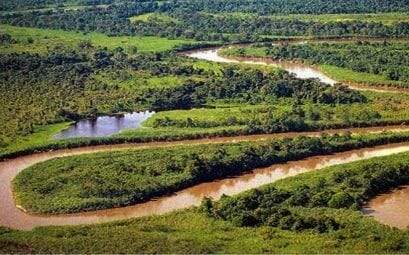
The Sepik River has no actual river delta and stains the sea brown for up to 50 kilometers. It is said that islanders off the coast can draw fresh water straight from the sea. The Sepik River is navigable for almost its entire length and winding its way through the land it resembles a huge, brown, coiling serpent. The force of the river tears great chunks of mud and vegetation out of the river banks and at times these drift downstream and appear as floating islands.

The Culture and History of Sepik

Their cultural links with the Sepik River are symbolized in many of their ancient and spiritual rituals, such as the manhood initiation. This requires painful carving of flesh on the backs of young men with razor blades. Patterns are that of a crocodile lying on the banks of the river.

The history of the Sepik region reflects the influence over the years of the missionaries, traders, labor recruiters, and administrators.

Here river and crocodiles, man and nature have learned to live in mutual respect. Parts of the Highlands remain untouched just as they were when first ‘discovered’ in 1933.

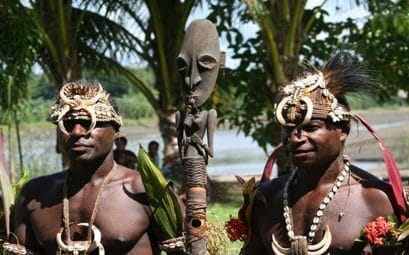
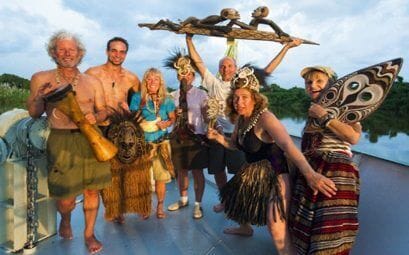
The people are hardy and village life depends on subsistence farming. Visitors will be fascinated by the bright ochre colors and two-meter high head-dresses swathed in plumes of the Bird of Paradise worn by the tribal elders. Dancing is proud and fierce at traditional sing-sings, with drums beating long into the night.

Honiara’s Cuisine

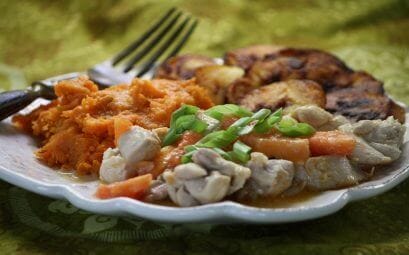
Fish is the most popular main item in the Solomon Islands and it is the same in Honiara. It is usually served with rice, sweet potatoes, taro, cassava and vegetables. Some popular dishes are ulu (made from breadfruit and served with other dishes) and Poi (made from taro roots and usually served during a celebration).

Some other popular restaurants are Lime Lounge, Korean BBQ, The Yatch Club, The Taj Mahal and Rain Tree Cafe. There are also a number of lunch bars near the museum. If you want to visit a pub, go to the House of Chiefs (not recommended for females).

The Central Market is a good place to source for ingredients should you wish to prepare your own meals.

Shopping in Honiara

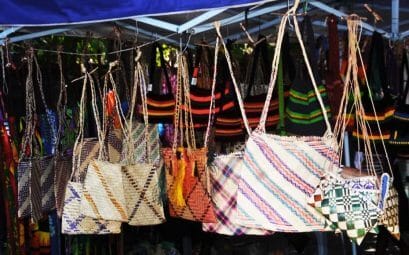
Shopping in Honiara is confined to traditional handicrafts and souvenirs. NPF Plaza, close to the museum is a good place to buy these products. Some shops near the Mendana Hotel sell woven baskets. Wooden handicrafts are sold near Rain Tree Cafe. You can also get the items from Central Market, traders from all over the island come here to sell their wares.

Coconut oil is also a very popular product. The villages around Honiara produce good quantities of virgin coconut oil which is transported to Honiara, for processing or shipping. The oil can be used for cooking, to make oil lamps, to make cosmetics or as a conditioner for your hair. Excellent quality virgin coconut oil is available at Koconut Pacific, close to the Melanesian Art Building at Point Cruz (Honiara port). Another interesting thing to buy is natural sea sponge. These can be used for bathing or washing up. It is said that they are very comfortable and soft on the skin.

There are also many casinos in Honiara, if you want to try your luck at gambling. We recommend the Pacific Casino Hotel, Honiara Casino or Supreme Casino.

Historical of Honiara

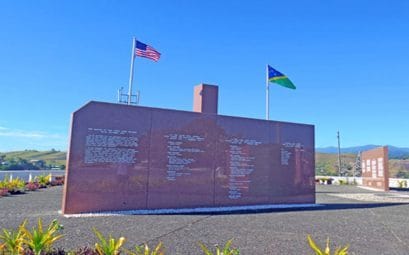
Honiara may look like a dusty old town at first glance but if you look closer, you will see that it contains a number of tourist attractions. The mountains around the town were the scene of fierce fighting between the Japanese and Allied forces during World War 2. Some of the sites are well preserved and have become tourist magnets.

There are also a number of waterfalls close to the town, including the majestic Matanikau Falls. There is a cave here and it is said that the cave was used by the Japanese to hide from the Allied soldiers during the war.

A number of old churches are scattered around Honiara. The South Seas Evanglical Church is especially recommended for a visit. If you want a slice of history, do visit the National Museum that is located in town. It has many exhibits of historical artifacts and traditional handicrafts. Another must visit place is the Central Market. The Central Market is a good place to buy traditional handicrafts, jewelery and sarongs (do keep a watch out with your pickpockets).

tahiti-bora-bora-clear-blue-waters

Activities in Bora Bora

There is no shortage of activities to do in Bora Bora. You can explore the island or laze around the beach all day long. Hire a catamaran and select your choice of relaxing cruises. There are also adventure island tours and sunset experiences. Most catamarans have a well-stocked bar, a sundeck on the roof and dining area.

If you love to fish, then Bora Bora is the place for angling all through the year. There are Pacific blue marlins and other kinds of game fish like skipjack tuna, trevally, mahi-mahi, yellowfin tuna, washroom barracuda, and jacks. You can choose between bottom fishing, shallow water or deep sea fishing. You can hire a boat by yourself or be a part of a group of generally six people.

The island tours are made of romantic outings made possible by private boat cruises. There are also sunset tours and eco-friendly excursions. The best way to enjoy is through a customized adventure package.

Bora Bora’s Cuisine

Fish is the staple of the Bora Bora natives. The local cuisine is a fine blend of traditional food and French items. The island has developed a distinctive taste of its own, spanning breakfast, lunch, and dinner. Sushi is made with fresh fish and where sweet rice and local ingredients are added. Only fresh catches are used. The French introduced foie gras and which is subsequently mixed with the unique methods of island food.

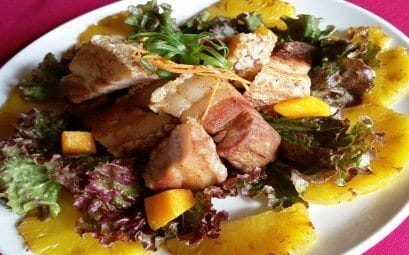
The rotisserie pork is another local dish prepared with the freshest of pork and pineapple slices to heighten taste. This dish embodies Bora Bora. The Mahi Mahi dish is cooked with vanilla sauce. The vanilla is grown on the island itself. The Tahitian Vanilla Panna Cotta is cooked with sugar and fresh cream to be served as a hearty dessert. The papaya or banana puree are generally baked and encased with coconut milk and sugar. The Tahitian Fruit Pudding is another notable option.

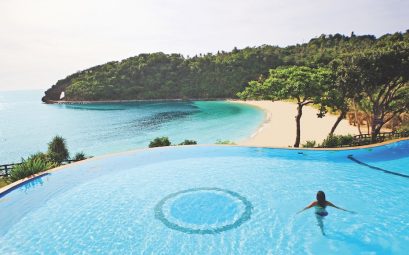
philippines boracay fairways and bluewater newcoast boracay swimming pool

Exploring Bora Bora

Bora Bora is truly a majestic destination. You can explore its famed lagoons with the island’s clear and shallow waters acting as a magnet for divers. You can see the bright schools of tropical fish and corals from your glass-bottomed boat. If you are here for a short period of time, consider hiring a jet ski or a motorboat to circumnavigate the island, occasionally stopping at beaches or at a small motor on your planned path.

The best way to begin any day in Bora Bora is to eat a delicious breakfast. This is served to you on the private balcony of your bungalow situated above the water. The Polynesian staff serves the freshest pastries, juices, and fruits while the water welcomes the South Pacific sun. At the later part of the day, hire a four-wheeled drive and embark on an adventure through the mysterious forest roads or put on a snorkeling mask and dive in the lagoon’s shallow waters.